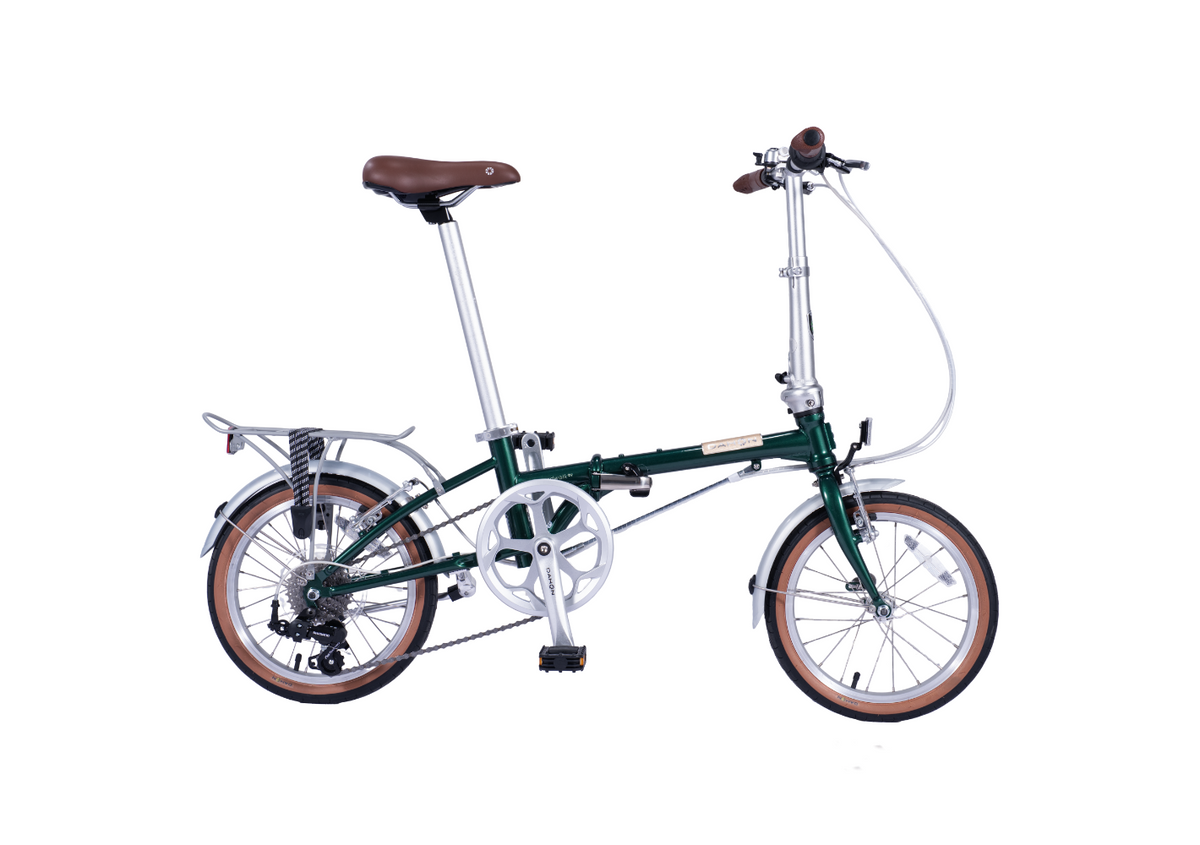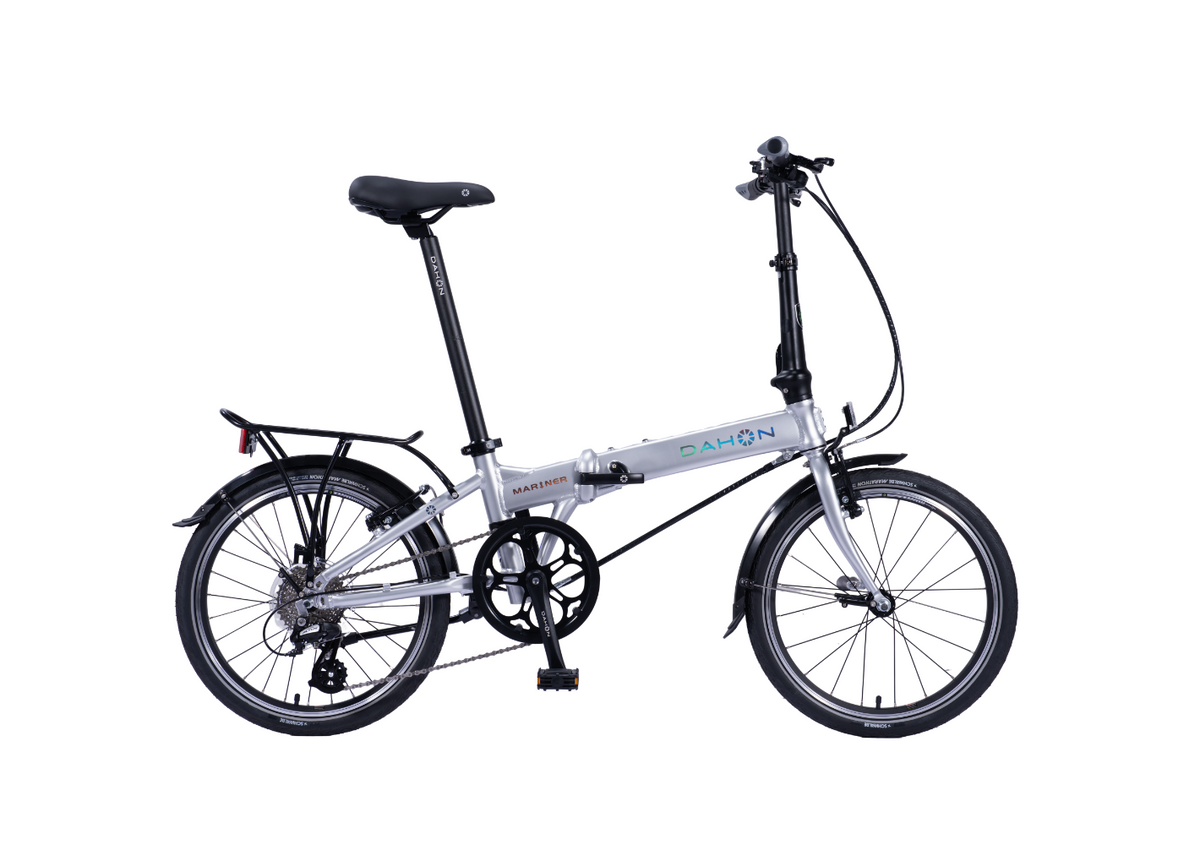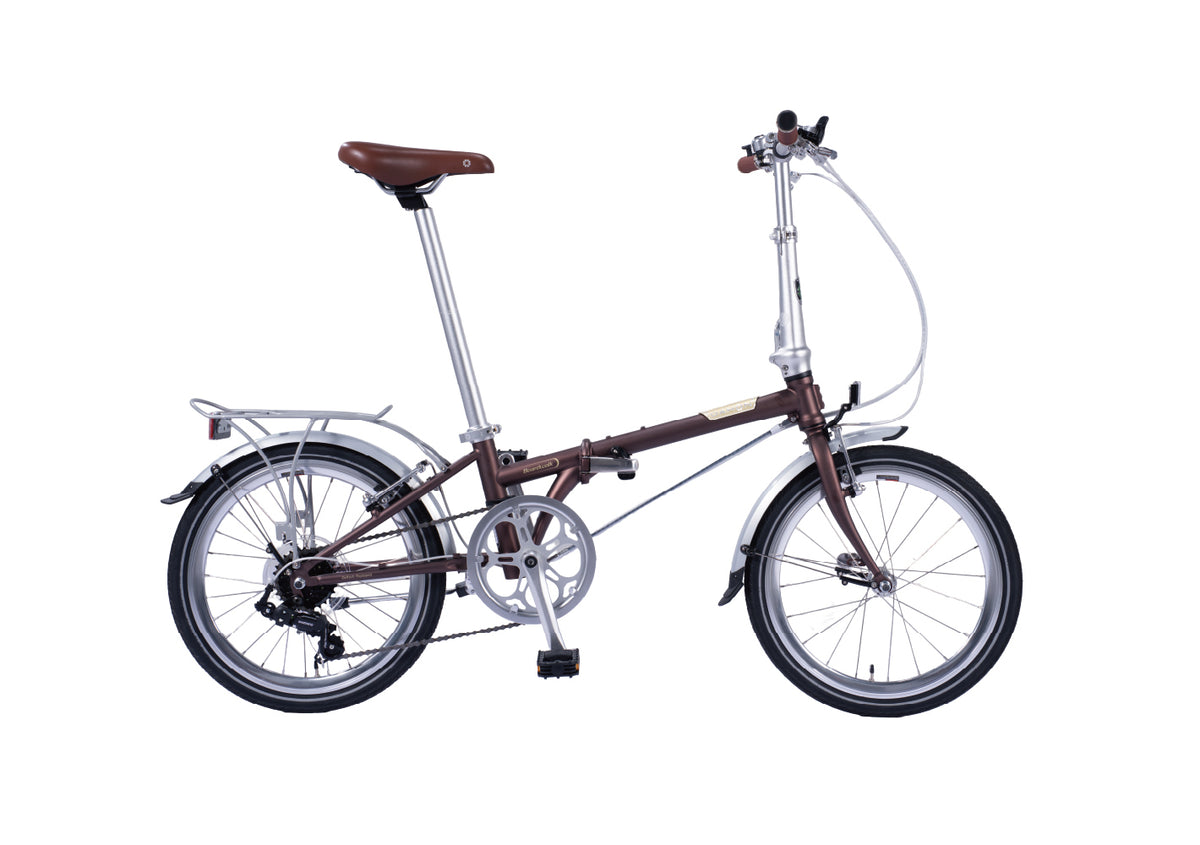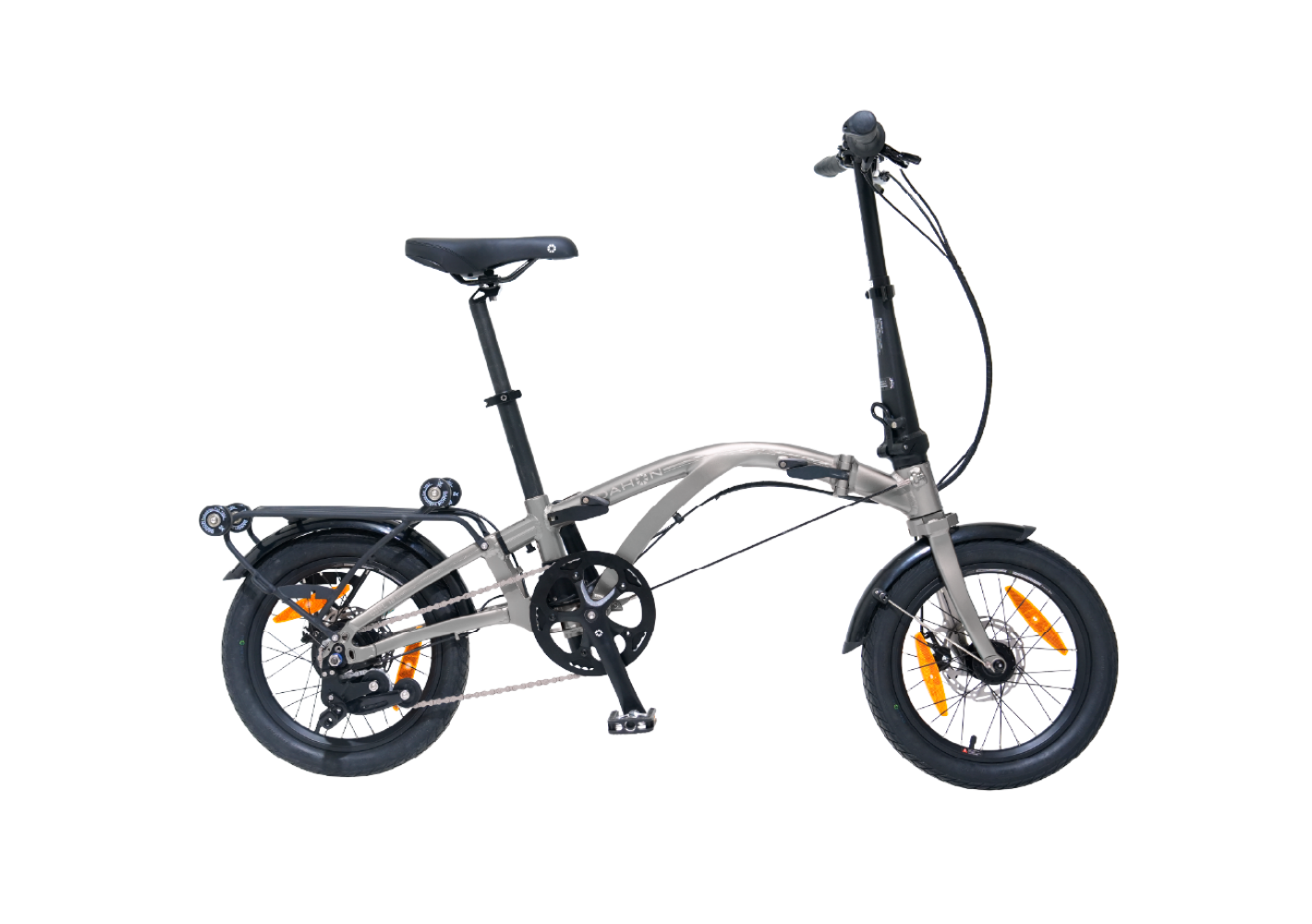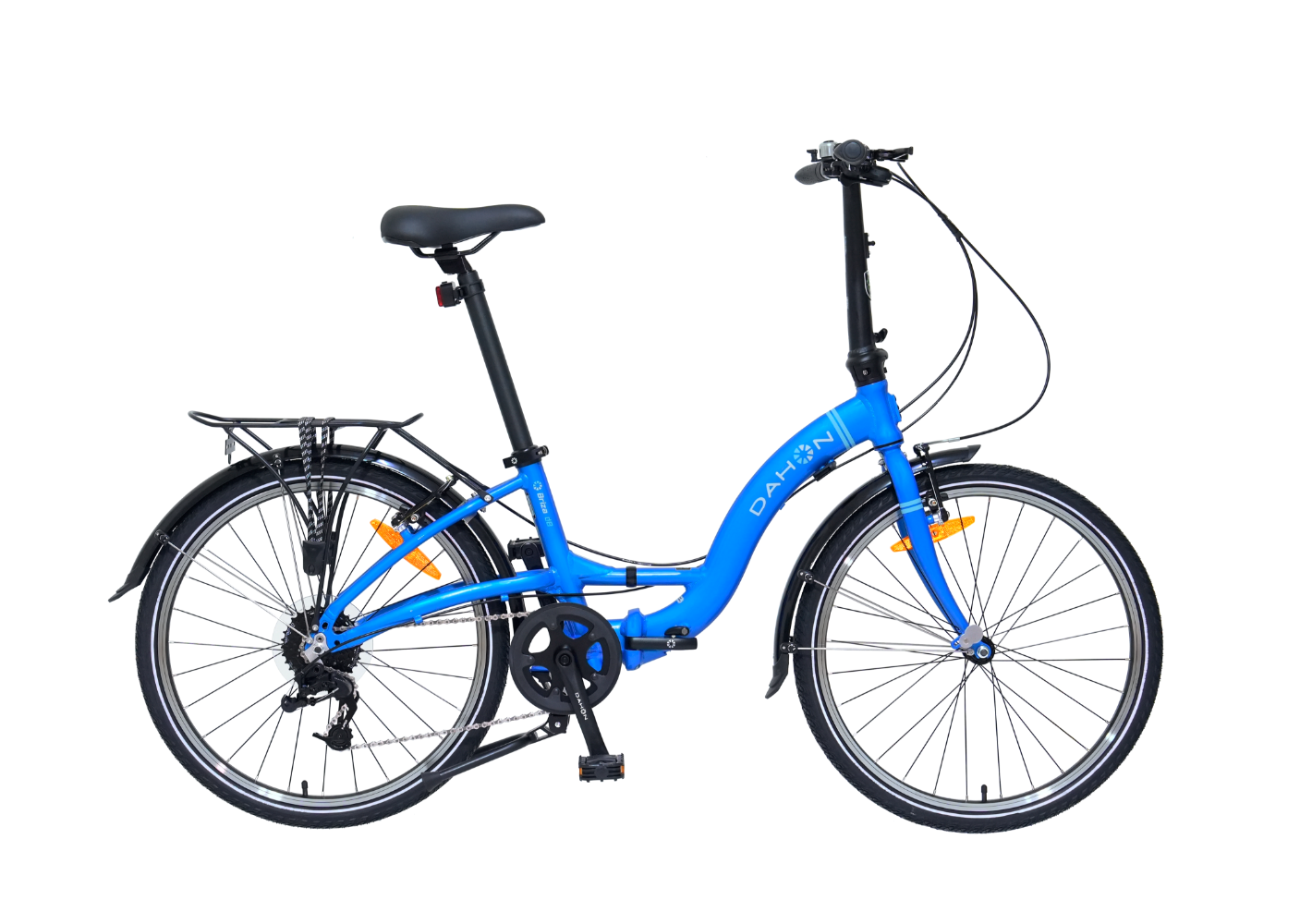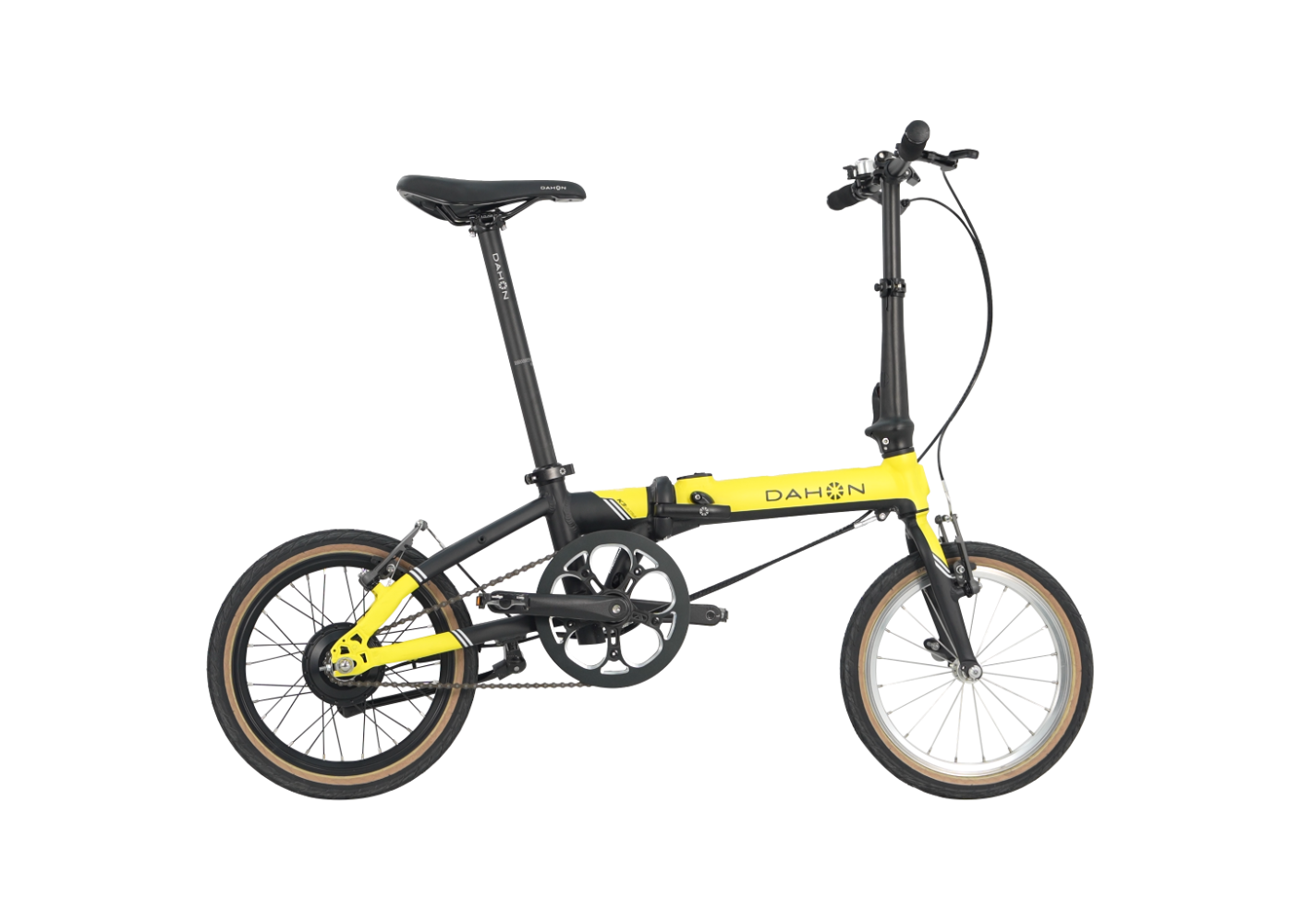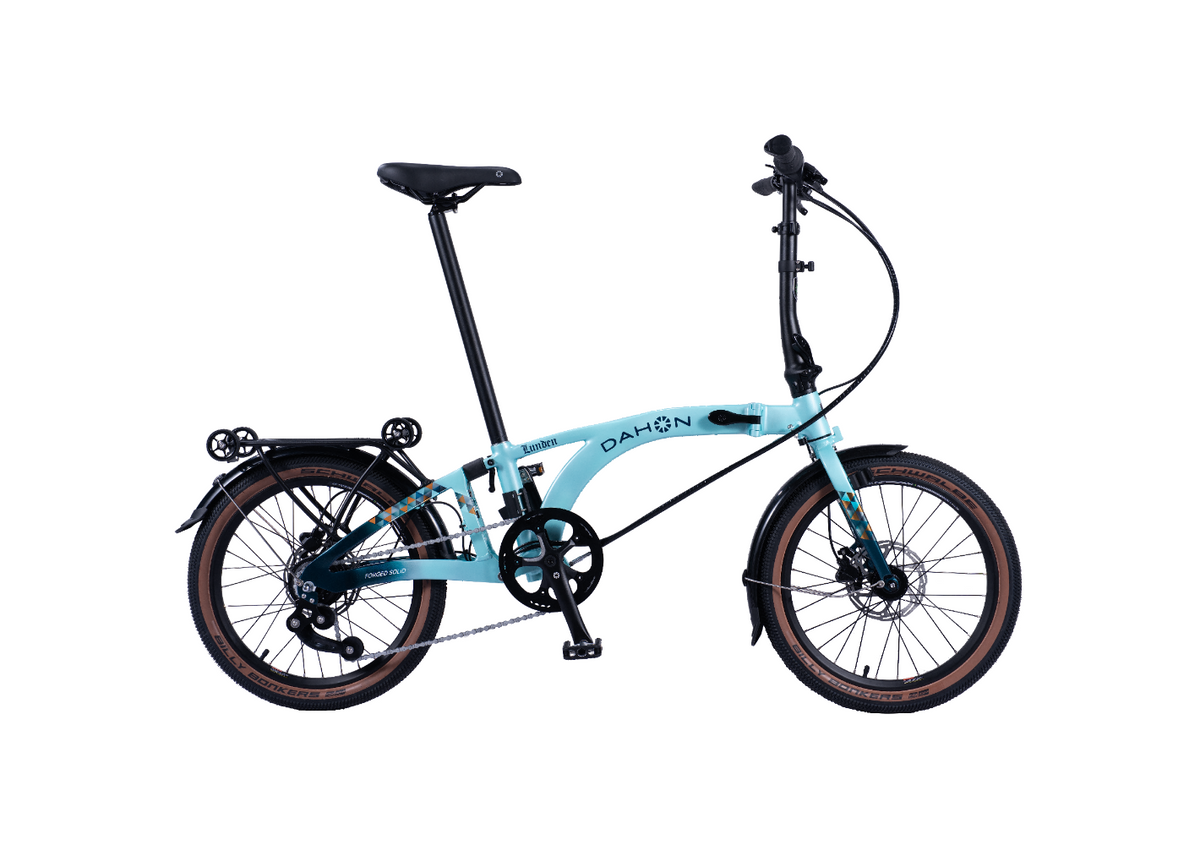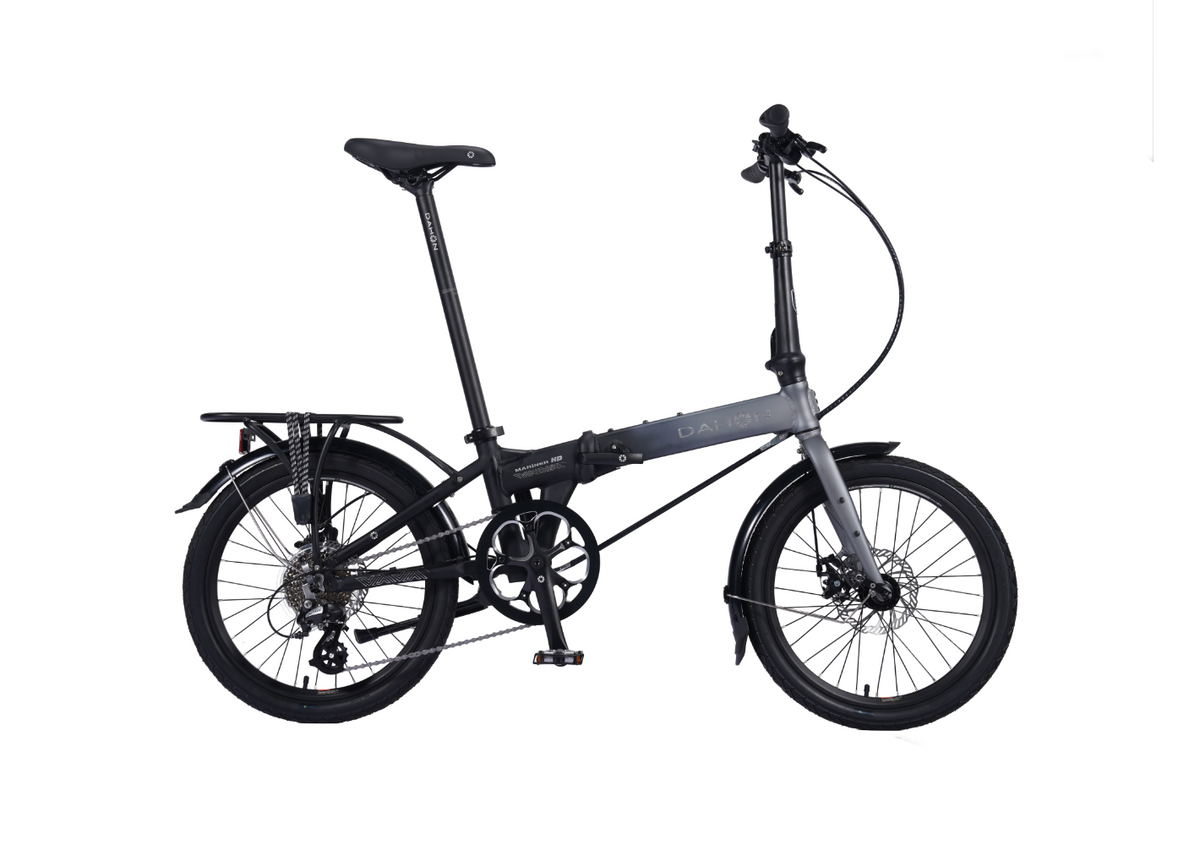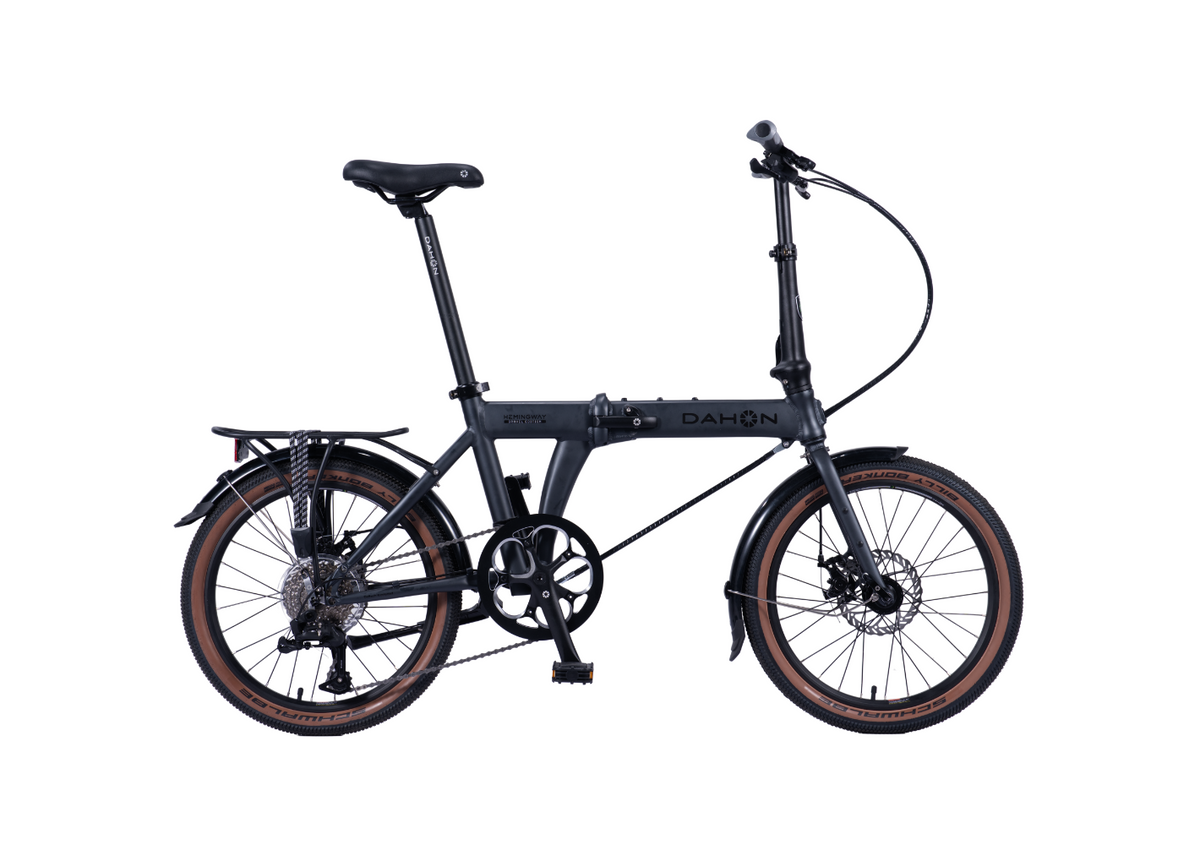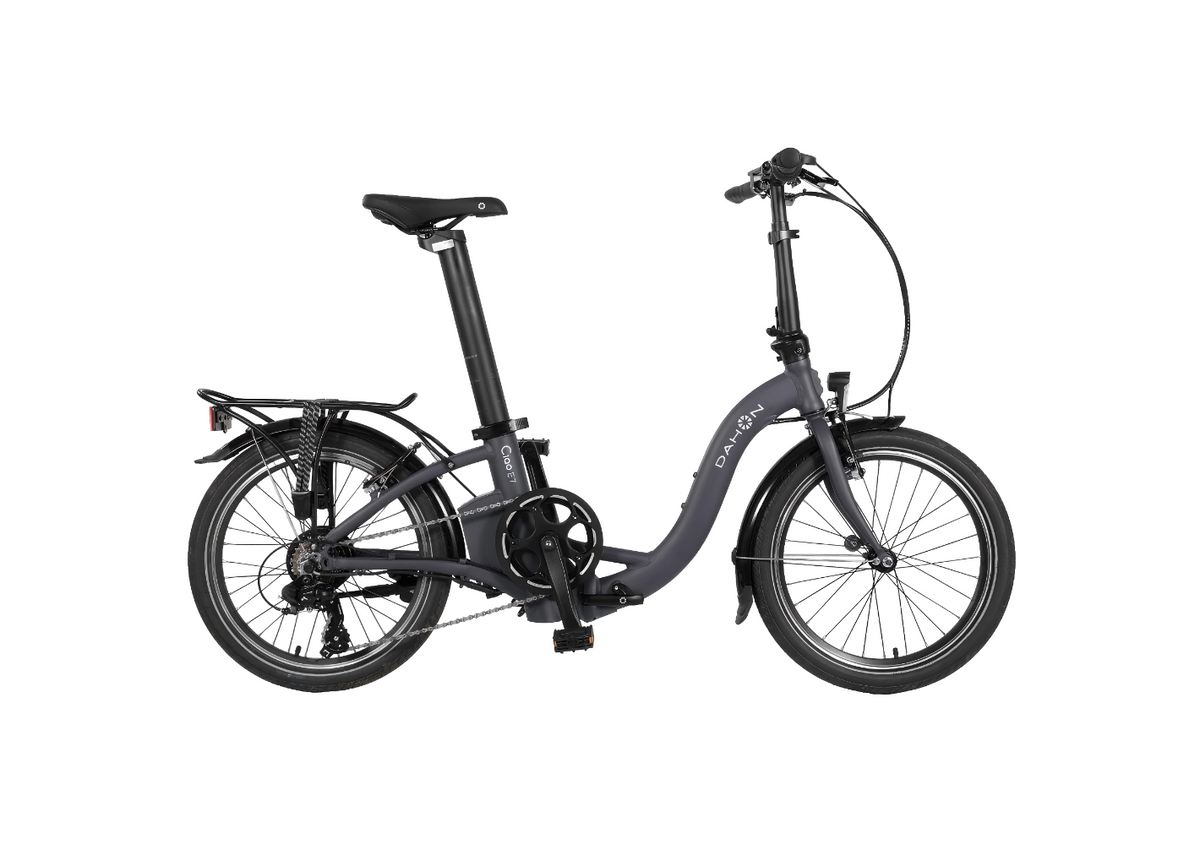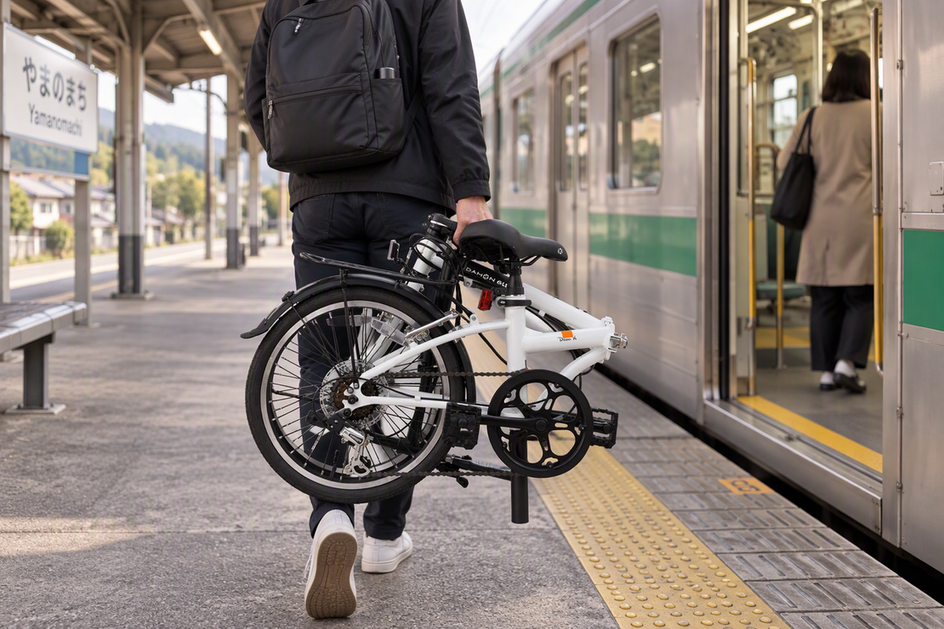
A folding bike can turn a small-town-to-city train commute into one smooth door-to-door trip. It works when both cycling legs suit you and every train service lets you carry and stow the folded bike without trouble.

If one ride is unpleasant or one operator's rules do not fit your bike, the whole chain weakens. So treat the decision as a single journey and check each part against your real route before you rely on it.
When is a folding bike useful for a small-town-to-city train commute?
It is useful when three things work together: the ride from home to your local station, the ride from the city station to your destination, and the handovers in between. Those handovers are folding, carrying through the station, boarding and stowing.

Judge the two rides separately. A short, easy ride to a village station does not tell you anything about a long ride across a spread-out city at the other end. Equally, a great city ride is little help if the train part becomes a daily struggle. Our guide to folded size and storage covers how the bike's shape affects that middle step.
Keep the verdict open until you know your actual routes, operators and stations. A folding bike commute can save time or money on some routes, but only your own journey can show whether it does.
Assess the two cycling legs separately
Each ride has to work on its own as something you would happily do every working day. Map both and look at them one at a time.
Home to the small-town station
Plot the real route from your door to the platform. Note the distance, any hills, whether there are cycle lanes or quiet roads, and how you get into the station itself. Steps, narrow entrances or a long walk to the platform all count.
Then ask a simple question: would you ride this in rain, in the dark and when you are tired? If the answer is yes, this leg works. If not, a different option for this leg may suit you better, which the comparison below covers.
Destination station to the city destination
Map this leg as its own route. In a spread-out city it can be longer or busier than the ride at home, so do not assume it will feel the same.
Check the distance, terrain, cycle infrastructure and how you will reach your workplace or other destination, including where you can keep the bike once you arrive. A compact urban bike that folds can be easier to take indoors, but confirm that your building allows it. If cycling the whole leg feels like too much, plan part of it another way.
Check the actual train operator's folding-bike rules
Carriage rules vary by train operator, meaning each service on your route requires separate confirmation. Review official operator terms for size, ticketing, and baggage requirements before travelling.
Deutsche Bahn in Germany
Deutsche Bahn's folded-bike guidance says a folded bicycle can travel as free hand luggage without a bicycle ticket or a space reservation. It must be stowed like luggage, without blocking passages, doors or safety equipment.
This applies to Deutsche Bahn. If your journey uses a regional operator or a local transport association, look up that operator's terms separately.
NS in the Netherlands
NS's terms set a folded-size limit of 45 × 86 × 80 cm (width × length × height). A folded bike within that size needs no separate ticket if it causes no nuisance, such as blocking a walkway or seat.
It must stay fully folded for the whole journey. That means you fold it before boarding and unfold it only after leaving the train. It should go in a luggage area, not in one of the bike spaces. NS notes that different conditions apply to certain aspects of its R-net service between Alphen a/d Rijn and Gouda.
Test the station-to-train handover
List every train on your route, including any change, and name the operator for each. For each service, confirm the current ticket or reservation terms, folded-size limits, folding rules, any packaging requirement and where the bike may be stowed.
Then walk through the physical steps. Can you carry the folded bike through your stations, onto the train and into a luggage area without blocking anyone? A practice run outside rush hour shows this quickly. If a change of train is tight, our guide to transfer and carry planning helps you set a time buffer.
Compare carrying the bike with parking or another connection
Carrying the folder is the only option here that covers both cycling legs with one bike. Parking or another connection can be the better fit when it reliably covers one leg and the facilities really exist where you need them.
| Option | When it may fit | What to confirm first |
|---|---|---|
| Carry the folded bike | Both rides suit you and every operator allows carriage | Each operator's terms; carrying and stowage steps |
| Park a bike at a station | One leg is easy to cover without a bike | Suitable parking at that station; how the other leg is covered |
| Walk, public transport or a shared bike | Service runs when and where you need it | Availability, timetable and access for that leg |
None of these facilities can be assumed at a particular station. For NS journeys in the Netherlands, NS's door-to-door connection options list bus, tram, taxi, OV-fiets, shared bikes and shared scooters as starting points to investigate for your station.
If carrying comes out on top, compare folded sizes in our folding bike range against the limits of the operators on your route.
FAQs
Is there one EU rule for folding bikes on trains?
No single rule appears in the operator terms covered here. Deutsche Bahn and NS set their own conditions, so confirm the terms of each operator on your journey, including regional and cross-border services.
What should I confirm when my journey includes a change of train?
Confirm the operator of every train, because the second train may follow different terms from the first. Also allow enough time to carry the folded bike between platforms.
Can I unfold the bike on the train to save effort?
On NS trains, no. The bike must stay fully folded from boarding until you leave the train. For other operators, check their own terms before assuming anything different.
Does a bike that fits one operator's size limit fit everywhere?
Not necessarily. NS publishes exact maximum folded dimensions, while other operators may use different wording or limits. Measure your folded bike and compare it with each operator's terms.