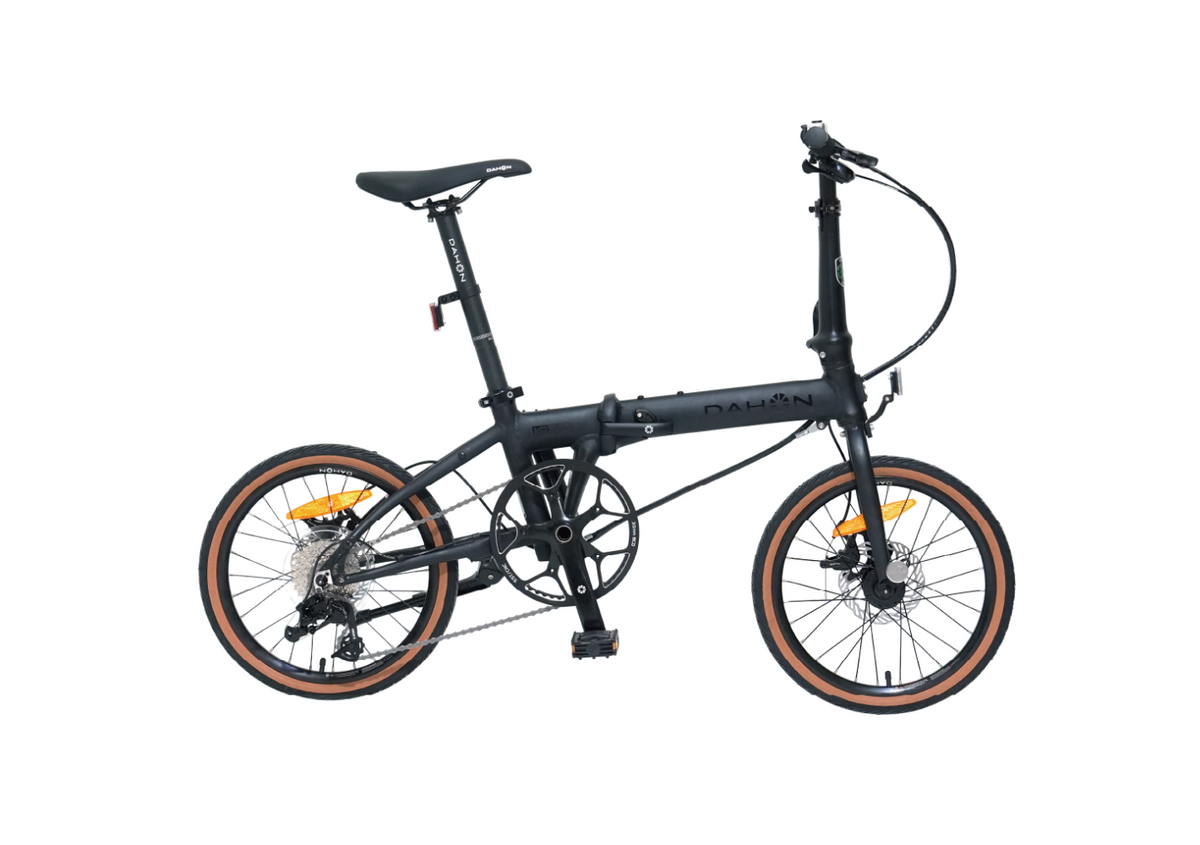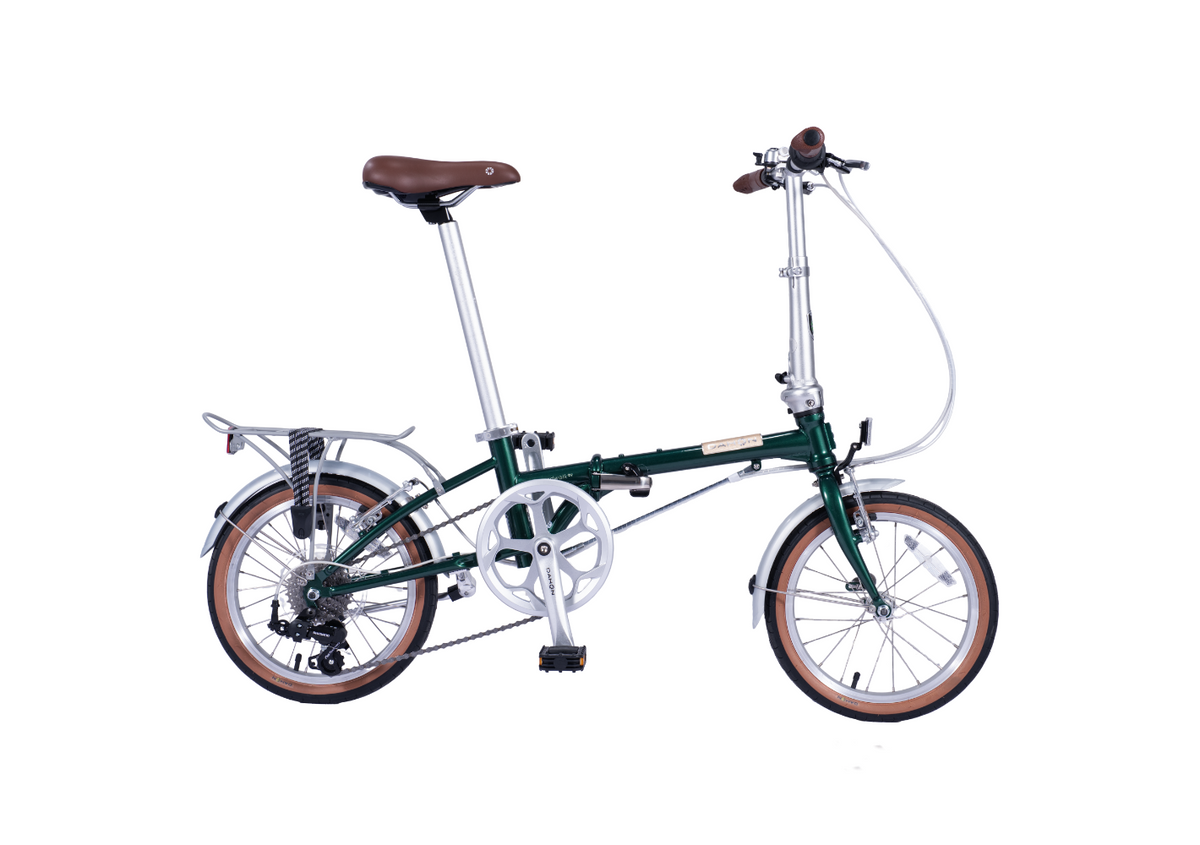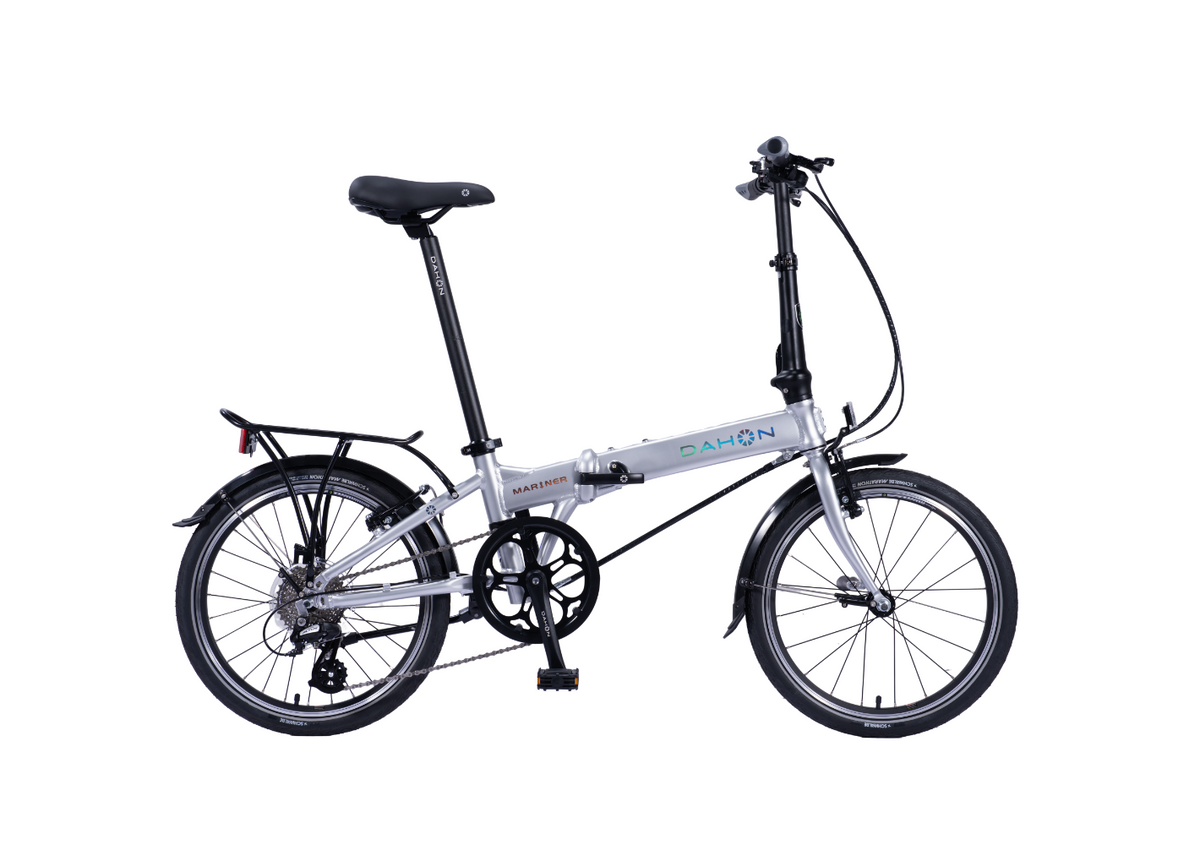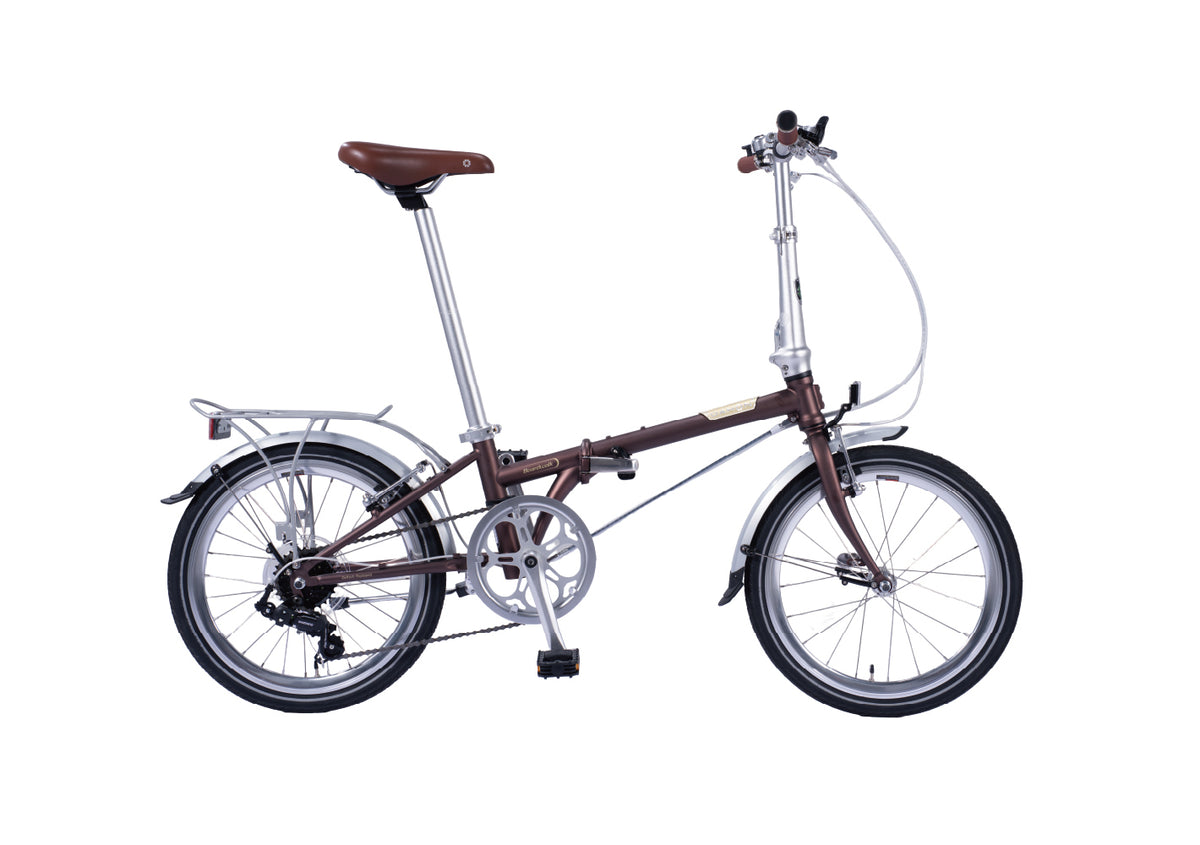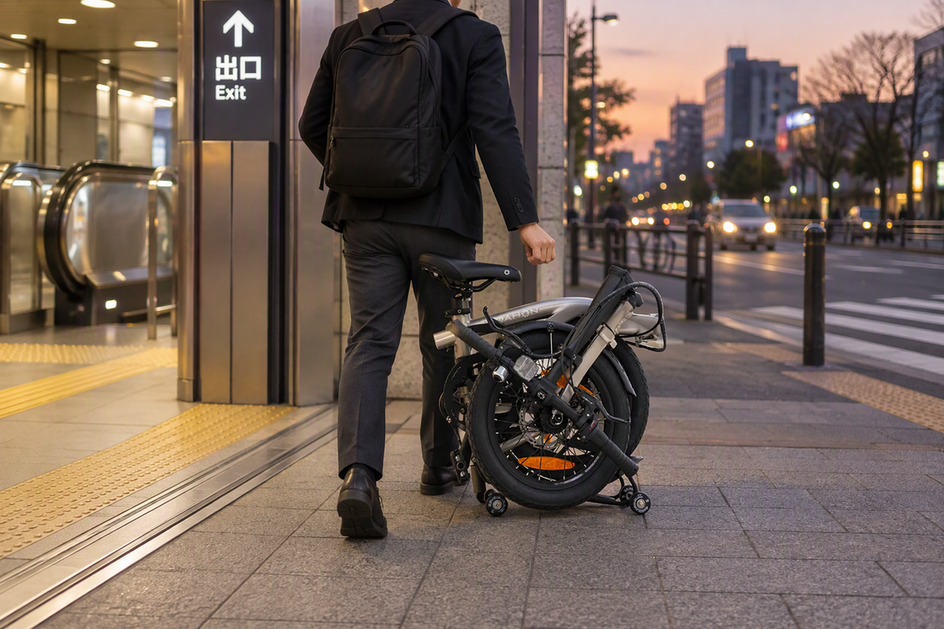
The best way to plan a night cycling commute from the station is to choose the full route you are comfortable riding in low light, not simply the fastest station exit. Map the walk with your folded bike, pick where you will unfold, and save a second option for nights when you are tired or conditions change.

Before you rely on that plan, confirm two things separately. First, check what lighting your exact bike has and that it works. Second, check the rules in the country where you ride, because lighting rules are not the same across the EU.
Choose the route you would ride after dark
Pick the route you would still want to ride when it is dark, from the exit you actually use to your front door. Then keep a second plan ready.
Compare the full station-to-destination options
- List at least two real options. Start each one at the station exit you would use, and follow it all the way to your destination. Do not judge by exit convenience or estimated minutes alone.
- Inspect the details. Look at major roads, busy or complicated junctions, hills, and the type of path or surface. A route marked as a bike path on a map may be a rough track, so check the actual surface against your specific bike and what you feel comfortable riding.
- Preview at a similar time, if you can. Map photos are taken in daylight, so they cannot show you how a street looks or feels at night.
- Choose by comfort. Prefer the option you feel comfortable riding in low light. That is a personal choice, not proof that a route is safe.
Keep a fallback for lower energy or changed conditions
A plan that only works on good nights will let you down eventually. Decide on these two choices in advance:
- A second ride route that you would still pick when tired, in rain, or if part of your usual route is blocked.
- A non-riding onward option, such as an arranged pickup or another way home, for nights when neither ride feels manageable.
Make the call when you arrive at the station, not halfway along the route.

Build the folding-bike handoff into the route
The station part belongs in the same plan as the ride. Where you exit and where you unfold decide which route is easy to start.
Map the folded walk and unfolding point
- Folded walk: trace the path from the platform through the station to your chosen exit, including stairs, lifts or crowded areas.
- Unfolding point: pick a spot where you can unfold without blocking other people, and check that it connects directly to the start of your chosen route.
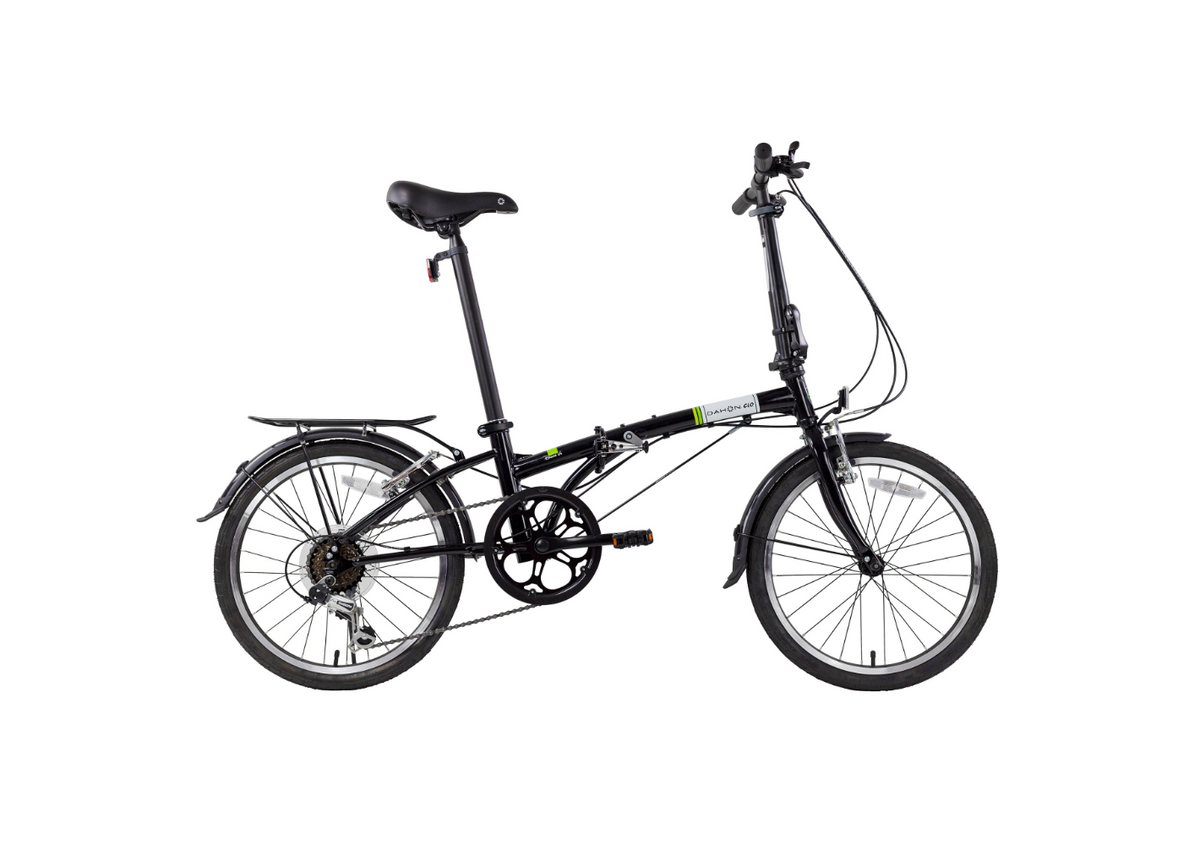
- Model details: how a bike folds and unfolds depends on the model. For example, our Curl i8 folding bike is a tri-fold design with a stated three-second fold and a folded size of 60 × 36 × 59 cm. Those figures help you picture the folded walk. Your own station layout still decides how the walk and unfolding go.
Rehearse the transition before relying on it after dark
Try the full handoff once when you can see the space clearly and have time to do it calmly. If the walk is awkward or the unfolding spot is too busy, change the exit or the route before your first late ride. If you commute in Germany, our guide to the German train handoff with a Deutschlandticket goes into more detail.
Check the lights on your exact bike
Confirm the lighting on the bike you will actually ride. A general description of folding bikes, or of an urban bike range, does not tell you what is fitted to yours.
Use the exact model's current information
- Identify the model and version of your bike.
- Read its current manual or product information. Find out whether the front and rear lights are fixed or removable, and what powers them, such as a dynamo or a battery.
- Compare that with the bike in front of you. Accessories may have been added, removed or swapped since purchase.
If you still cannot work out the setup for any model, including the Curl i8, ask us or your dealer to confirm it. Our articles on folding-bike light checks and on choosing dynamo or battery lights explain the options.
Check the actual equipment before departure
- Turn on the front and rear lights and confirm both work.
- Make sure they are firmly fitted and cannot be knocked out of position or covered by luggage.
- Charge or fit them as the model's instructions describe, especially removable lights you take off on the train.
If a required light does not work, or you cannot confirm your setup meets the rules where you ride, use your non-riding onward option until it is fixed.
Check the rules for the country where you ride
Lighting rules depend on the country where you ride. There is no single EU checklist you can rely on.
Treat the country as the legal scope
The European Commission notes that cyclists follow national cyclist rules and equipment requirements. It also says some countries, such as Germany and the Netherlands, have extra rules on visibility equipment. Find the official source for the member state where your ride takes place, and compare it with the setup you confirmed on your bike.
Use Germany only as a labelled example
For rides in Germany, Germany's StVZO § 67 lighting requirements include:
- Approved lighting equipment, with a white front headlamp and a red rear light plus a red rear reflector.
- Removable lights are allowed, but they must be fitted at dusk, in darkness, or when visibility requires it.
- Flashing front and rear lights are not permitted.
These points apply in Germany only. If you ride in another member state, check that country's own rules.
FAQs
Does the shortest route from the station make sense after dark?
Only if it is also a route you are comfortable riding in low light. A slightly longer route with simpler junctions or a better surface can be the better choice on a tired evening.
Should I unfold my bike on the platform?
Usually it is easier to walk the bike folded to your chosen exit and unfold at a spot where you do not block others. Rehearse this once so you know the spot works.
What if I ride in more than one country?
Check the rules for each country you ride in. A setup that meets one country's rules may need changes in another, so confirm before each new ride area.
Can I take my removable lights off on the train?
Many riders do. Plan to refit and switch them on before you start riding. In Germany, removable lights must be fitted at dusk, in darkness, or when visibility requires it.