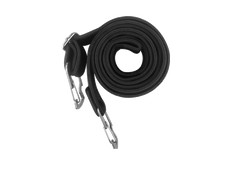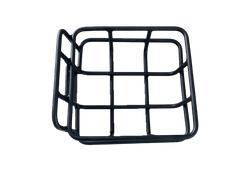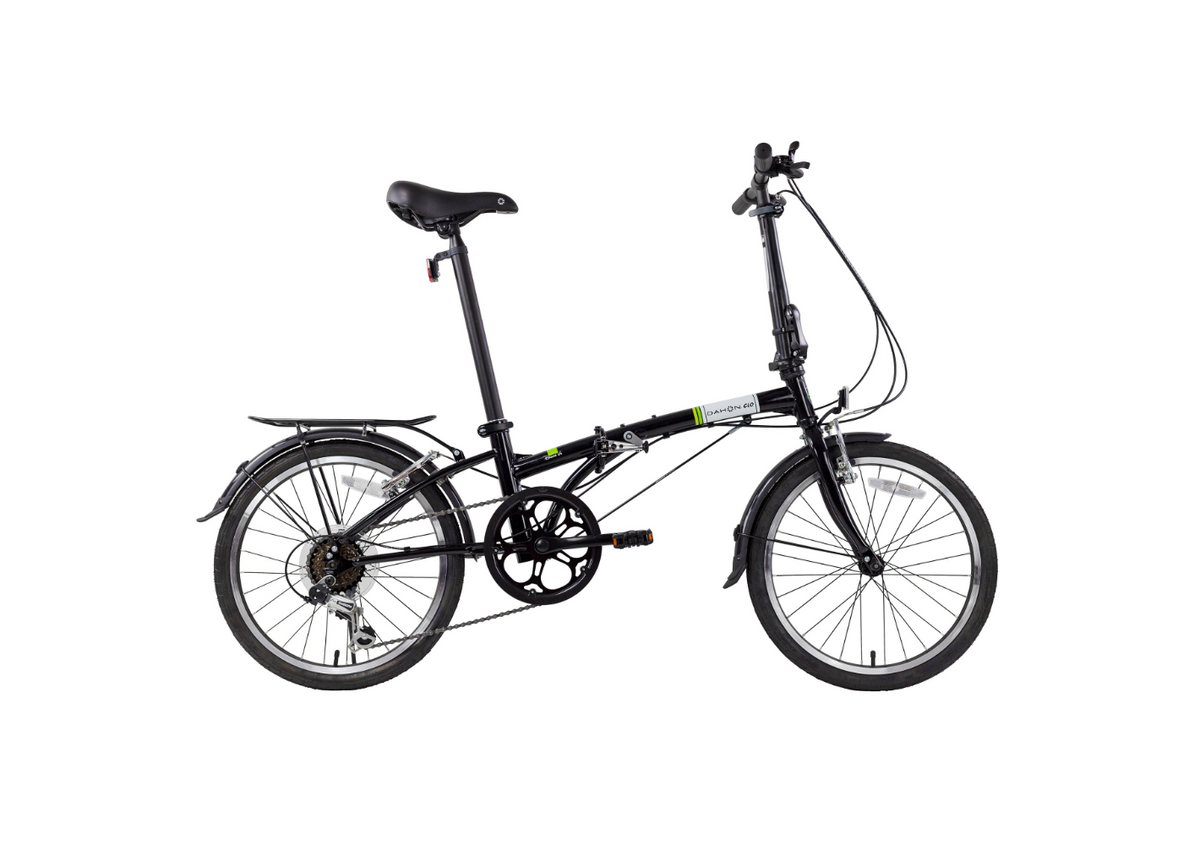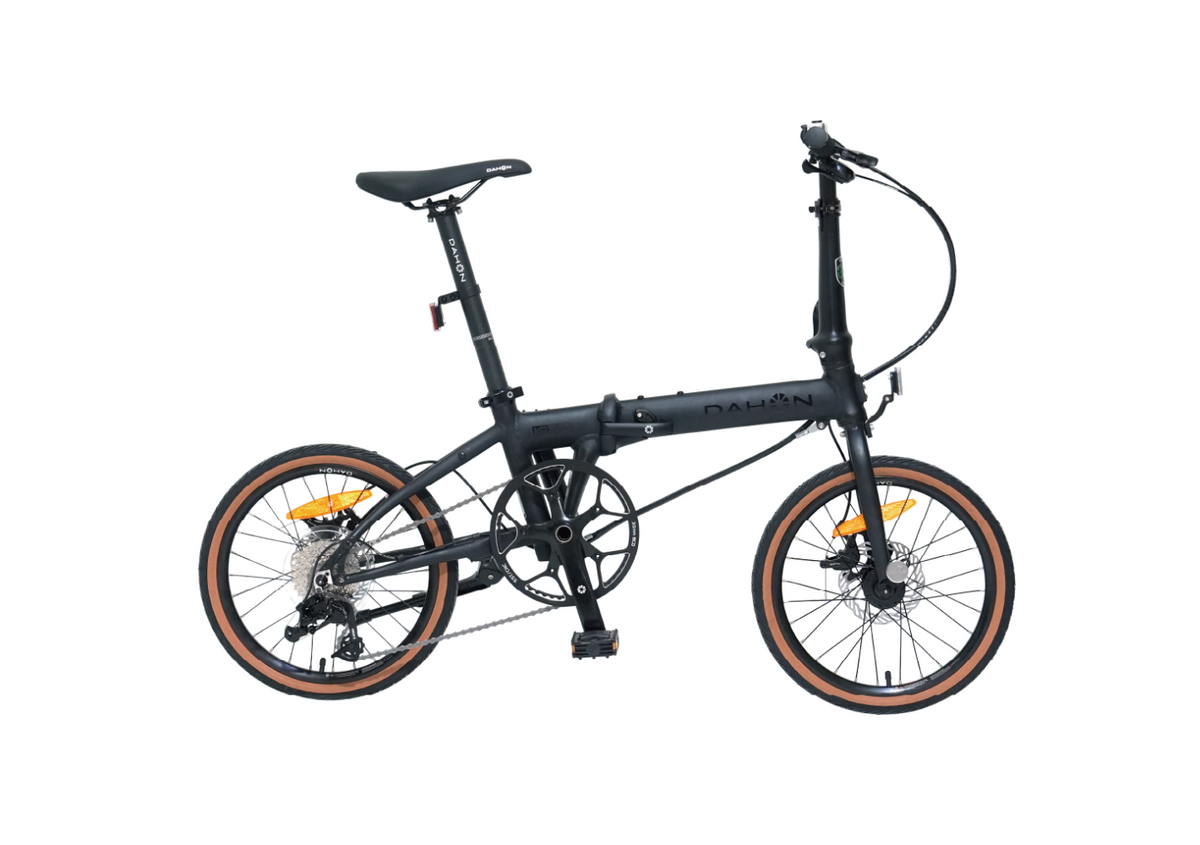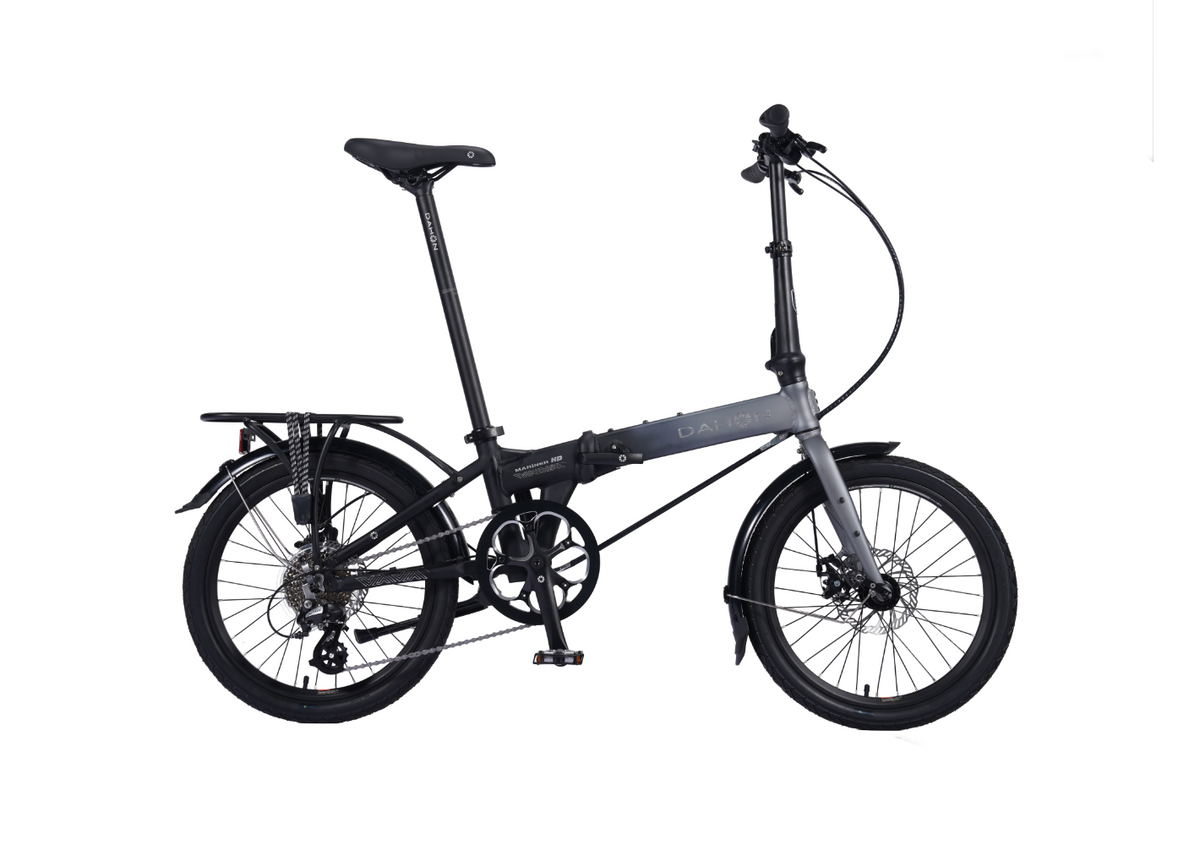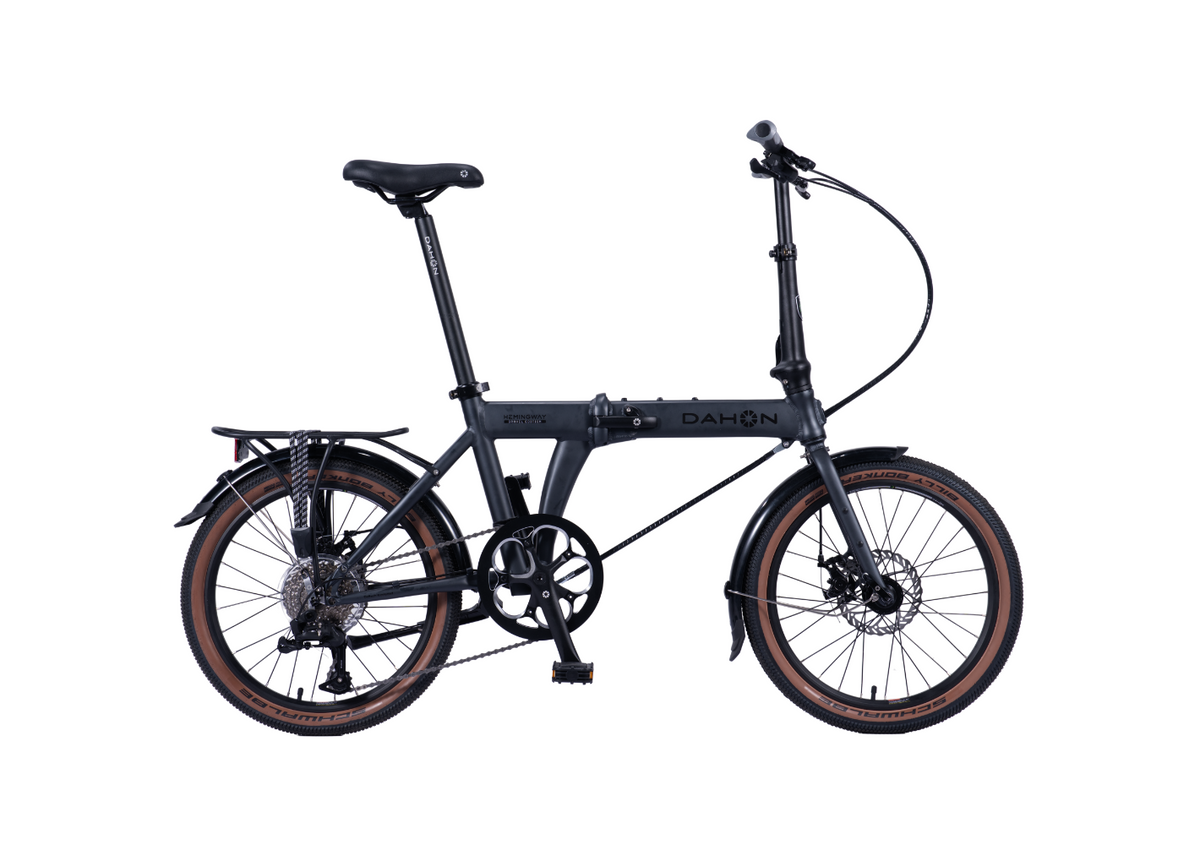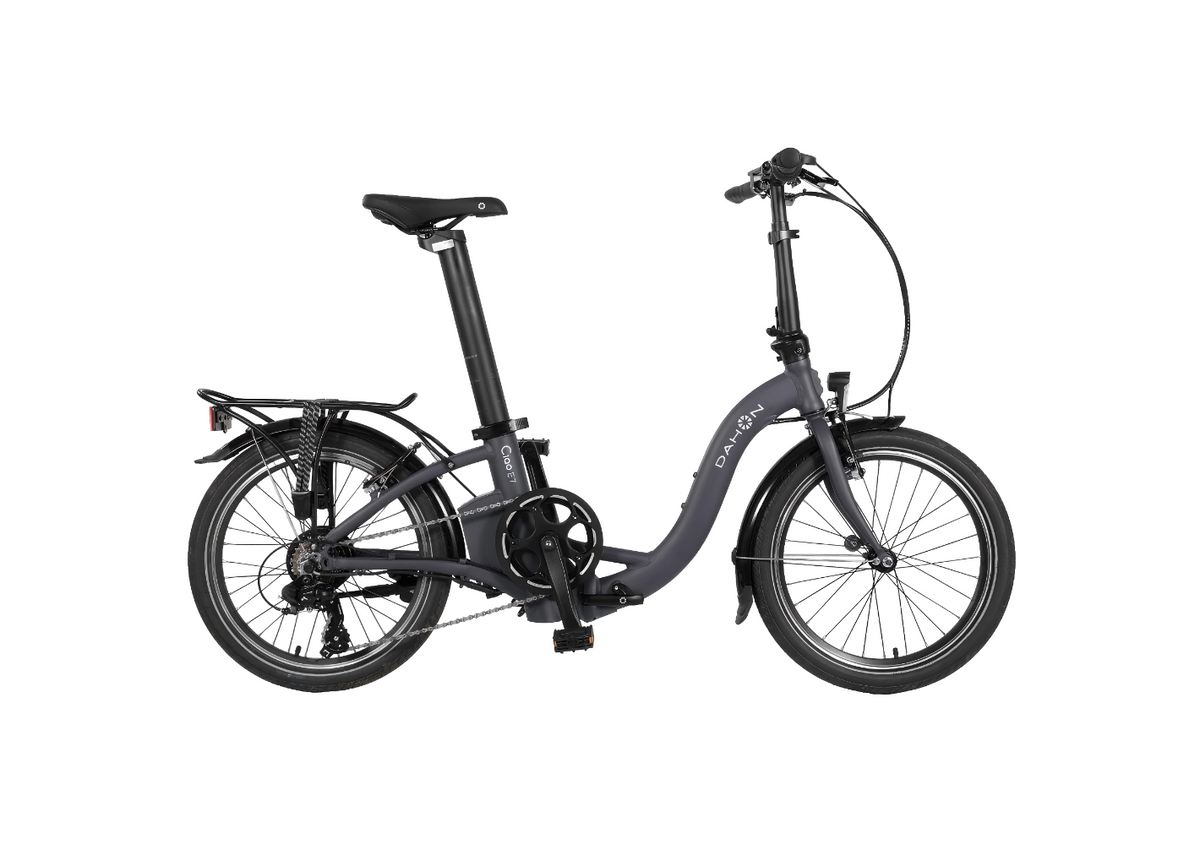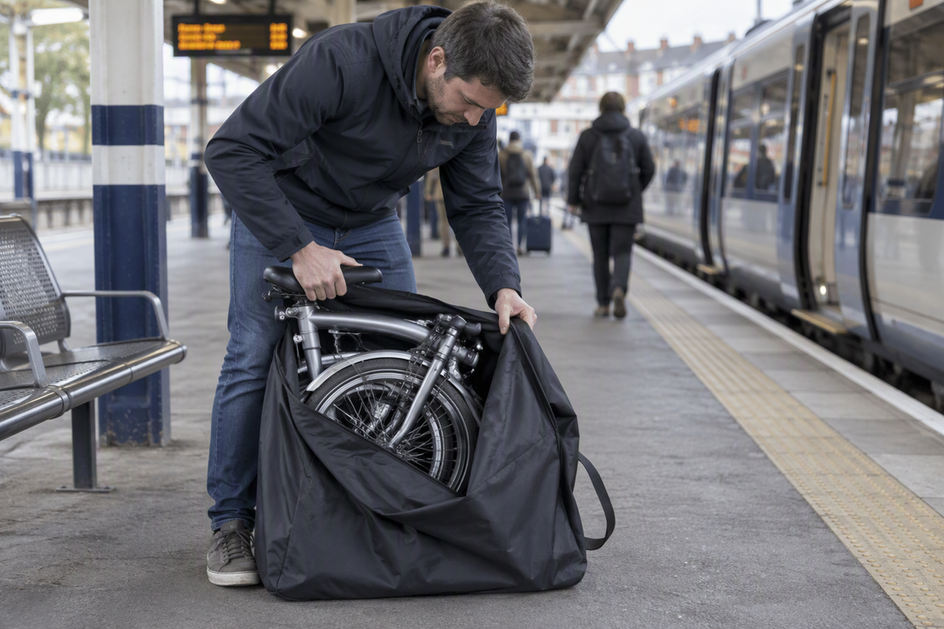
A carry bag is worth taking when part of your day trip means carrying or stowing the folded bike as luggage, or bringing it into a shared space where keeping it in one neat package helps. If you ride the bike unfolded from start to finish and have no folded stop planned, the bag has little to do and becomes one more thing to pack.

So the real question is what happens to the bike during this outing, not whether it can fold. Below, you can map your route, weigh the bag against the extra item, and confirm fit and any operator rules before you leave.
Is a carry bag worth taking on your day trip?
Take it when the folded bike has a clear job as luggage. Leave it at home when the bike stays unfolded and nothing on the plan calls for containment.
The yes case looks like this. You fold the bike to board a train, carry it through a station, store it on a rack, or bring it into a café, museum cloakroom or friend's flat. In those moments a folding bike carry bag can keep the bike in one package. It can also help keep a chain or wet tyres away from seats, floors and other people's luggage. How well it does that depends on the exact bag, so treat it as help with handling, not a guarantee against dirt or damage.
The no case is just as clear. Say you ride from your front door, loop around a lake, stop at an outdoor café with the bike parked beside you, and ride home. The bike never gets folded, so a bag would only travel along unused.
Most trips fall in between, and that is where the counterweight matters. A bag you use for one short train leg still has to ride with you for the rest of the day. Ask yourself whether that one folded moment is awkward, messy or crowded enough to justify carrying the bag for all the other hours. If the answer is yes, pack it. If the folded part is brief, easy, and in an open space, you can usually manage without it.
Where will you fold and handle the bike?
Trace the day from departure to return, and mark every point where the bike stops being ridden. Those are the main places where a carry bag is likely to prove useful.
- Write down the route in legs. Split it into riding legs and non-riding legs, such as "ride to station", "train", "ride the river path", "lunch indoors", "train home".
- Mark each fold. Note where you will fold the bike and where you will unfold it again. Two train legs usually mean at least two folds.
- Note what happens while it is folded. Will you carry it up stairs, roll it through a crowded hall, stow it on a luggage rack, or take it into a building? Write the specific action next to each fold.
- Flag shared spaces. Mark any spot where the folded bike sits close to other people, their clothes or their bags. That is where containment can matter most.
- Decide if the bag has a job. Look at your list. If one or more folded moments would be easier or cleaner with the bike in a bag, the bag is worth packing. If you expect no folded sections and have no realistic public-transport fallback, you can probably leave it behind.

Here is an illustrative example. A rider takes a regional train 40 km out of town, rides a 25 km loop, eats lunch at a busy indoor restaurant and takes the train back. That plan has two train legs and one indoor stop, so three folded moments. That gives the bag a real job. The same rider doing only the 25 km loop from home would mark zero folds.
If trains are part of your route, our guide to train storage for folding bikes explains how folded size and storage space affect the trip. For routes with changes, our article on planning folding-bike transfers (in German) covers time buffers and the walk between platforms.
What should you confirm before setting out?
Confirm two things: that your exact bag fits your exact bike, and what the operator or venue on your route actually allows. Each check changes what you do next.
- Bag-to-bike fit. Use current information for the specific bag and the specific bike model: the manufacturer's product details, the manual, or a hands-on demonstration in a shop. If dimensions are all you have, compare the bike's folded dimensions with the bag's usable interior dimensions, not its outer size. If the folded bike is larger than the inside of the bag, choose another bag or plan the trip without one. If you are still comparing options, you can start with our bike accessories range and then confirm fit for your model before you buy.
- Operator and venue conditions. Name every transport company, ferry, hotel or venue on your plan and look up its current rules for folded bikes. Rules are set by each operator or venue, so one company's policy does not apply to the others, or to other EU countries. For example, Deutsche Bahn's folded-bike hand-luggage guidance says folded bicycles can travel as free hand luggage on its trains, with no bicycle ticket or bicycle-space reservation. Deutsche Bahn's storage and clearance guidance also names luggage racks and multi-purpose areas as places to store folding bikes, and says aisles, doors and safety equipment such as fire extinguishers must stay clear. If your trip uses another operator, find that operator's own page and plan around what it says.
When both checks are done, your decision is set. A bag that fits and has a job on your route goes in the pack. A bag that does not fit, or has no job, stays at home.
FAQs
Is a bag worth it if I only fold the bike for a few minutes?
It can be, if those few minutes happen in a tight or crowded place, such as a busy train vestibule or an indoor shop. If the short fold happens outdoors with plenty of room, the bag usually adds more carrying than it saves. Weigh how awkward that single moment is against carrying the bag all day.
Do other rail operators in the EU follow the same rules as Deutsche Bahn?
You cannot assume they do. Deutsche Bahn's guidance covers Deutsche Bahn trains only. Practical conditions for folded bikes can vary between operators and services, subject to applicable national and EU rules. On a cross-border trip, look up the rules for every operator that runs a leg of your journey.
What if I am not sure whether I will need to fold the bike?
Think about your fallback plan. If bad weather or a tired legs moment could send you home by train or bus, you may end up folding the bike after all. If that backup is realistic and the bag packs into your normal luggage, taking it keeps your options open. If your only fallback is riding home, the bag is less useful.
Does the decision change for a multi-day trip?
Often, yes. Over several days you may fold the bike for trains, hotel rooms and shops many times, so a bag gets more chances to be useful. Our guide to planning a folding-bike holiday in Germany (in German) covers how to combine stages, trains and luggage for longer trips.