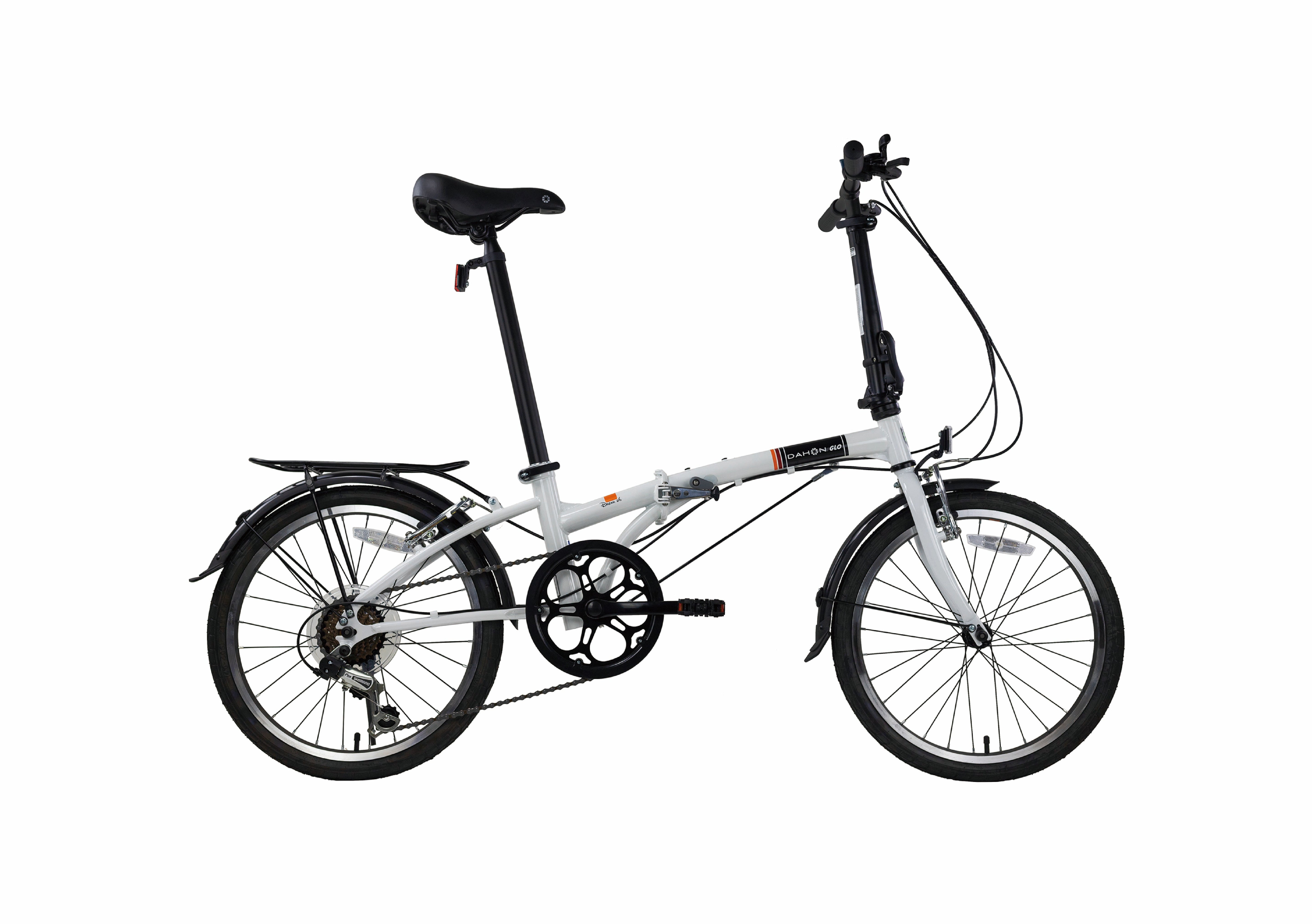
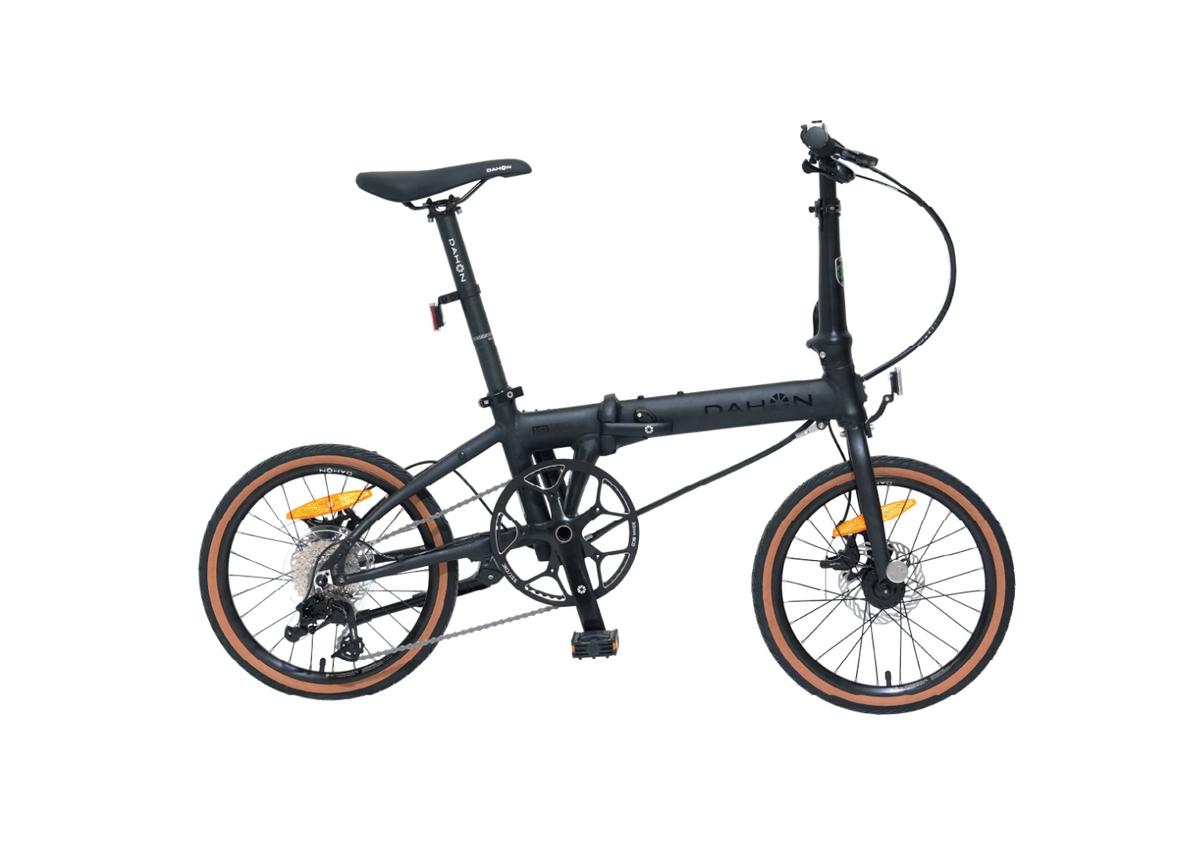
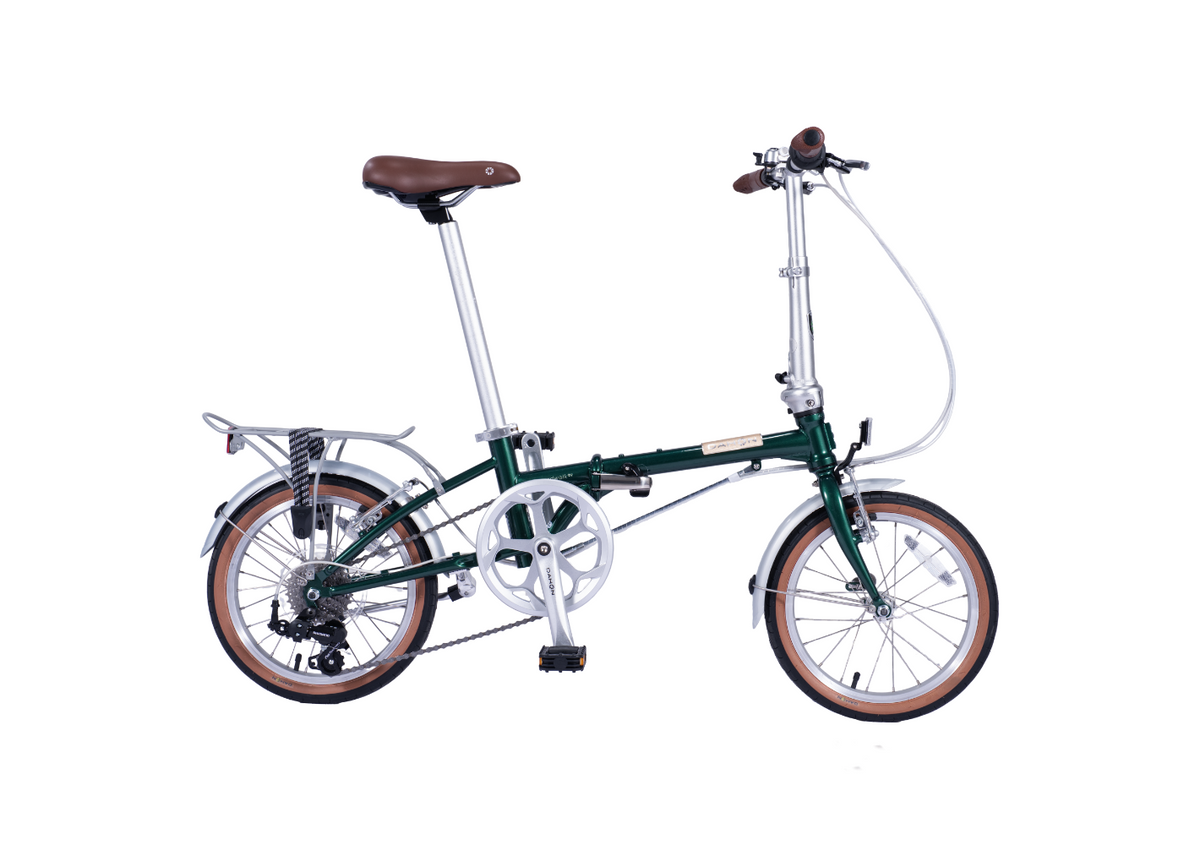
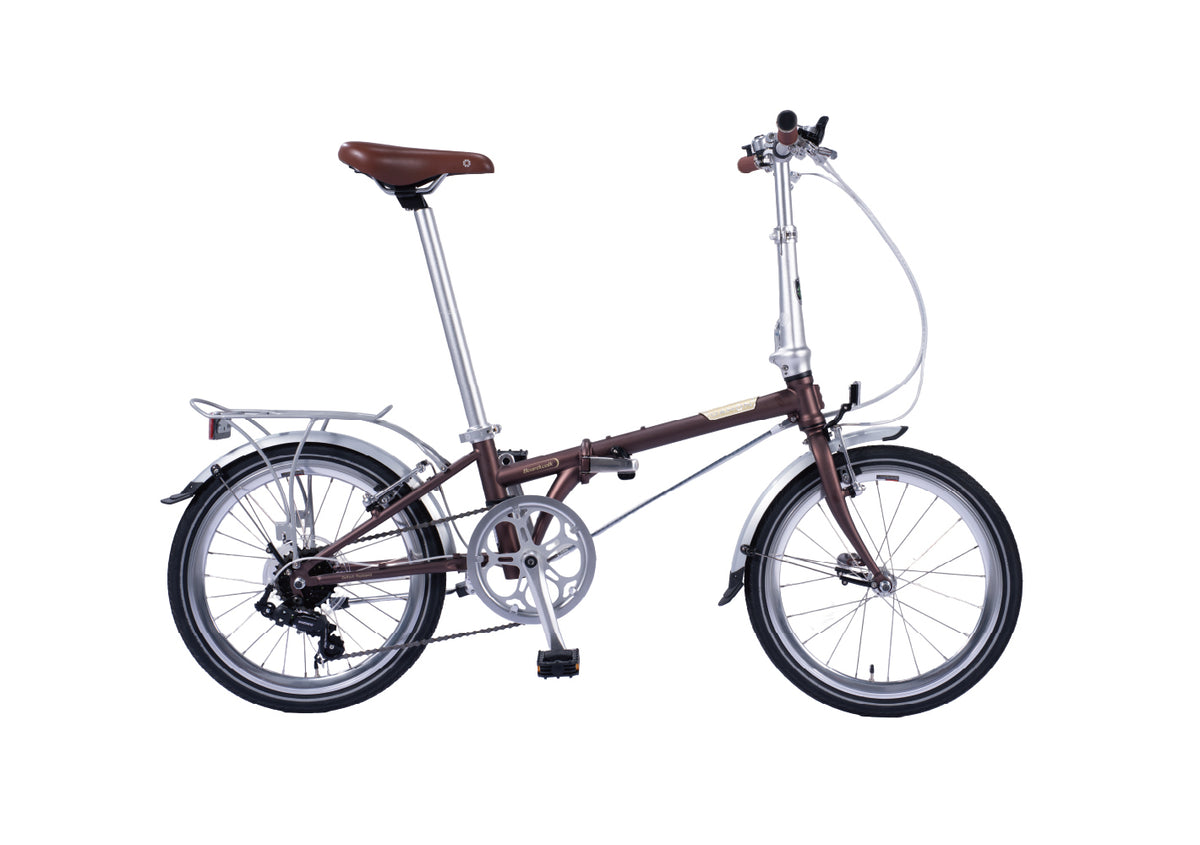
If the chain jumps off or jams when you fold your folding bike, stop the folding process immediately and first assess the position of the chain instead of pushing further.
Possible causes include contact during the folding process, an existing shifting or tension problem, a damaged or worn drive component, or blocking dirt. An unfavorable crank or pedal position can also hinder the folding path, but is not automatically the cause of the chain jumping off.
Which direction applies depends on the timing and the visible signs, which we will narrow down practically below.
If the chain jumps off when folding: stop first
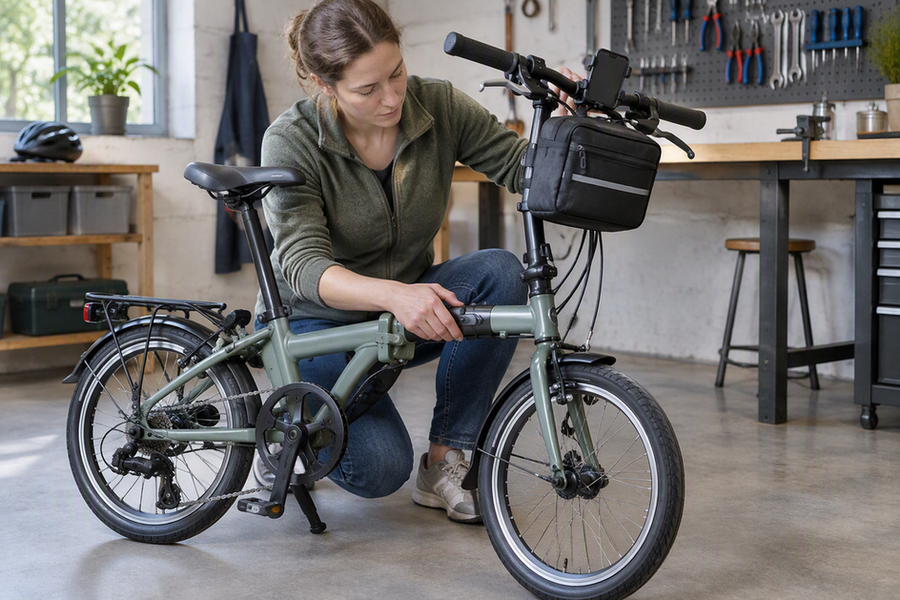
The first action is a controlled stop, not forcing the chain back on quickly. Set your folding bike down securely, interrupt the folding movement, and look only at the visible position of the chain and derailleur as well as any obstructions on the frame or folding mechanism.
If the chain is jammed, parts look visibly damaged, or you cannot clearly assess the chain position, you should stop the folding process at this point and not force it. The DAHON owner's manual classifies problems with shifting, among other things, as a possible mechanical misadjustment and recommends only carrying out adjustment or maintenance work if you know how to perform them properly; otherwise, you should not force the folding process when the chain is jammed and involve your specialist dealer.
In practical terms, this means:
- Secure the bike and stop the folding movement.
- View the chain, sprocket area, and folding path only from the outside.
- Do not continue pushing if it is jammed or the position is unclear.
- If you are unsure, pause the check at this point instead of trying to continue.
Before folding: prepare the chain and folding path
A crank and pedal position prepared according to the model can prevent components from obstructing the folding path. Whether this is also relevant for a chain jumping off depends on the design and the specific cause. Therefore, follow the folding instructions for your model and consider repeated jumping off as a possible indication of an additional drive or adjustment problem. The exact procedure is model-dependent and should therefore follow the instructions for your specific DAHON folding bike, not a general rule of thumb.
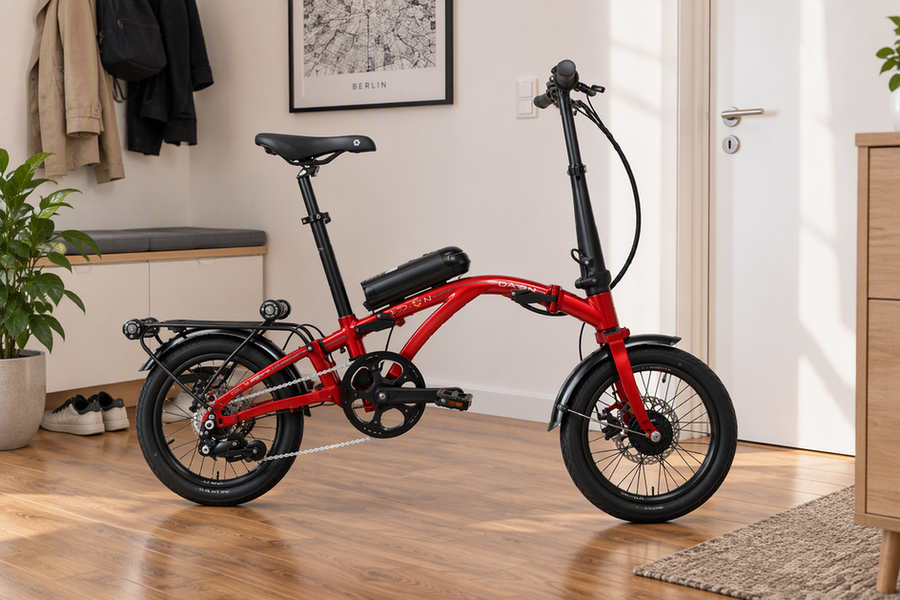
Depending on the model, DAHON uses different folding mechanisms, such as ViseGrip, V-Clamp, or the LockJaw hinge, and describes a neutral position, a specific crank or pedal position, and a marking on a telescopic handlebar post as an example of a possible procedure. These details show what a model-dependent folding position can look like, but they do not automatically apply to every folding bike. Therefore, check the manual for your model beforehand before adopting a pedal or handlebar position mentioned there.

Before actually folding, it is worth taking a quick look at three points: Is the bike in the starting position specified in the instructions, is the chain lying free and without contact with frame parts, and are the brake or shift cables not pinched or twisted? Anyone who understands their model's folding mechanism in peace can master the folding mechanism correctly and experience resistance during folding significantly less often. A diagram for correct chain alignment during folding is only useful for the specific model in question and should be created based on the accompanying manual, not as a generally valid drawing.
Narrow down the cause based on the observed scenario
The time at which the chain jumps off is a useful hint for the next check, but not a finished diagnosis. The following four scenarios organize troubleshooting without automatically presenting one cause as the most likely.
Jumping off during the folding movement
If the chain only jumps off during the actual folding, look first at the chain line, the folding position, and possible contact with frame or folding parts. If you feel resistance, stop the movement immediately instead of continuing to fold against the resistance.
Jumping when pedaling or shifting
If the error also occurs independently of folding, for example during normal riding or shifting, this points more towards a shifting function or a possible mechanical misadjustment. Consider this a check direction for the specialist dealer and do not fix it yourself with general, non-model-tested adjustment values.
Contamination or visible damage
Check easily accessible areas of the chain for blocking dirt, an unusual position, or visible abnormalities such as deformation. From this visual inspection alone, chain elongation or sprocket wear cannot yet be determined; a more precise check is necessary for this.
Repeated jumping off
If the chain jumps off repeatedly despite careful preparation, this is a signal for a more extensive drive or adjustment check, not just for readjustment by trial and error. Note the model, time, gear engaged, and visible findings for the next check.
Visual inspection and cleaning without adjustment work
Without special tools, you can perform a limited visual inspection: observe the chain line, watch for visible damage, recognize foreign objects or dirt. As long as the bike can be supported securely, observe whether the chain runs smoothly when you turn the crank slowly. Do not reach into the area of the chain, chainring, or sprockets. However, this check does not replace derailleur or drive adjustment.
- Chain line: Does the chain run smoothly over the sprocket and chainring without bouncing?
- Visible damage: Are deformations, cracks, or conspicuous links recognizable?
- Foreign objects or dirt: Is visible dirt blocking the chain guide?
- Free chain run: Observe only when the bike is securely parked and your fingers are at a sufficient distance to see if the chain runs smoothly over the chainring and sprocket when the crank is turned slowly. If the bike cannot be positioned safely for this, a specialist workshop should carry out the check.
Clean the chain and sprockets according to the specifications of the respective component manufacturer with a suitable cleaning agent. Then dry and lubricate the chain according to the product instructions; excess lubricant should be wiped off the outside.
With such findings or if an adjustment does not clearly succeed, a specialist workshop should check the cause more precisely. For everyday use, it is also worth looking at a suitable chain guard to keep trouser legs clean, which reduces dirt when commuting from the start.
When a bicycle workshop is the better option
Involve a specialist workshop or the responsible DAHON service if the chain jumps off repeatedly, there are visibly damaged parts, or the chain guide remains permanently unclear. This is especially true if you are missing the specific model manual or an adjustment does not clearly succeed after the visual inspection.
For the inquiry, precise details about the model, the time of jumping off, the gear engaged, visible findings, and repeatability are helpful. You should only perform adjustment or maintenance work yourself with the appropriate instructions, suitable knowledge, and the right tools; otherwise, it is sensible to leave adjustment work to the specialist dealer. If you are unsure whether a part still meets the standard or needs to be replaced, our article on spare parts and workshop procedure will support you in the classification.

If one of these points applies to your folding bike, let's arrange the next safe step together: Note your observations and contact your specialist workshop or our customer service directly to have the derailleur and drive checked without consequential damage.
Frequently asked questions
Does a specific pedal position apply to every DAHON folding bike?
No. A pedal position or handlebar post marking mentioned in the manufacturer's post is an example for a specific folding mechanism and cannot be automatically transferred to every DAHON model. Therefore, check the instructions for your own model beforehand before adopting such a position.
What information should I provide to the bicycle workshop after a chain jump?
Helpful information includes the exact model, the time the chain jumped off, the gear engaged at that moment, visible abnormalities on the chain or sprocket, and whether the error repeats. With this information, the workshop can narrow down the cause more specifically instead of starting from scratch.
Can cleaning replace an incorrect derailleur adjustment?
No. You can remove visible dirt yourself as part of the intended care. Use a cleaning agent suitable for the components installed and then lubricate the chain according to the manufacturer's instructions. However, an unclear chain guide or repeated jumping off cannot be reliably fixed by cleaning alone.