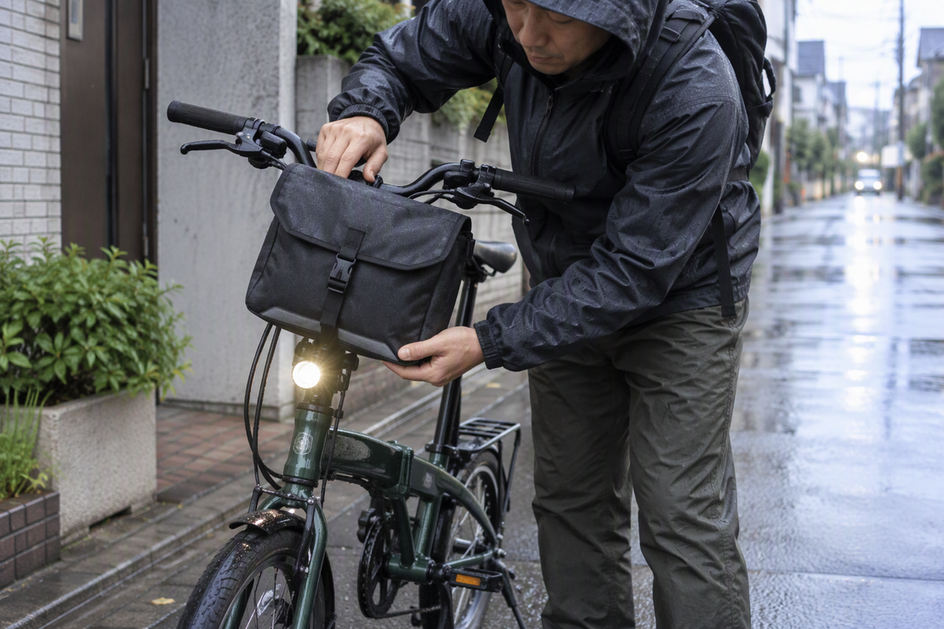
On a rainy folding-bike commute, protect your visibility first: make sure your lights work and that nothing covers them. Next, put work items and electronics in luggage that is properly waterproof. After that, plan simple care for the bike once you arrive, mainly cleaning and chain lubrication.

This order works for a short shower and for a long, wet ride. What changes is how much care the bike needs afterwards. For parts such as folding joints and electrical components, the manual for your exact model is the best guide.

What needs protection first on a rainy folding-bike commute?
Treat this as a practical order of checks, not a technical ranking. Each step protects something different, so skipping one cannot be made up by doing another twice.
- Your visibility, before you leave. Rain makes you harder to see, and Austria's transport ministry lists rain and early dusk among the causes of poor visibility. Working, unblocked lights come before anything else.
- Rain-sensitive cargo, while you pack. A soaked notebook or a wet laptop can spoil your working day. Cycling UK's waterproof-bag guidance is simple: make sure the bags you carry are properly waterproof.
- The bike, after you arrive. Plan time for cleaning and chain care. A very wet ride calls for more than a damp one, but no fixed number of minutes marks the line, so judge by how hard it rained.
Keep lights visible and usable
Your lights only help if they are switched on and nothing blocks them. Run these checks after you have loaded the bike, not before.
- Switch on early. Austria's transport ministry on rain and visibility points out that good lights are not enough. You also have to switch them on when dusk begins.
- Look at each light with everything fitted. Put on your bag, rain cover or cape, then walk to the front and rear of the bike. Cycling UK's rain-cover visibility advice warns that a cape should not obscure your bike lights. If any light is partly hidden, reposition or remove the item before you ride.
- Check front luggage separately. A bag on the front of the bike can sit close to the headlight. Our guide to front luggage visibility tests shows how to compare loaded and unloaded setups.
- Leave more room to stop. Austria's warning about rain and wet leaves says they can turn roads into slides and greatly increase braking distance.
Required lighting and reflectors are not the same in every member state. The Commission's note on national supplementary rules names Germany and the Netherlands as countries with extra mandatory visibility equipment. Confirm the rules for the country where you actually ride.
Protect rain-sensitive work items and electronics
The safest choice for laptops, phones, chargers and paper documents is luggage that is genuinely waterproof. Cycling UK's advice for carried items is to make sure the bags are properly waterproof, and that standard fits anything that cannot dry out on a radiator.
In practice, choose luggage that the manufacturer explicitly rates or designates as waterproof for carrying electronics. If you rely on a standard commuter pack or rain cover, add a sealed waterproof liner inside. Close every opening and roll-top fully before setting off, because an unsealed closure compromises wet-weather protection.
Use the same standard whether rain is forecast for ten minutes or for the whole trip. A short shower is still enough to soak an open pocket or a thin backpack. Packing your vulnerable items the same way every time also means you do not have to guess the weather correctly.
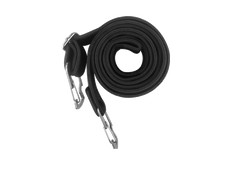
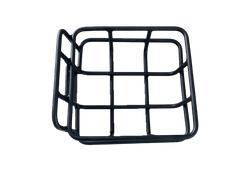
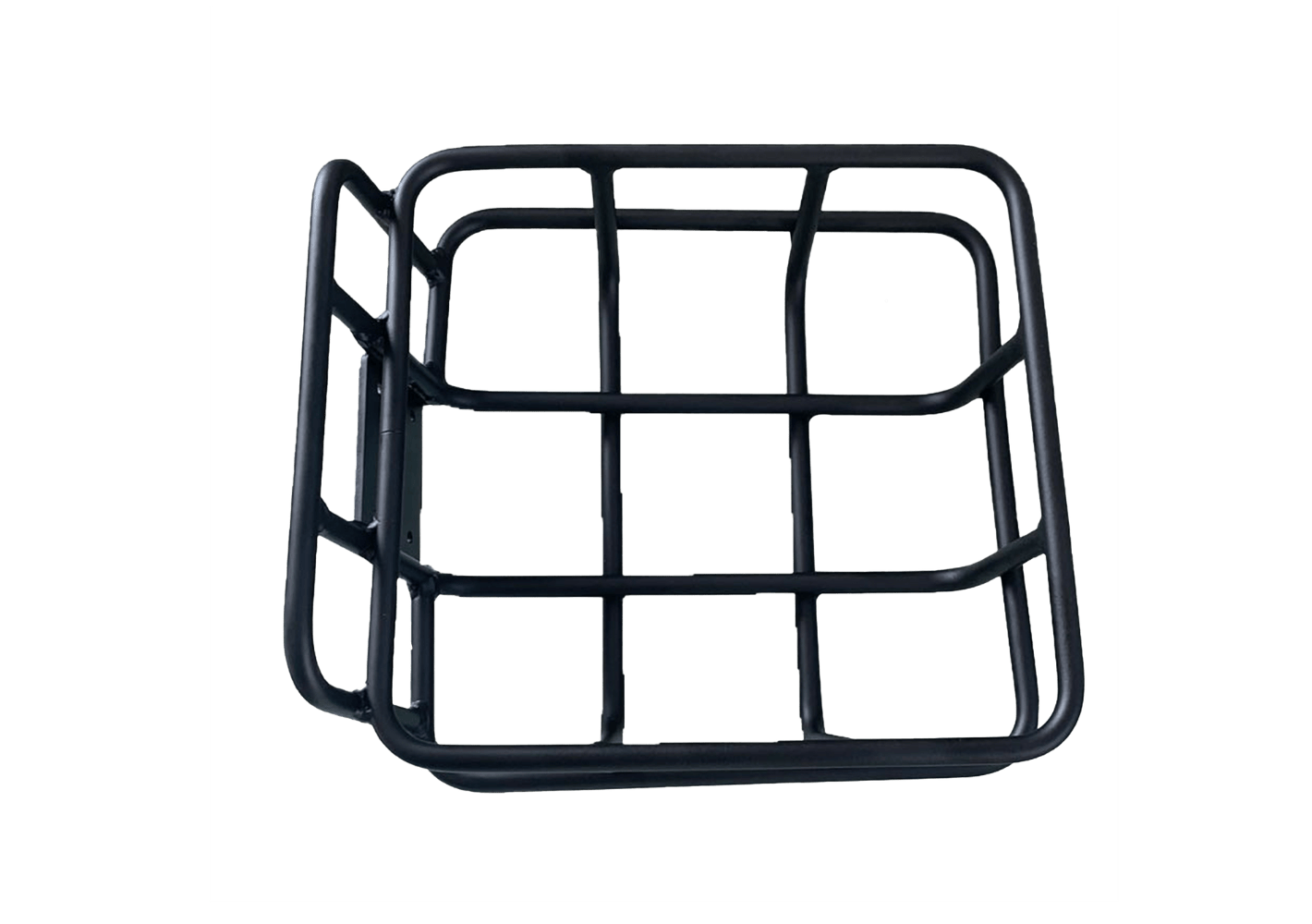
Your bag also has to suit the bike and the fold. If you fold the bike for a train or an office lift, the bag should come off quickly or stay out of the way. Our guide to commuter accessory combinations helps you choose between a backpack, a bag or a basket with the fold in mind. You can then compare racks and other accessory storage options that match the setup you plan.
Care for the bike after wet use
Post-ride care helps clear road dirt and protect the drivetrain after wet riding. General cycling advice covers cleaning and the chain, while your model manual covers everything else.
General care after a wet ride
- Clean the bike regularly. Cycling UK's general wet-ride cleaning advice recommends cleaning your bike properly and regularly when you ride in wet, dirty conditions.
- Use a wet-weather chain lube. The same guide suggests a wet lube for wintry conditions when you lubricate the chain.
- Oil the chain after very heavy rain. Cycling UK's commuting A-Z advises oiling the chain after any ride in very heavy rain. The guide gives no time limit, so use your own judgement of how heavy the rain was.
For more on drying, folding joints, the drivetrain and brakes, read our guide to folding-bike rain care.
Use the exact model manual for component-specific care
The manual for your exact model is the right source for water-exposure limits, electrical parts, folding joints and storage. General cycling tips cover the chain and frame cleaning. They do not say how long a particular bike can stay wet, or how to store it outdoors for hours.
That matters for how your day ends. You may fold the bike and take it indoors, carry it onto a train or leave it locked outside. The cleaning and chain steps above apply in every case. For anything beyond them, follow the manual for your model. On an e-bike, follow it before you clean the motor, battery or display. Our guide on cleaning folding joints and electrics explains which areas need extra care.
Before your next wet commute, load the bike and check every light from the front and rear. Close your waterproof bag, and keep your model manual close by for the after-ride steps.
FAQs
How often should I oil the chain when it is not raining heavily?
Cycling UK's commuting guide gives rough intervals: about once a month in summer and perhaps once a week in winter. Very heavy rain is an extra reason to oil it, on top of these intervals. If your model manual gives its own schedule, follow that.
Where are wet roads most slippery for cyclists?
Austria's transport ministry advises taking care on bends, road markings and tramlines when roads are wet. Slow down before these spots and avoid braking hard or steering sharply while you cross them.
How can I keep spare clothes dry on the way to work?
Cycling UK suggests wrapping clothing in plastic bags to help keep it dry. This works well inside a backpack or pannier that is not fully waterproof. Keep electronics in properly waterproof luggage anyway, because a plastic bag is a simple extra layer, not a seal.
Which lights does a bicycle need under the Vienna Convention?
The European Commission summarises it like this: a cycle should be able to show a white or yellow light at the front and a red light at the rear, and carry a red reflector at the rear. Some countries add more mandatory visibility equipment. Treat this as a baseline, not a full checklist for every member state.