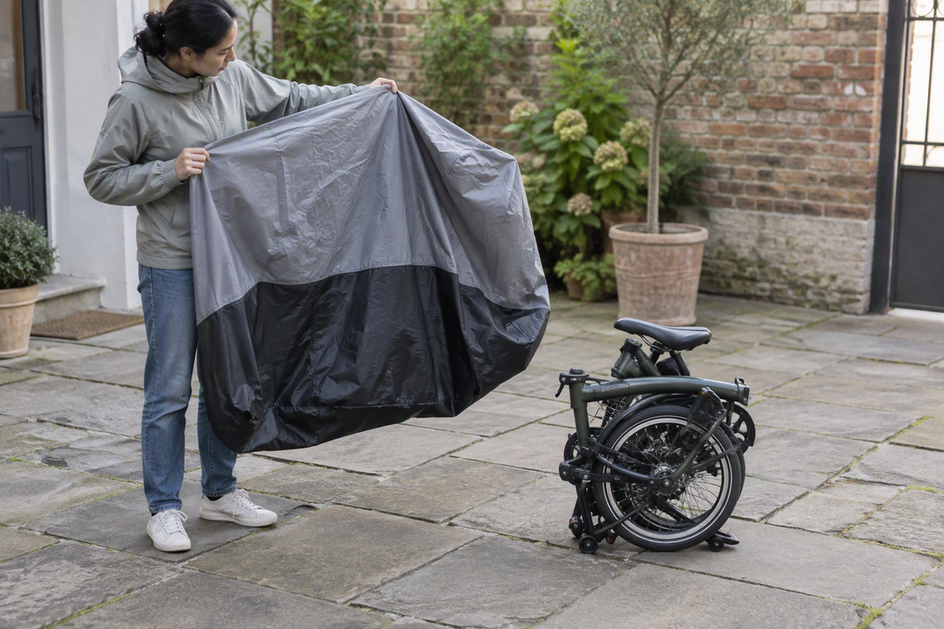
Start with where your folded bike will actually stand and how exposed that spot is. Then choose a folding bike rain cover whose stated protection and intended use match that spot, not one that simply says "rain cover" on the label. Check that its stated dimensions and fastening work around the bike in its folded form.
One more point decides the purchase. You need a simple way to take the cover off and let the bike dry after a wet ride. If a cover meets all of these points, put it on your shortlist.
Match the Cover to Its Storage Setting
Your storage spot sets the bar, so describe it before you compare any covers. BikeRadar's guidance on cover protection by storage setting suggests looking for high levels of waterproofing when a bike is exposed to the elements, and says less protection is needed indoors or in a shed. Use this distinction as a practical buying reference for comparing stated coverage.

Before you open a product page, note these three things:
- Exposed storage: the bike stands outdoors, for example on an open balcony, in a courtyard or at an outdoor stand. Here, look for a cover whose maker states protection and intended use for outdoor weather.
- Sheltered or indoor storage: the bike stays in a hallway, a shed or under a roof. A cover with a lighter stated protection level may suit this setting.
- Damp or dry when covered: decide whether you will sometimes cover the bike straight after riding in the rain. If so, the drying plan further down matters as much as the cover itself.
With this note in hand, compare each cover's stated protection and intended use with your actual setting. If the bike lives inside, storing a folding bike at home also raises points such as floor space and folded size.
Read the Cover's Material, Protection and Fastening Details
The maker's statement about intended use and protection tells you more than the material name alone. Record the fabric and any coating, but use them as background information rather than proof of how well the cover keeps rain out.
Construction details are worth reading next to the protection claim. In BikeRadar's examples of a PU coating and taped seams, one listed cover has those features described as helping to make it watertight, while another cover made of polyester is described as "water resistant". These descriptions illustrate specific products rather than a general fabric ranking. For the cover you are considering, check the manufacturer's stated use and compare it with your storage note.
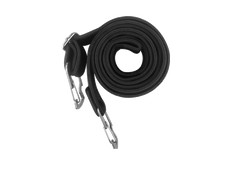
Fastening is the second detail to read closely. BikeRadar lists adjustable cords as a feature to consider when assessing a bike cover. A cord, hem or buckle only helps if it can close around your bike's folded shape, so picture where it would sit once the bike is folded.
If the listing leaves intended use, protection or fastening unclear, ask the cover's manufacturer directly for current product specifications.
Check Fit Around the Folded Bike
Fit is judged against the bike as you store it, folded, not against its unfolded size or wheel-size label. BikeRadar's general advice to check bike measurements before buying a cover applies here; using it on the folded bike is our practical adaptation, not a folding-bike test.
- Fold the bike exactly as you will store it. Include the saddle and handlebar positions you will actually use.
- Measure the maximum outer length, width and height. Include parts that stick out, such as pedals, handlebar ends or a rack, because they change how the cover sits.
- Find out what the cover's listed dimensions describe. Check whether they refer to usable interior space or outer size. If the units differ, convert first: 1 inch = 2.54 cm.
- Compare each bike measurement with the matching cover dimension. If any bike measurement is larger, the stated dimensions show a mismatch, so drop that cover. If all fit within them, treat this as a first screen only, because shape, openings and fastening can still prevent a workable fit.
- Picture the fastening on the folded shape. Check whether the cords or hem can close below the folded bike rather than across an awkward joint or protruding part.
- Ask for details if anything stays unclear. Request clearer dimensions or a demonstration from the cover maker instead of assuming fit.

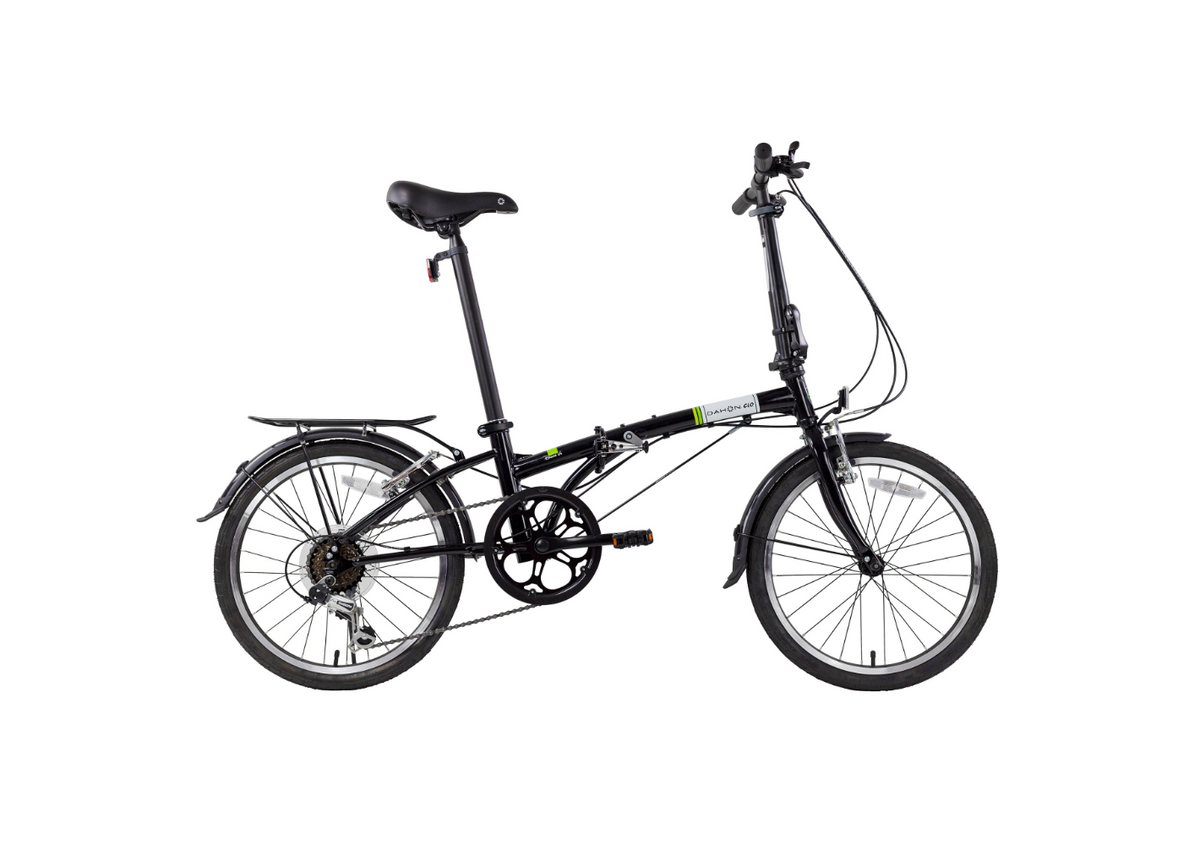
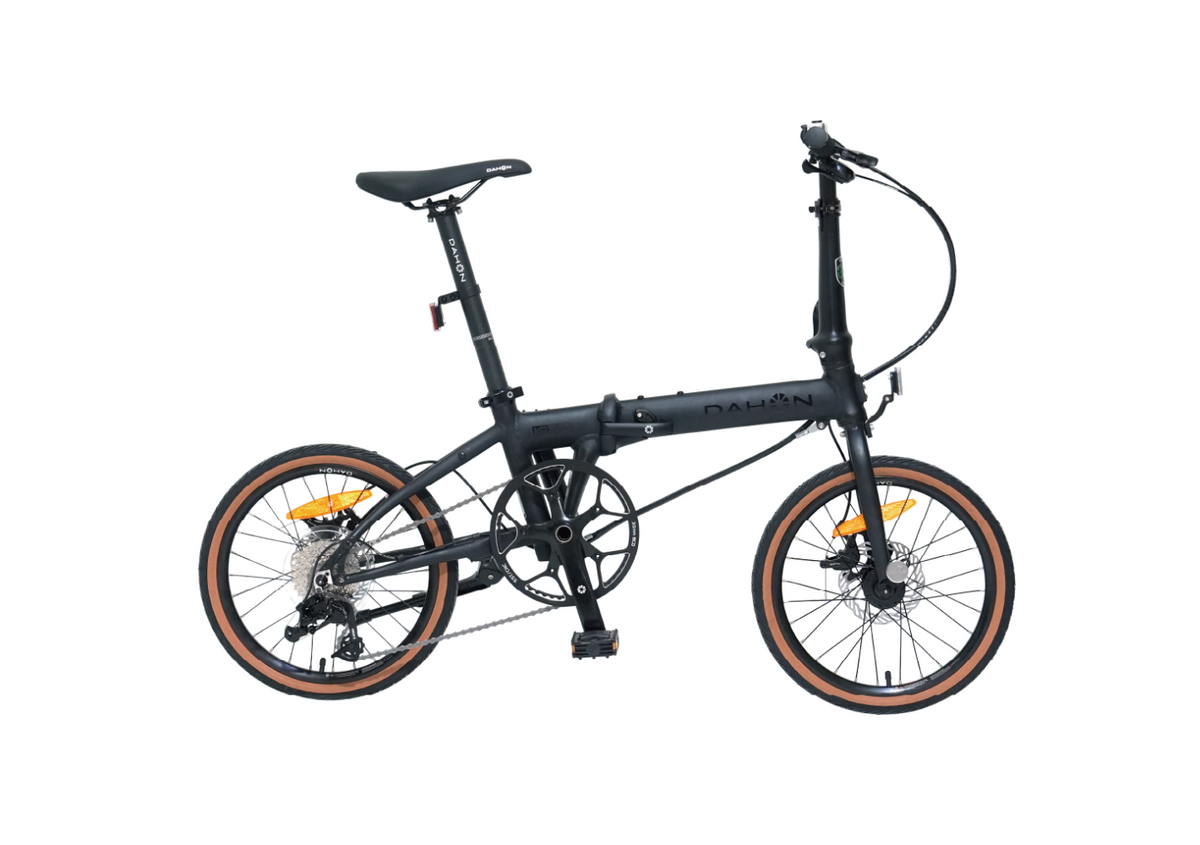
Folded size varies with wheel size and frame design, as our overview of folded bike dimensions by model shows, so rely on your own measurements. If you ride one of our bikes and are unsure about its storage fold, you can ask our support team or find a nearby dealer who can show you the fold in person.
Plan How You'll Uncover and Air the Bike
If you might cover the bike soon after a wet ride, plan when the cover comes off and where the bike can dry. Make access to the bike and a few minutes to uncover it part of your storage routine, not an afterthought.
The UK-based Walk Wheel Cycle Trust gives clean-and-dry advice after a wet ride: this practical guidance from a UK charity recommends putting a bike away clean and dry, ready for the next ride.
When you compare covers, BikeRadar names outlets for moisture as a feature to consider. Check any vent or breathability claims against the manufacturer's exact wording. In practice, a simple plan works best: wipe the bike down, leave it uncovered somewhere sheltered until it is dry, then cover it again. Our guide to folding bike care in rain covers cleaning, drying and the folding joints in more detail.
Use a Clear Shortlisting Rule
Shortlist a folding bike rain cover when three things align: its stated use suits your storage setting, its dimensions and fastening fit your measured folded bike, and you have a clear plan to uncover and dry the bike after rain.
If one of these points is unclear, turn it into a specific question for the manufacturer. For example, ask whether the dimensions are interior measurements, which weather the cover is designed for, or how the fastening closes. Keep the cover in a "clarify" group until you have an answer, and decide based on stated information, not on an assumed material performance or a generic size label.
FAQs
Can I use a standard bike cover on a folding bike?
Possibly, if its stated dimensions and fastening suit the bike in its folded form. The deciding factor is your measured folded length, width and height compared with the cover's usable size, not whether the product mentions folding bikes. A cover made for a full-size bike may also be much larger than the folded bike, so check how the fastening would close around a smaller shape.
Do "water-resistant" and "waterproof" mean the same thing on a cover listing?
Treat them as different manufacturer claims, not as standardised ratings. “Waterproof”, “watertight” and “water-resistant” are not directly comparable unless the manufacturers provide the test method, resistance value or specific weather conditions covered. Check the manufacturer’s stated test conditions and intended use to determine whether the claimed protection suits your storage location.
Do I need much protection if the bike is stored indoors?
BikeRadar's guidance suggests less protection is needed indoors or in a shed than for storage exposed to the elements. For a hallway or a covered shed, a cover with a lighter stated protection level may be enough, as long as its size and fastening suit the folded bike.