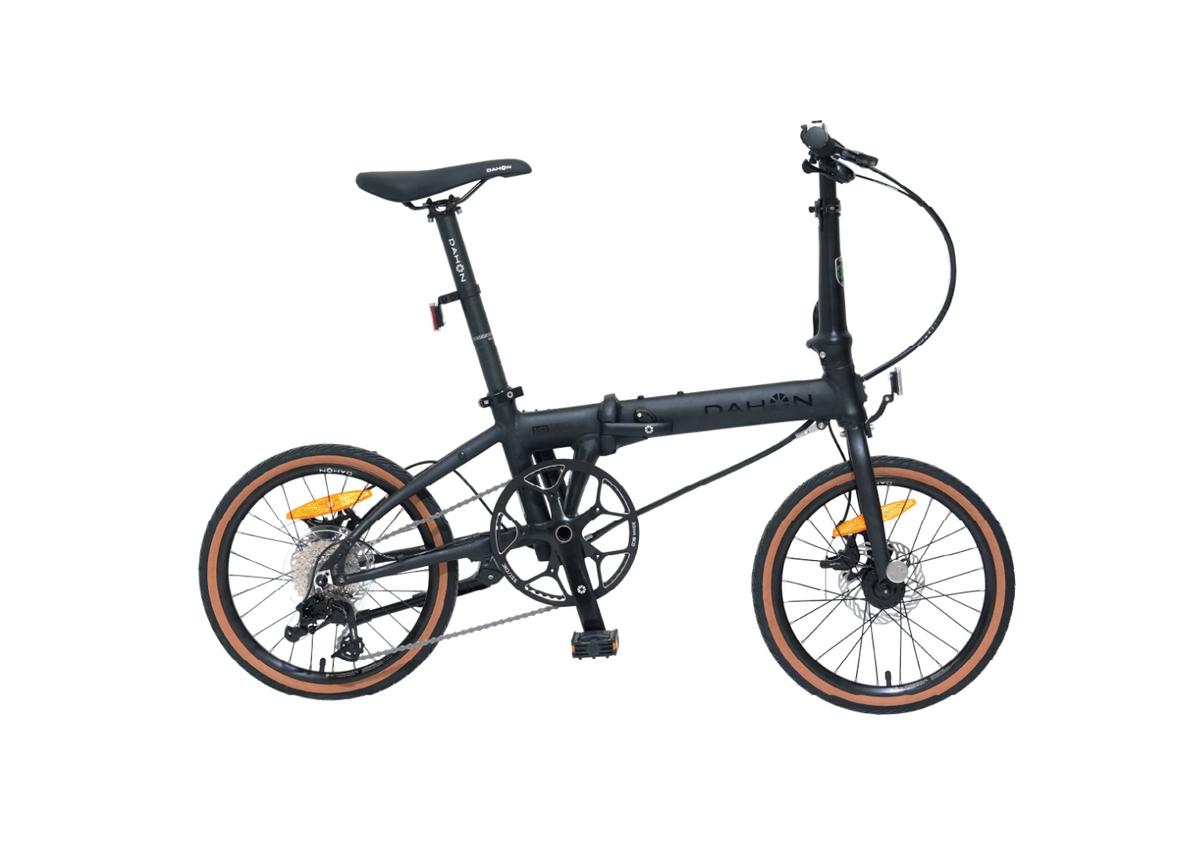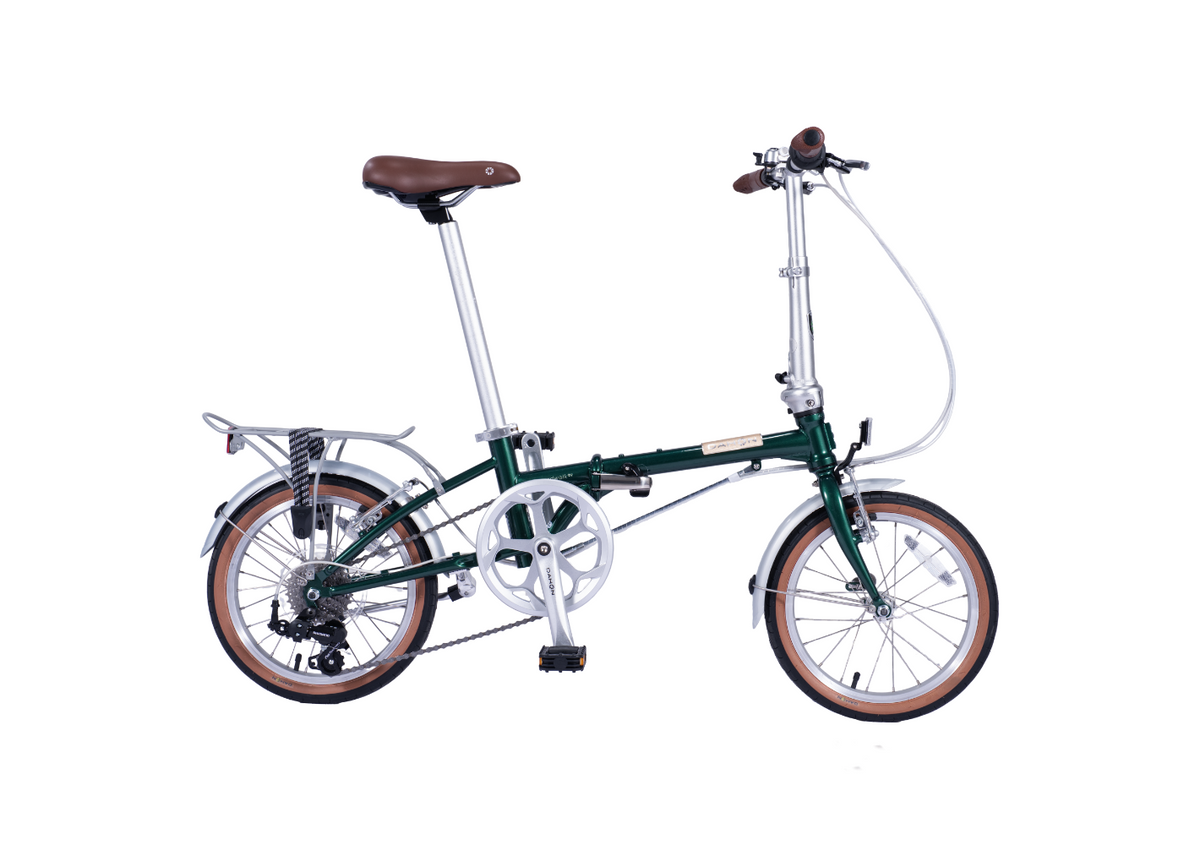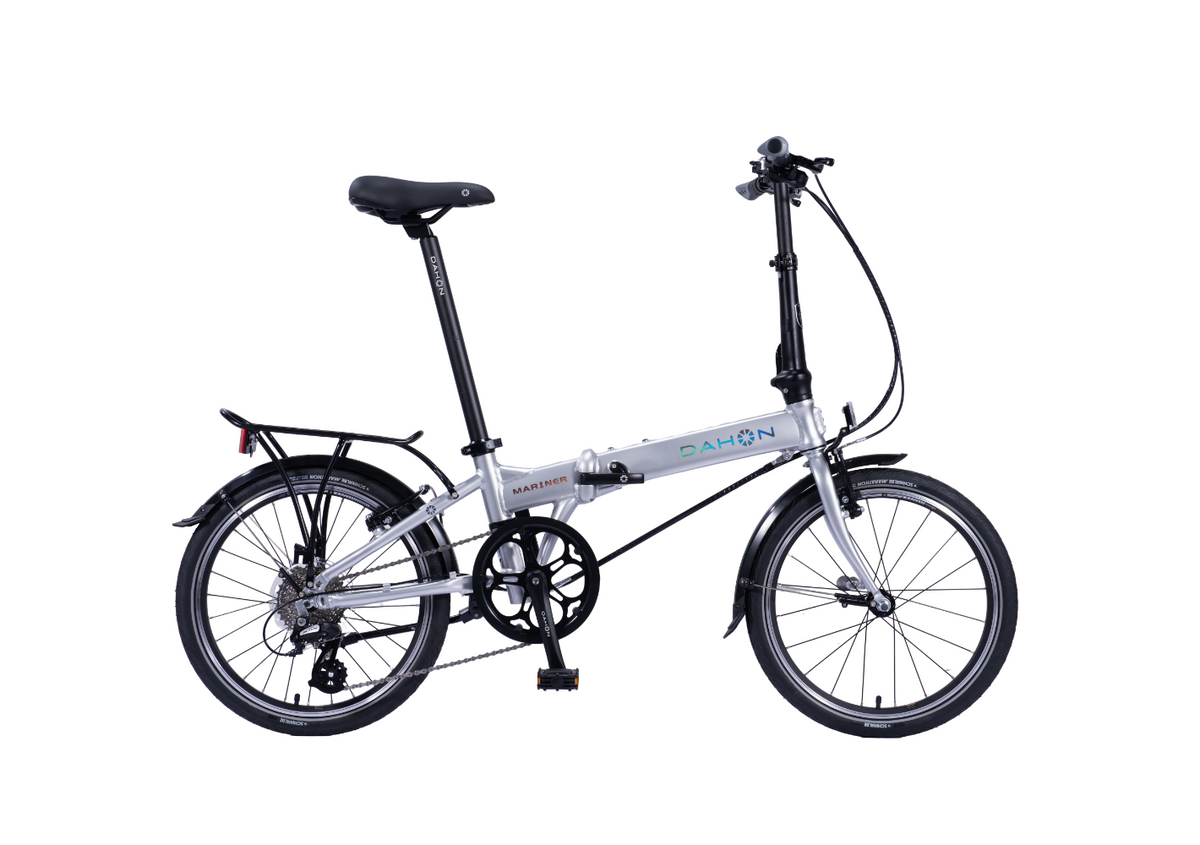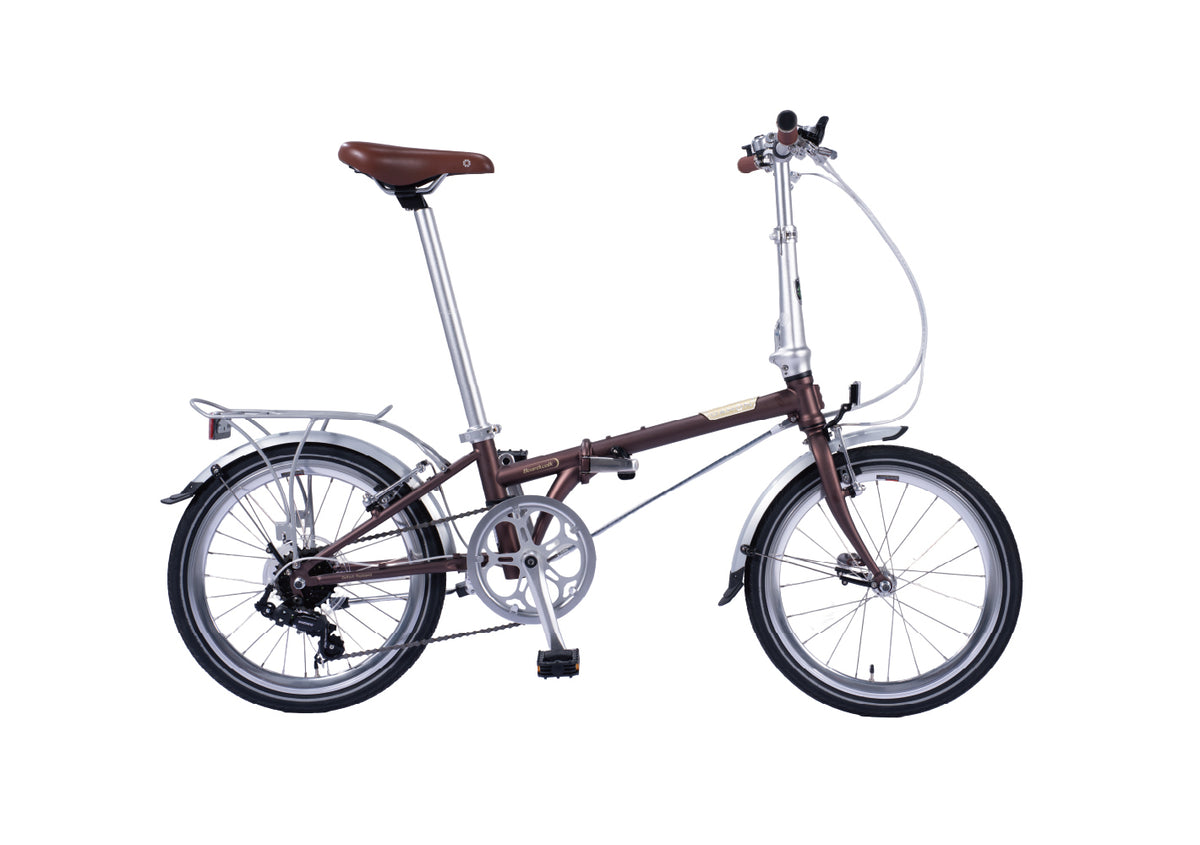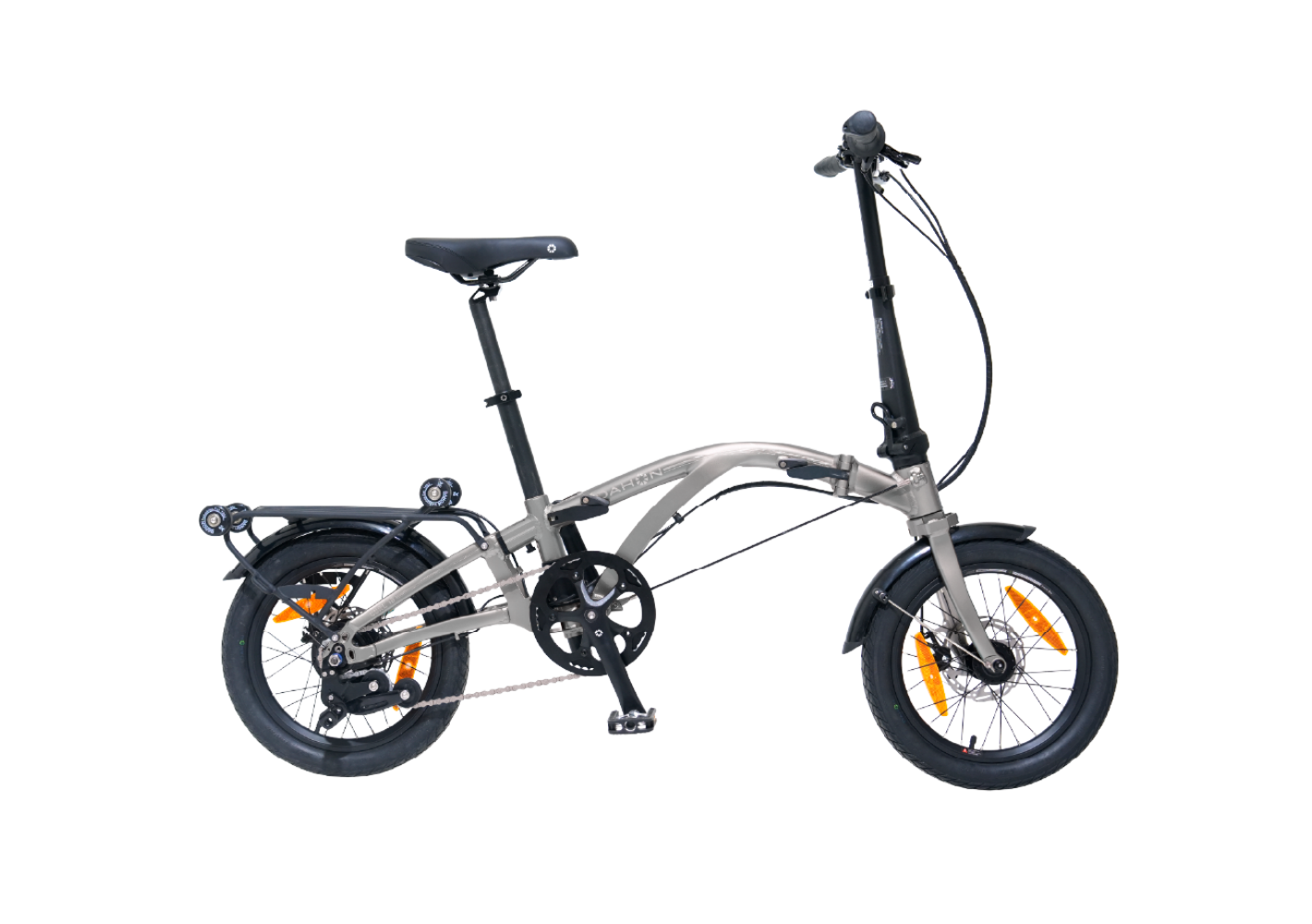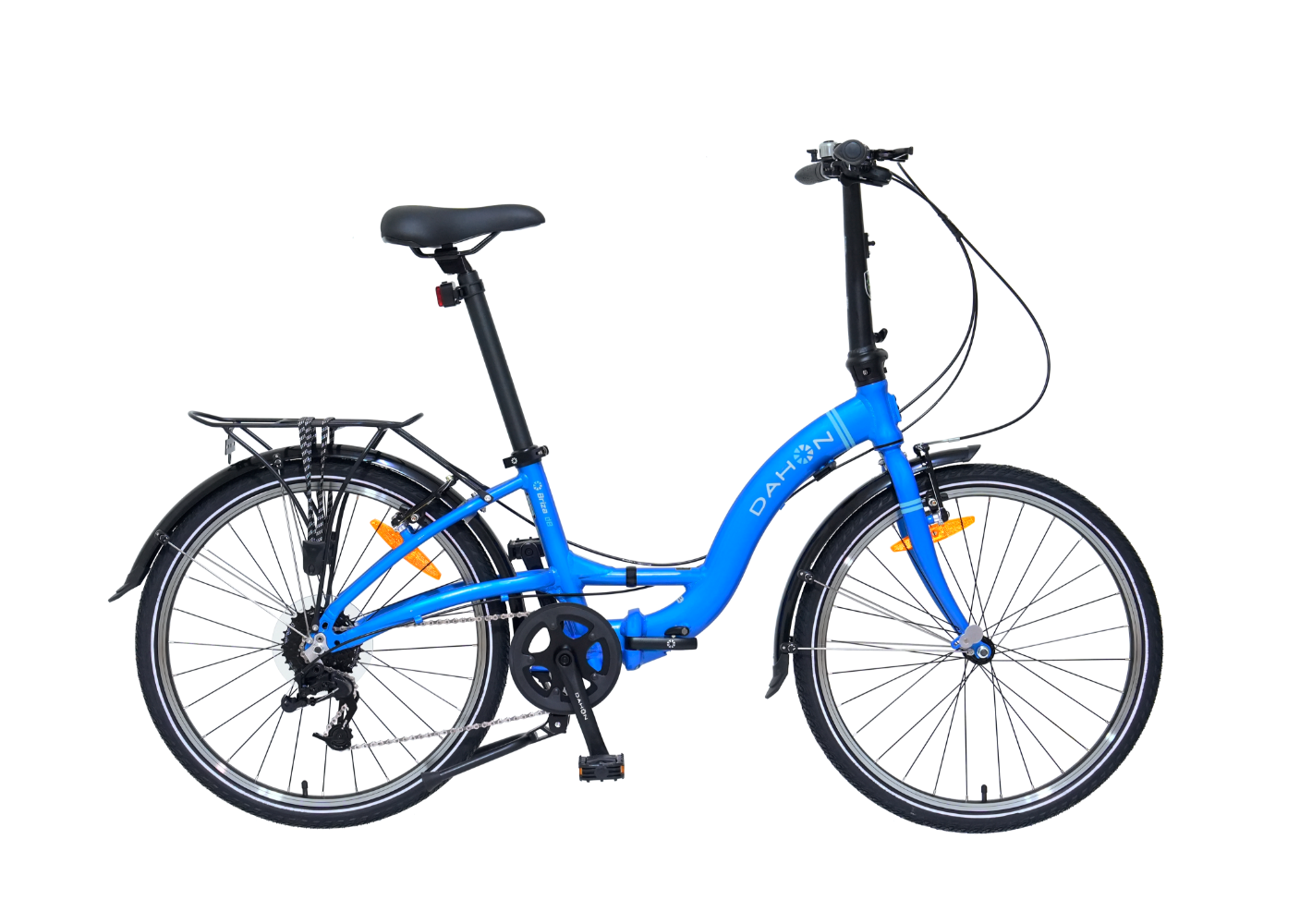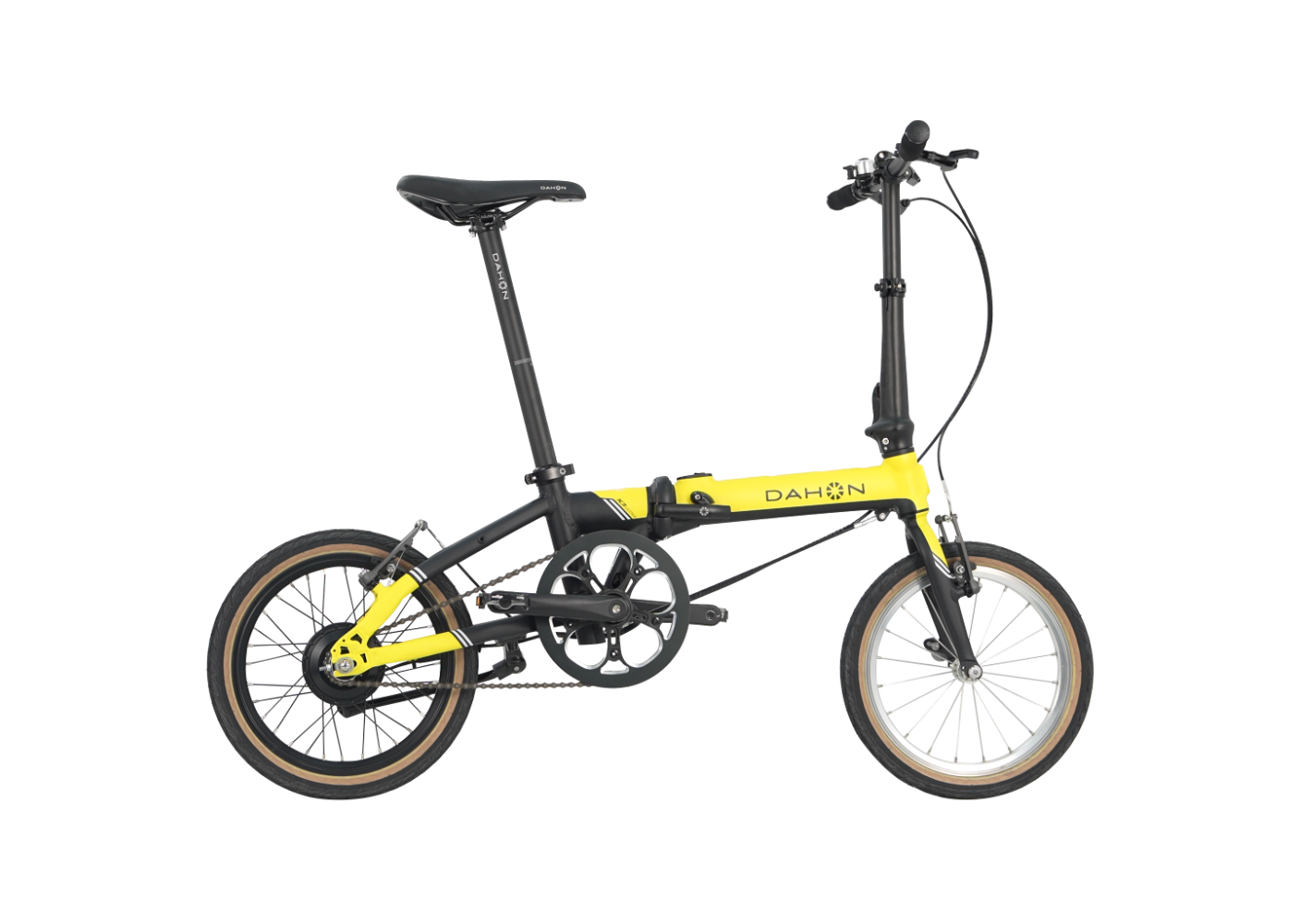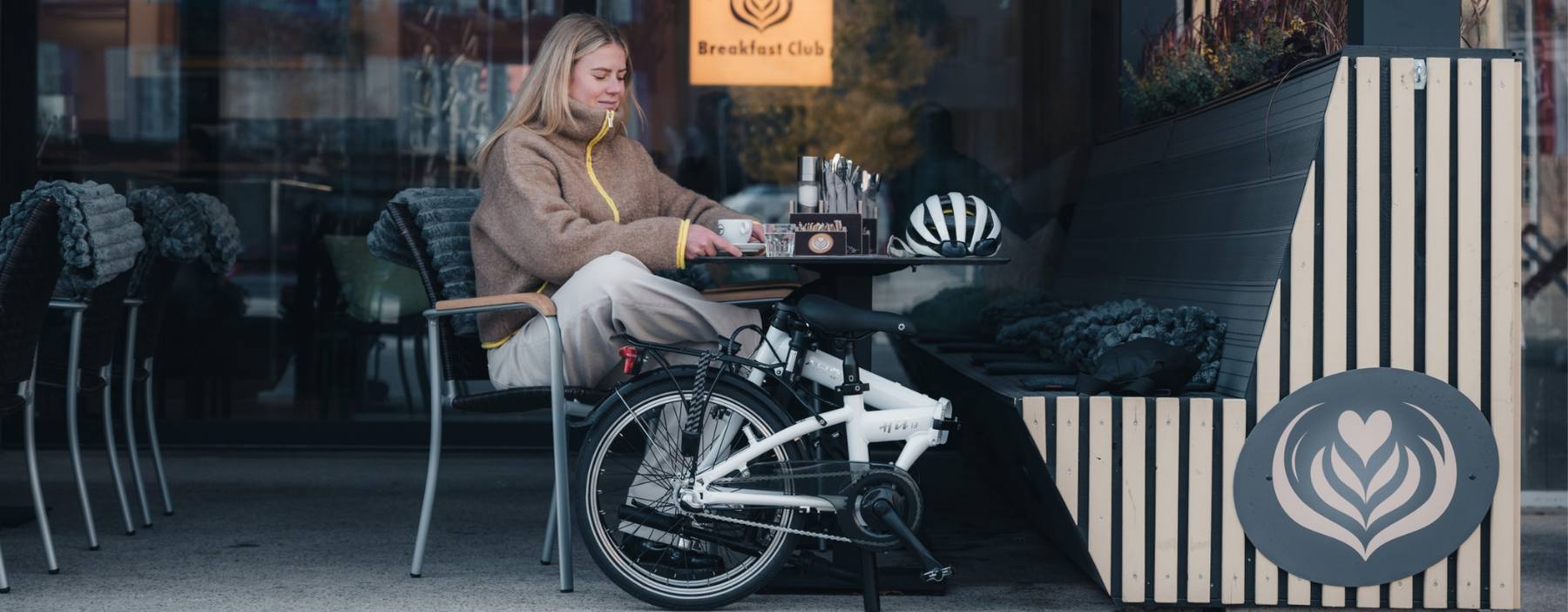
A folding bike only makes sense if it actually fits where you need it to go. That might be the overhead rack on an ICE train, the boot of a small hatchback, or a corner of your flat hallway. The folded dimensions decide all of that.
Quick Takeaways
| 16-Inch | 20-Inch | |
| Typical folded size | 60–80 × 30–40 × 60–70 cm | 65–90 × 30–40 × 70–85 cm |
| DB train | Free hand luggage, no ticket needed | Free hand luggage, no ticket needed |
| Car boot | Fits almost any car | Fits most mid-size and larger cars |
| Ride feel | More vibration, higher cadence | Smoother, more stable |
| Best for | Maximum portability, multi-modal | Longer commutes, mixed terrain |
A smaller wheel size does not automatically mean a smaller folded package. Frame design matters just as much.
How Small Does a Folding Bike Actually Fold?
These are the typical folded dimensions by wheel size across common production models.
16-inch folding bikes
- Length: 60–80 cm
- Width: 30–40 cm
- Height: 60–70 cm
- Smallest available: around 60 × 28 × 55 cm
20-inch folding bikes
- Length: 65–90 cm
- Width: 30–40 cm
- Height: 70–85 cm
- Largest common models: up to 85 × 35 × 85 cm
Within each wheel size, actual dimensions vary by 10–15 cm depending on frame hinge design, whether the handlebar post folds flat, and how the rear wheel sits against the frame when folded. The spec sheet number is the fully prepared minimum. If you skip any folding step, the bike will be larger than listed.

What Sets the Folded Size of a Bike?
Three factors determine the final folded package.
Wheel Diameter
This is the most straightforward factor. A 16-inch wheel has a diameter of about 41 cm. A 20-inch wheel has a diameter of about 51 cm. That 10 cm difference sets the minimum possible folded height because the bike cannot fold smaller than the wheel itself.
Frame Hinge Design and Geometry
This is where the real engineering difference shows. A precision-machined hinge allows the rear triangle to fold flush against the front triangle with almost no gap. A loose hinge leaves a gap of several centimetres, which adds directly to the folded width or length.
Two bikes with identical 20-inch wheels can produce folded packages that differ by 10–15 cm in one dimension, purely because of hinge placement and frame geometry. A hinge positioned lower on the frame closes the two halves more tightly. A hinge positioned higher creates more offset. This is why folded size is a result of deliberate engineering, not just wheel choice.
The shape of the folded package also changes with geometry. Some frames fold into a tall, narrow rectangle. Others fold into a longer, flatter shape. Both can have the same total volume but suit different storage situations.
Handlebar Stem and Seatpost
These two components add significant dimensions if left extended before folding.
- Seatpost: Left extended, it adds 20–30 cm to the folded height. Dropped to the minimum before folding, it disappears into the frame.
- Handlebar stem: Left in the riding position, the handlebar extends roughly 55–60 cm across. Rotated 90 degrees to align with the frame, it reduces to about 30–35 cm wide.
Does a 16-Inch Folding Bike Fold Smaller Than a 20-Inch?
Usually, but not always, and the gap is smaller than most people expect.
What the market data shows:
- Typical 16-inch folded volume: roughly 60–80 × 30–40 × 60–70 cm
- Typical 20-inch folded volume: roughly 65–90 × 30–40 × 70–85 cm
The overlap is real. A well-engineered 20-inch model can fold smaller than a poorly designed 16-inch one.
DAHON models as examples:
- Boardwalk D7 (16-inch): 77 × 30 × 63 cm
- Boardwalk D7 (20-inch): 63 × 30 × 77 cm
- HIT D6 (20-inch): 65 × 34 × 82 cm
- Dream D6 (20-inch): 81 × 33 × 66.5 cm
The 16-inch example folds shorter in length but taller in height compared to one of the 20-inch models. Both have a similar total volume, but the shape is different: the 16-inch package is more upright, while the 20-inch is more horizontal.
Why does this happen? With smaller wheels, the frame halves fold closer together vertically, reducing length. However, the frame tubes themselves still need to accommodate the rider's height, so the folded height does not shrink as much as the length does. With 20-inch wheels, the opposite pattern can occur: the longer wheelbase means more length when folded, but a frame optimised for a flatter fold can bring the height down.
The practical rule: Always check all three dimensions against your actual storage space. A bike that is 5 cm taller than your cupboard shelf does not fit, even if the total volume looks small on paper.
Will a Folded Bike Fit in Your Car Boot?
The key measurement for car boot fit is the opening height, not the total boot volume.
Compact Cars (e.g., VW Polo, Renault Clio)
- Boot opening height: typically 55–65 cm
- A 16-inch folded bike at 60–70 cm tall may need to be tilted or laid on its side.
- A 20-inch bike at 70–85 cm tall almost always needs to be laid flat.
- Both fit once horizontal; floor space is sufficient.
Mid-Size Cars (e.g., VW Golf, Ford Focus)
- Boot opening height: typically 65–75 cm
- A 16-inch folded bike fits upright in most cases.
- A 20-inch bike at 77 cm tall fits upright in many vehicles; check your specific model.
- Two folded bikes side by side fit with the rear seats up.
Estate Cars and SUVs
- There is no practical limitation for either wheel size.
- Two-fold bikes plus luggage fit in most cases.
Width is rarely the limiting factor. A folded bike at 30–34 cm wide fits easily next to other luggage. Height is what catches people off guard. Measure your boot opening height before assuming a bike will stand upright.
A folding bike bag adds roughly 3–5 cm in each dimension but protects the car interior and keeps the chain away from upholstery. For regular car transport, a bag is worth using.
Can You Take a Folded Bike on a Train in Germany?
Deutsche Bahn allows folded bikes as free hand luggage on all trains, including ICE, IC, EC, and all regional services. No Fahrradkarte or seat reservation is required. The bike must be stored like luggage: in the overhead rack, in the luggage areas between carriages, or in the multi-purpose zones.
DB Rules at a Glance
| Train Type | Rule | Cost |
| ICE, IC, EC | Free as hand luggage, no reservation needed | €0 |
| RE, RB, S-Bahn | Free as hand luggage | €0 |
| DB-ÖBB to northern Italy | Allowed if max 90 × 60 × 40 cm | €0 |
Practical Advice for Train Travel
- A 16-inch folded bike fits in most overhead racks without difficulty.
- A 20-inch folded bike is better stored in the multi-purpose area or between carriages rather than the overhead rack.
- DB recommends using a folding bike bag (Fahrradtasche) or straps to prevent the bike from shifting during the journey.
- Multi-purpose areas fill up quickly on popular routes. Board early and secure your space.
Where to Store a Folded Bike at Home
Under a Desk or Table
- Standard desk clearance: 70–75 cm
- 16-inch folded bike height: 60–70 cm — fits under most desks.
- 20-inch folded bike height: 70–85 cm — does not fit under a standard desk.
In a Hallway
- Folded footprint: roughly 63–81 cm long × 30–34 cm wide.
- Standing against one wall in a standard German hallway (80–100 cm wide) leaves enough room to pass.
- Use a hook or wall bracket to keep it stable and off the floor.
In a Storage Cupboard
- Standard wardrobe depth: 60 cm — a 30 cm wide folded bike fits with room to spare.
- Limiting factor is height: check whether the bike's folded height clears any shelf above.
- A 20-inch bike at 82 cm may not fit in a 90 cm cupboard once the shelf thickness is counted.
In a Cellar (Keller)
- This is the most common storage solution in German apartment buildings.
- Folded floor footprint: roughly 0.06–0.08 m².
- Standard unfolded bike: roughly 0.30–0.40 m².
- A folded bike takes up roughly one-fifth of the floor space of an unfolded one.
Smaller Fold or Smoother Ride? The Trade-Off
| Factor | 16-Inch Wheel | 20-Inch Wheel |
| Folded size | Smaller (typically) | Larger |
| Ride stability | Less stable at speed | More stable |
| Road vibration | More noticeable | Smoother over bumps |
| Cadence required | Higher for the same speed | Lower |
| Best use case | Short city trips, multi-modal | Longer commutes, mixed terrain |
| Tyre availability | Limited, mostly specialist | Widely available |
The ride quality difference is most noticeable on roads with tram tracks, cobblestones, or potholes, which are common in many German city centres. On smooth tarmac under 10 km, the difference is minor.

How to Make Any Folding Bike Pack Smaller
The folded dimensions on the spec sheet assume the bike is fully prepared. Most riders skip one or two steps and carry more than necessary.
Step 1: Lower the Seatpost Fully
The seatpost adds 20–30 cm of height if left extended. Dropping it to the minimum takes 10 seconds and produces the single biggest reduction in folded height.
Step 2: Fold or Remove the Pedals
Folding pedals fold flat and add only 3–5 cm to the width. Non-folding pedals stick out 14–16 cm from the crank arm when folded. If your bike has folding pedals, fold them before measuring or carrying. If not, removing them with a pedal spanner takes about 2 minutes and reduces the folded width significantly.
Step 3: Rotate the Handlebars Parallel to the Frame
Most folding stems allow the handlebars to rotate 90 degrees so it sits alongside the top tube rather than crossing it. This reduces the overall width from roughly 55–60 cm to 30–35 cm.
Step 4: Use a Folding Bike Bag
A bag holds the bike in its most compact configuration, prevents parts from swinging open during movement, and keeps the chain away from seats and other surfaces. For train travel, a bag also makes the bike read clearly as luggage, which avoids any ambiguity on crowded platforms.
Fold It. Take It Anywhere.
Folded size determines where a bike can go with you — on the train, in the car, or in a flat with no room for a full-size rack. Get that number right, and the bike stops being an object you store and starts being something you actually use every day.
That shift is what folding bikes are built around. A lighter commute, fewer car trips, and a city that feels smaller and more connected. DAHON has been engineering that kind of freedom since 1975. Every model in the range ships with published folded dimensions, so you can check the fit before you buy. Find the right model for your route in the full DAHON range.
FAQs about Folding Bike Fold Size
Q1: What Is the Smallest Folding Bike Available?
The smallest production folding bikes use 14-inch or 16-inch wheels and fold to around 55–65 × 28–35 × 55–65 cm. Exact dimensions vary by model and manufacturer, so always check the folded spec sheet rather than estimating from wheel size alone.
Q2: How Small Does a 20-Inch Folding Bike Fold?
Most 20-inch folding bikes fold to roughly 65–90 cm long, 30–40 cm wide, and 70–85 cm tall. The actual number depends heavily on frame design. Well-engineered 20-inch models can fold smaller than many 16-inch bikes on the market. Always compare the three individual dimensions rather than assuming wheel size determines folded size.
Q3: Can a Folding Bike Fit in a Car Boot?
Yes, in most cars. A folded 16-inch bike fits in virtually any passenger car boot. A folded 20-inch bike fits in most mid-size and larger cars. The key measurement to check is the boot opening height, since a 20-inch bike standing at 75–85 cm may need to be laid down in smaller cars. Measure the boot opening height before assuming the bike will stand upright.
Q4: Does a Smaller Folded Size Mean a Worse Ride?
Not automatically, but there is a general pattern. Smaller wheels produce a smaller fold but also transmit more road vibration and require a higher cadence at the same speed. For short urban trips on smooth roads, the difference is minor. For longer commutes or routes with cobblestones and tram tracks, 20-inch wheels feel noticeably more stable. The right choice depends on the length and surface of your regular route.