On a bike accessory, a broad "water-resistant" phrase does not specify the exposure conditions covered. Without documented testing, an enclosure rating or stated use guidance, the label does not indicate how much rain, spray or riding time the item handles.

The useful information sits behind the label. Look for a named test, a rating or a clear intended-use statement for the exact product. Then compare those conditions with the rain you actually expect to ride in.
What "water-resistant" can—and cannot—tell you
A broad label does not identify which exposure conditions a bike accessory covers. A bag, a light and a phone mount can all carry similar wording, but the label alone leaves open whether the design is intended for light drizzle, sustained wet commuting or road spray without consulting the product's published specifications.
Because general labels leave the exact exposure open, a buying decision needs the product's documented conditions. One model may link the term to a specific test, while another uses it purely as a descriptive word. Evaluating rain protection requires checking the manufacturer's stated ratings or use guidance for that specific item.
The following sections show what these technical details look like in practice and how to compare them with your planned rides.
What an IP rating tells you—and where it applies
An IP code is a rating for electrical and electronic enclosures, so you will mainly see it on items such as lights, displays or other powered accessories. According to the IEC, the second numeral in an IP code rates the enclosure's protection against liquids on a scale from 0, meaning no protection, to 9, which covers high-pressure hot water from different angles. The first numeral covers solids such as dust.
The IEC points readers to IEC 60529 for the full description of each rating and its test conditions. This matters because each numeral stands for a defined test condition. It is not a general rain score, and it does not apply to bags, fabrics or other non-electrical accessories.
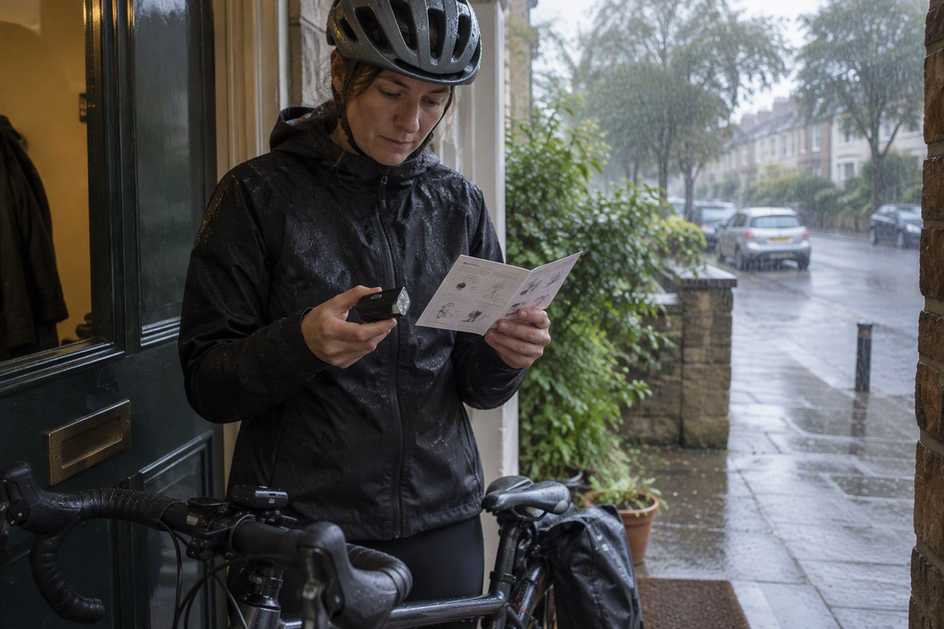
If an electrical accessory lists an IP code, note the complete IP code exactly as printed, including every numeral and any “X”, rather than recording only that the product is “IP-rated”. For example, in IPX4, the “X” means that no solids-protection rating is specified, while the second character gives the liquid-ingress rating. Then read what the manufacturer says about use conditions for that exact product. The code tells you which test condition the enclosure was rated against. The manufacturer's use guidance tells you whether the product is intended for the kind of riding you plan, including how it is mounted, charged or closed. You need both pieces before you decide that the accessory suits your wet-weather rides.
Match the product information to the rain you expect
Judging bike accessory water resistance works best as a short comparison: your planned exposure on one side, the product's documented protection on the other. Work through it in this order.

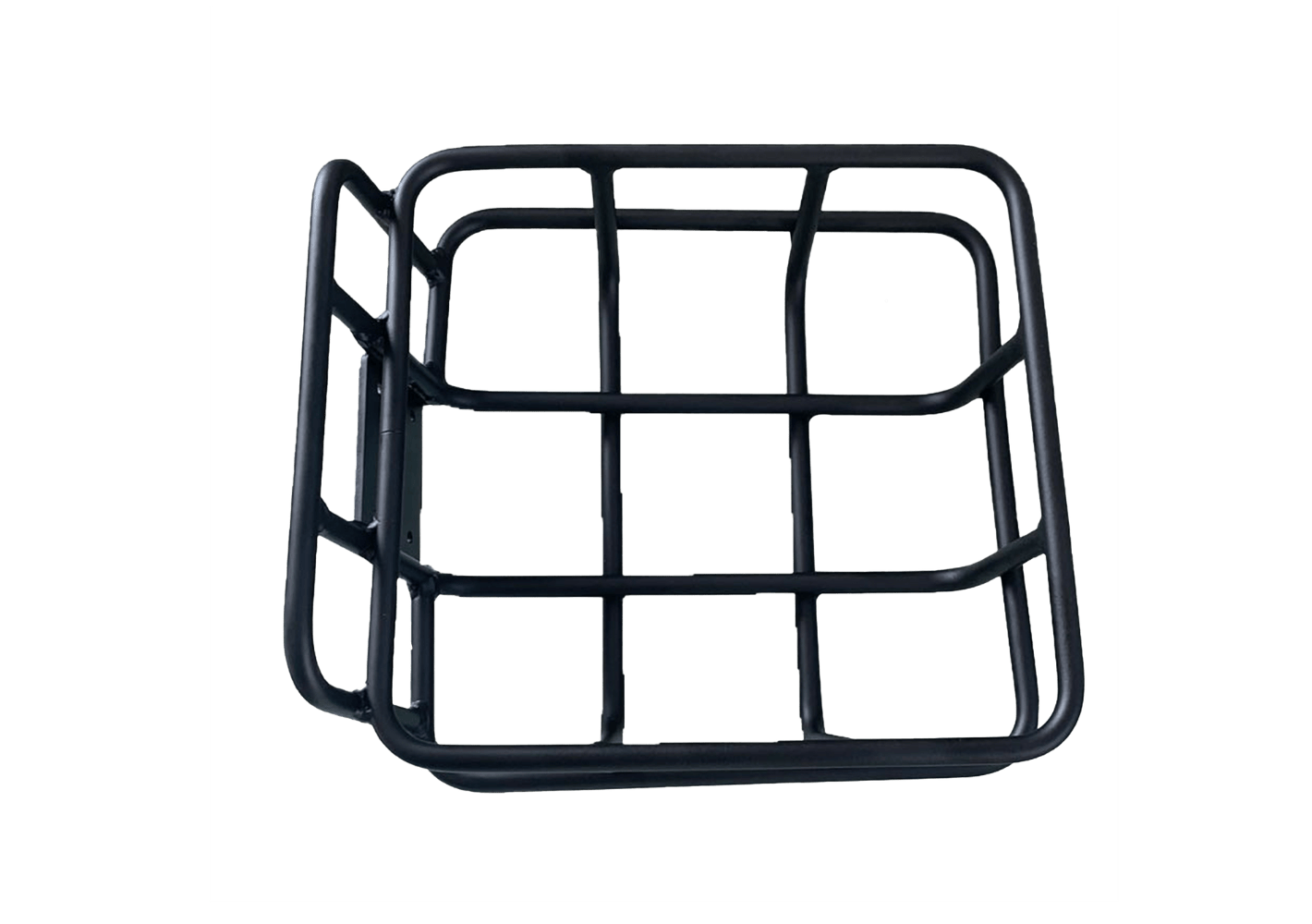
- Name the exact accessory. Use the model name or product number, not the category. Two saddle bags or two lights can come with very different documentation. If you are still deciding which type of carrier fits your bike, our guide to attaching luggage to a folding bike compares bags, baskets and racks before you look at weather details.
- Describe the rain you expect. Occasional light rain on a short trip is a different question from sustained rain on a long commute or direct spray from the wheels. Write down roughly how long and how often you expect to ride in it.
- Find the stated test, rating or intended use. Check the product page, packaging and manual. Look for a named test or rating, the conditions it lists, and any limits, such as closures that must be sealed or covers that must be fitted.
- Check what the test actually covers. Some tests apply to a material, not the finished product. ISO 811:2018 specifies a hydrostatic-pressure method for measuring how well a fabric resists water penetration, and it applies to fabrics intended to be water resistant, with or without a water-repellent finish. ISO 22958:2021 specifies a water-impact test for fabrics that can be used to predict probable rain-penetration resistance. Both describe fabric. Seams, zips, openings and the complete accessory need their own documentation.
- Compare and record the result. Place the outcome in one of three groups. The documentation addresses your planned exposure. It clearly does not cover it. Or it is too vague to decide.
The first outcome means you have a supported basis for the choice. The second means you should plan an alternative for that use, such as a different accessory or an extra cover that the documentation does support. The third means the decision is still open, which the next section deals with. Base comparisons entirely on the durations, pressures or ratings explicitly published in the product information.
When you compare several bike accessories for a wet commute, run the same check on each item. Our article on planning compatible commuter accessories helps you decide which items belong together before you compare their weather information.
When the product information is incomplete
If the product page and manual do not answer your exposure question, ask the manufacturer for confirmation about that exact accessory. Make the request specific so the answer is useful. Give the model name, describe the rain you expect, such as daily 30-minute rides in sustained rain, and ask whether the accessory is intended for that use and which conditions or limits apply.
When documentation is sparse, leave the suitability decision open rather than assuming higher protection. Confirm the exact details before riding in wet conditions. For accessories from our own range, you can contact our support team with the product name and your planned riding conditions, and we will help you match the available product information to your use.
FAQs
Does an IP code on a light also tell me about its mount or cable?
The code applies to the rated enclosure. Mounts, cables and charging ports may be covered or excluded depending on the manufacturer's description. Check the manual for how the product must be assembled and closed to match its stated rating.
Is a higher second IP numeral always the better choice for rain?
Not necessarily. Each numeral refers to a defined test condition described in IEC 60529, and the top of the scale describes high-pressure hot water. Choose based on whether the manufacturer's stated use conditions match your riding, not on the highest number alone.
Can a user review prove an accessory stays dry in rain?
A review describes one person's conditions, which may differ from yours. Use it to raise questions, then compare it with the manufacturer's stated test, rating or intended use for the same model.
Does riding in the rain change how I should care for accessories and my bike?
Yes, wet rides add cleaning and drying steps afterwards. Our guide to folding bike care in rain covers cleaning, drying, folding joints and the drivetrain after wet and salty conditions. For accessory-specific care, follow the product manual.