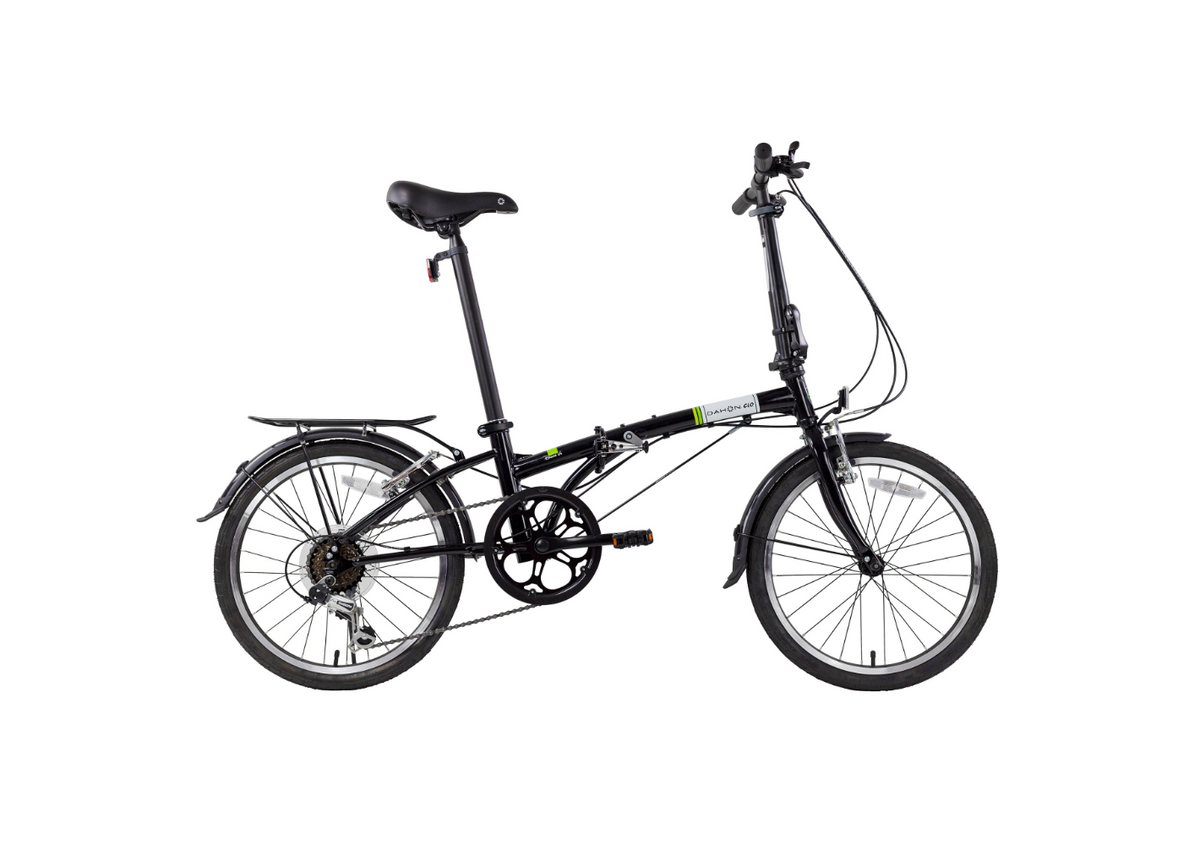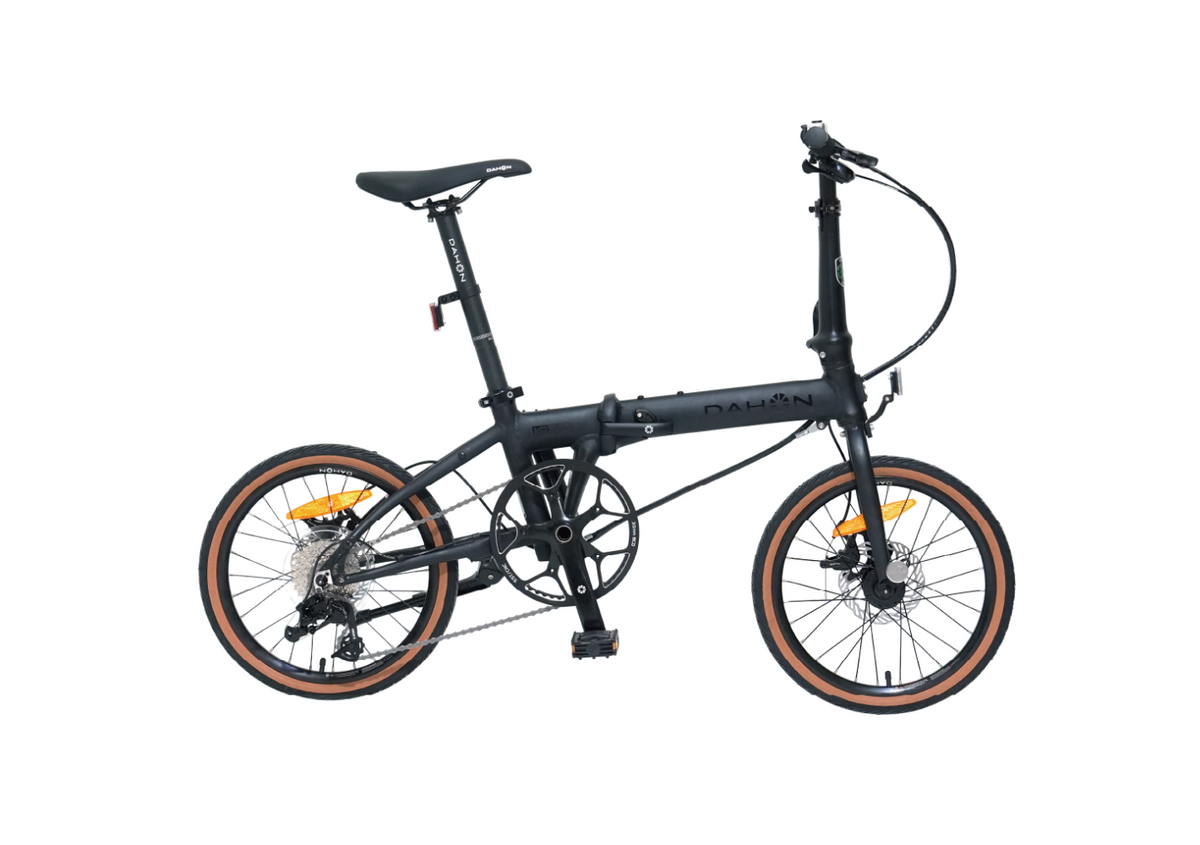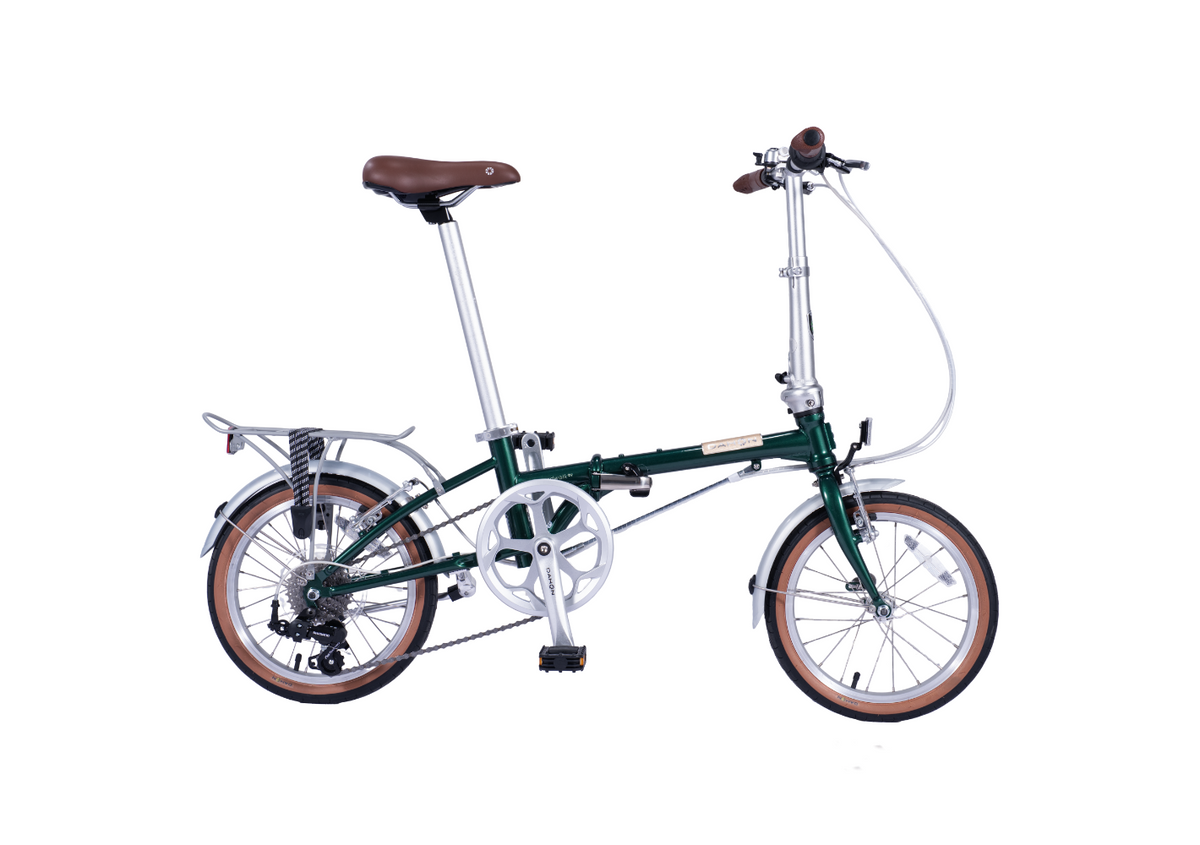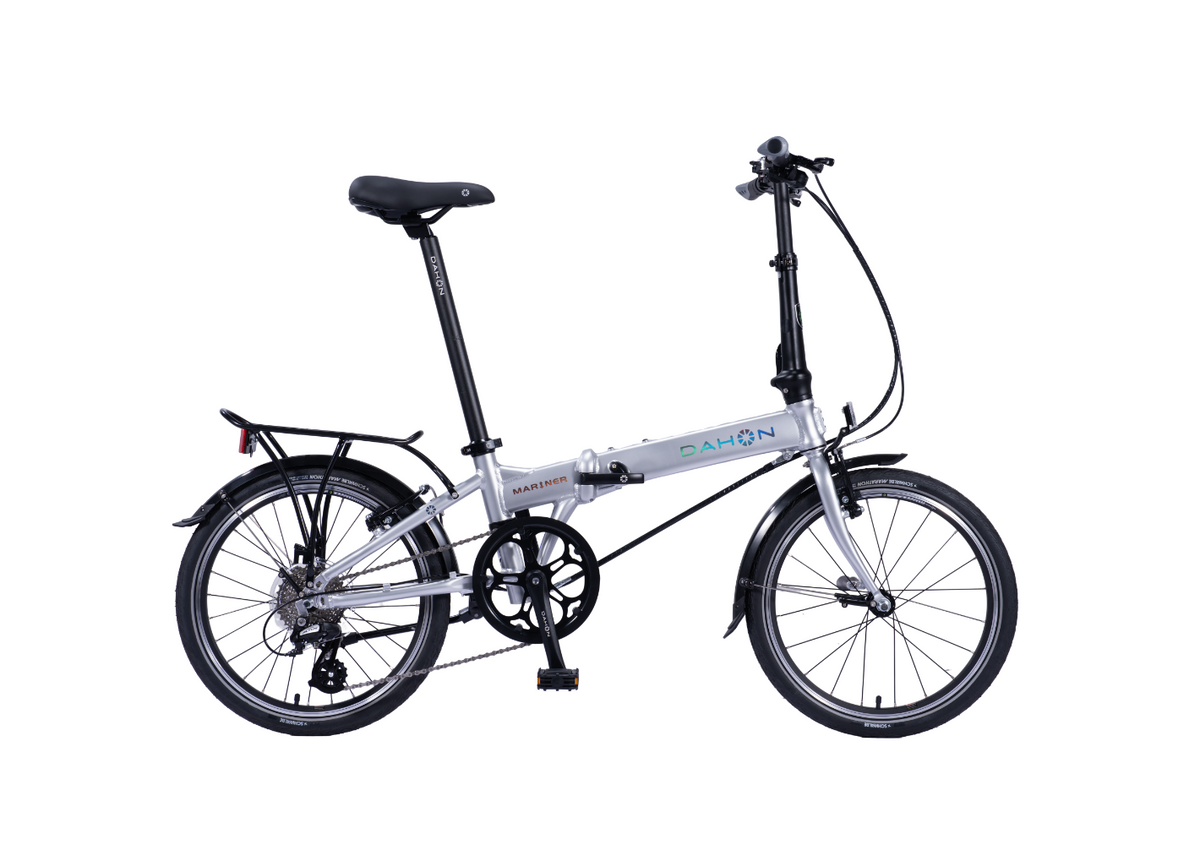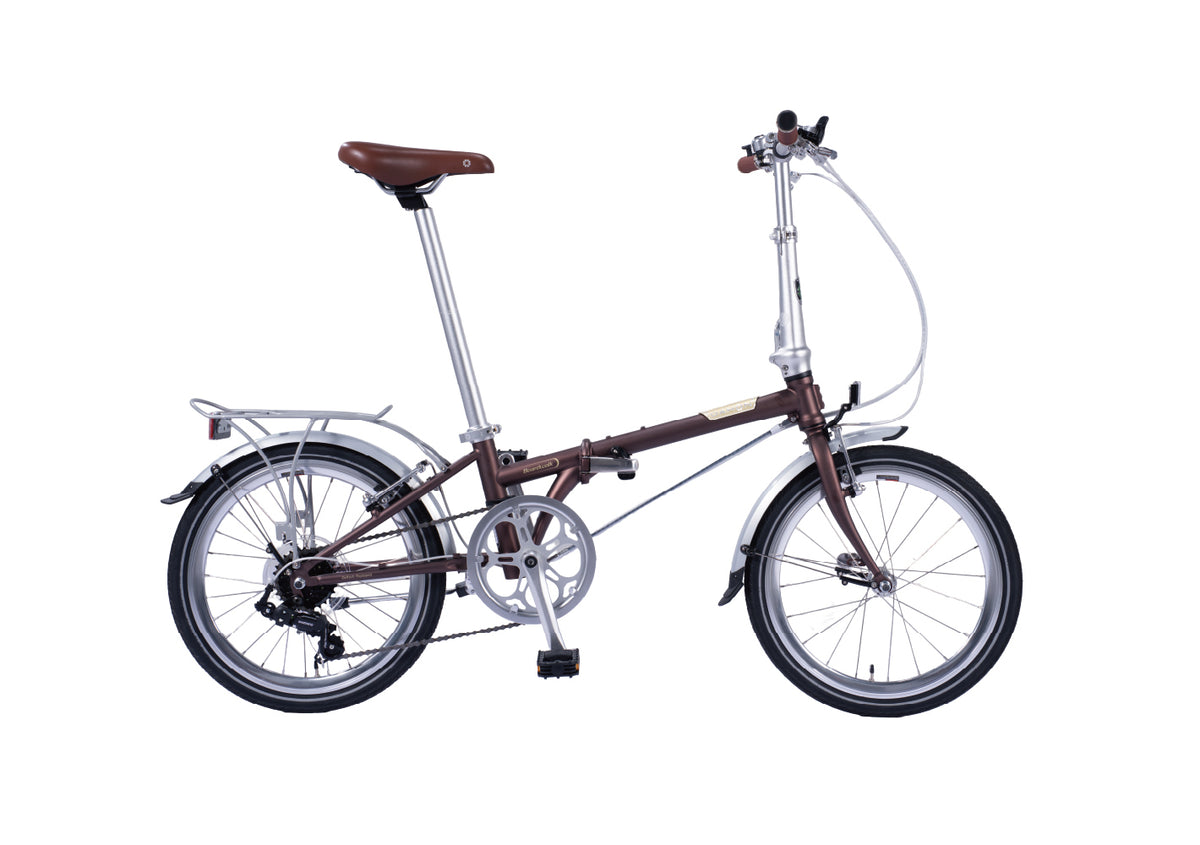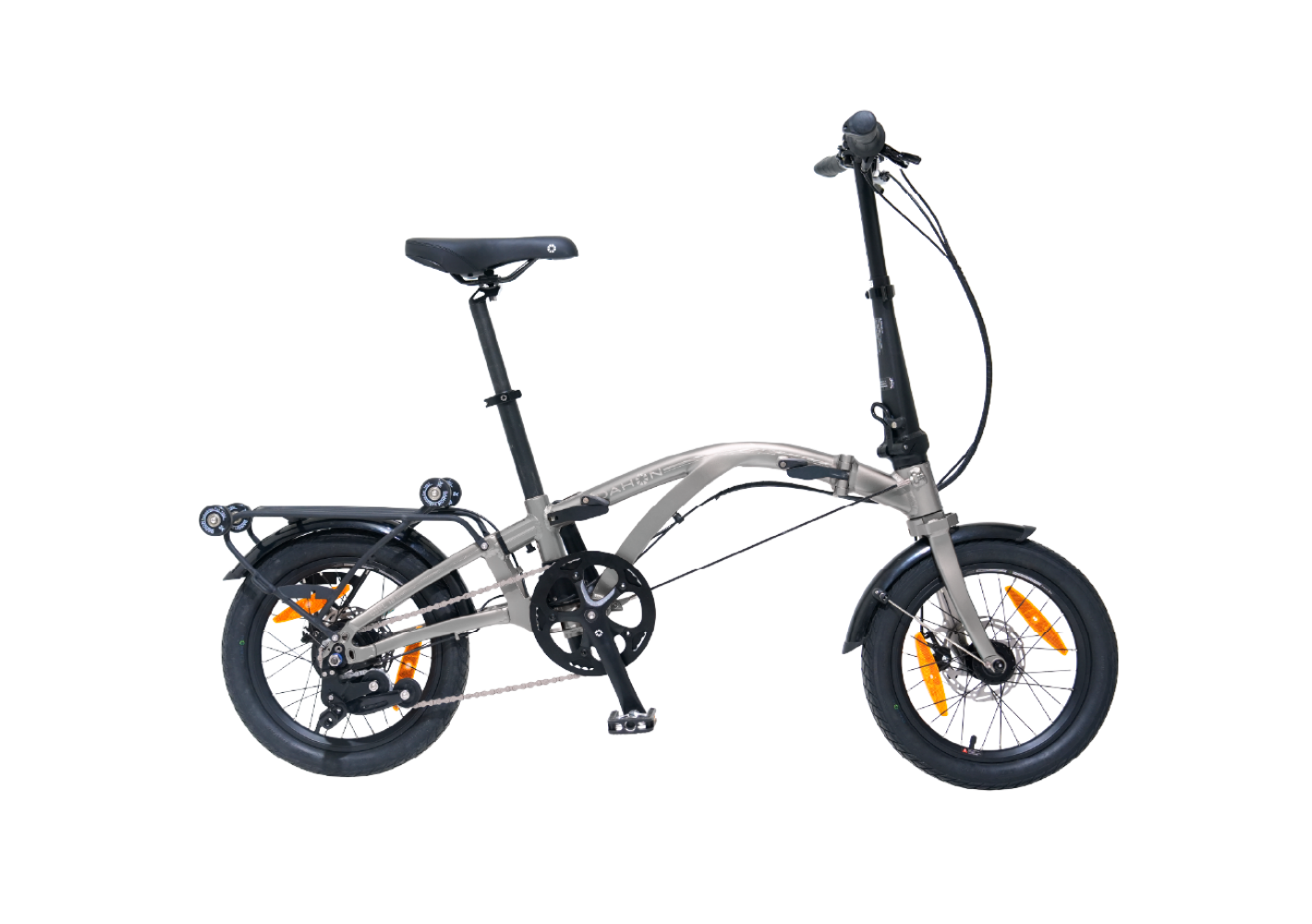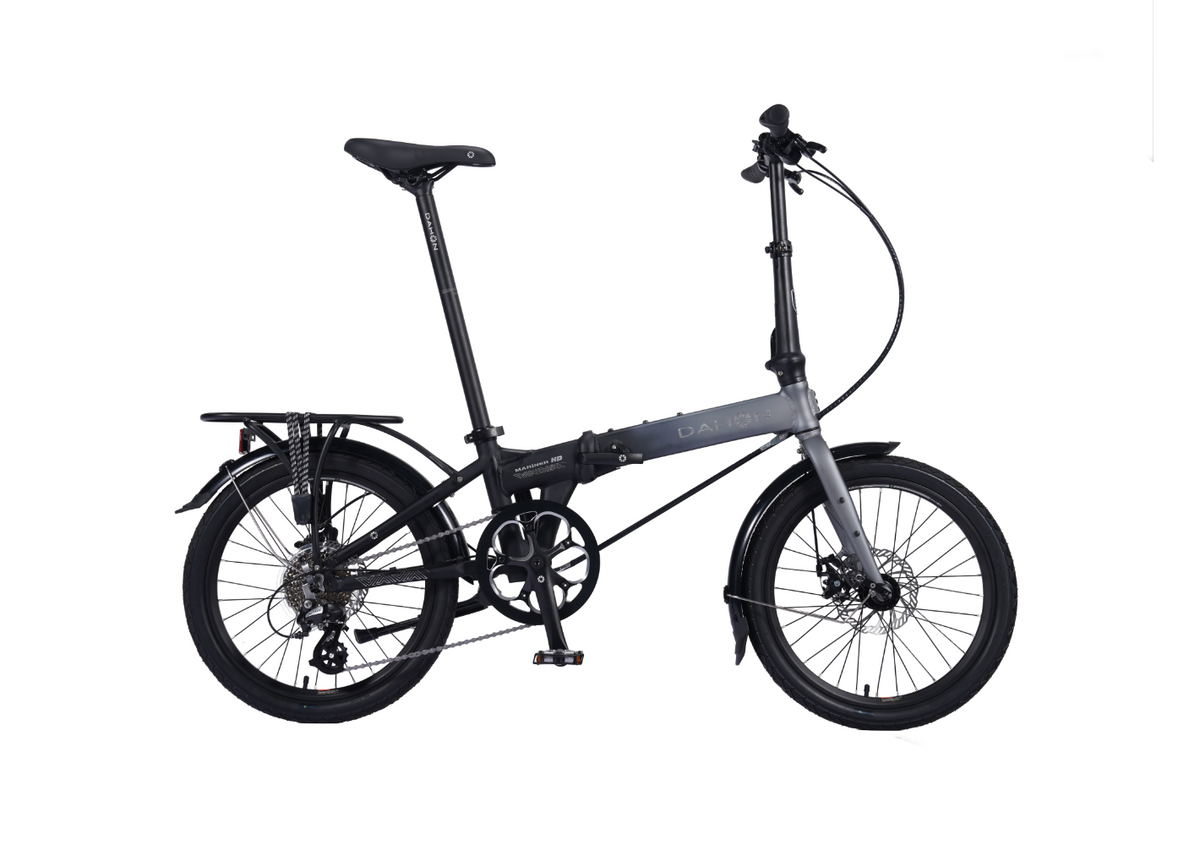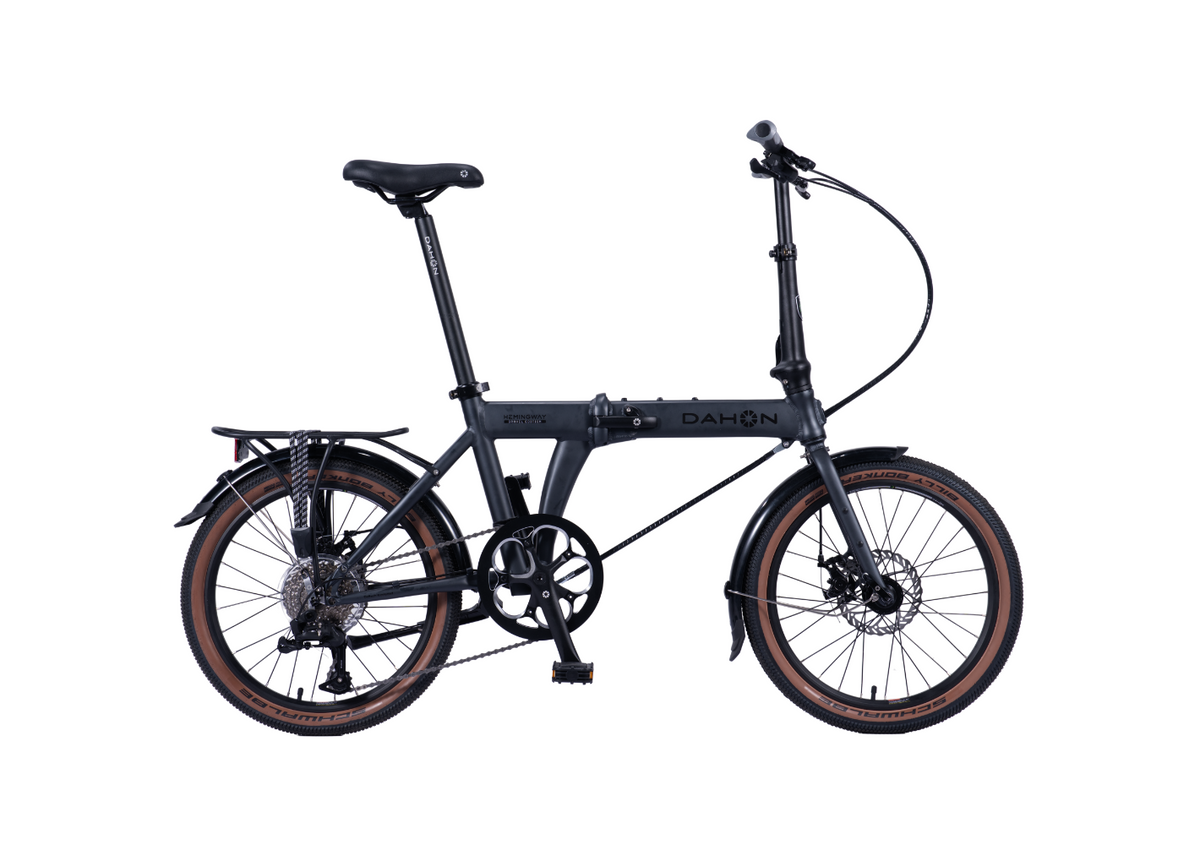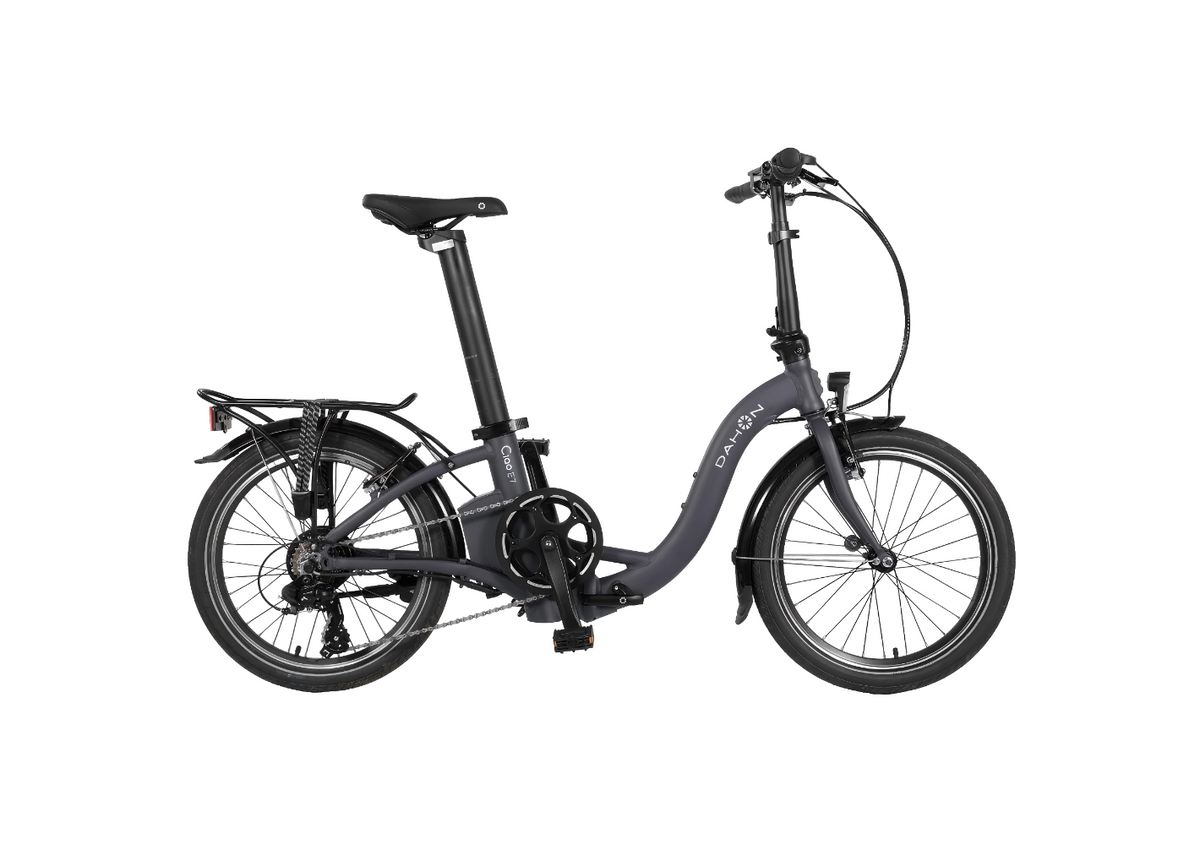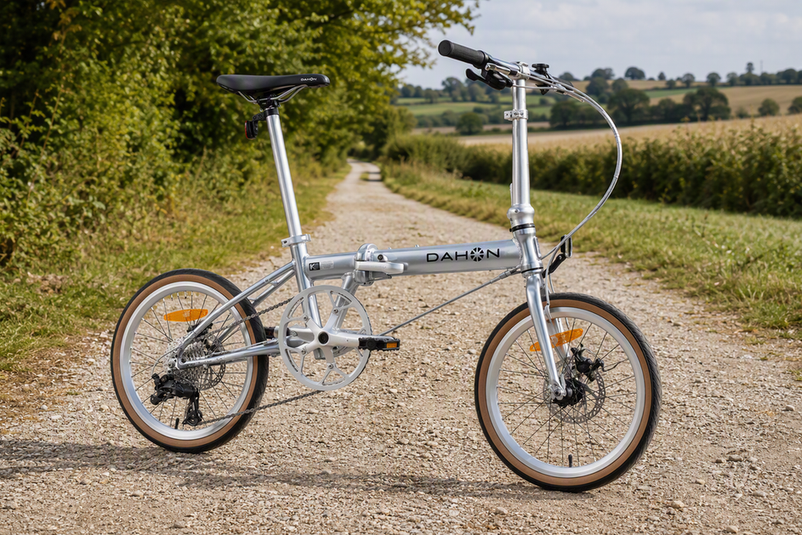
The maximum suitable tire width for a DAHON folding bike on gravel and dirt roads is not determined by a flat-rate value, but by the tightest spot on the fork, chainstays, and, if applicable, the mudguard.
The decisive factor is the actual measured outer width of the mounted tire on the intended rim, not the inscription on the tire sidewall. Only the comparison with the official specifications of your specific model turns this measurement into a reliable selection.

Although a 20-inch e-folding bike carries the same nominal inch designation as many classic folding bikes, it may have a different ETRTO rim diameter as well as a different frame geometry and tire clearance. The following steps show you how to determine this clearance on your own bike and compare it with the manufacturer's specifications.
The short answer: The tightest spot determines the tire width
The suitable tire width is derived from three values: the actually measured tire width, the smallest clearance on your bike, and the approval for your specific model. If one of these values is missing, any inch specification remains a guess.

Why 20 inches does not define a maximum width
The inch designation "20 inches" does not uniquely define the rim diameter. Depending on the version, it can designate different ETRTO diameters that are not compatible with each other. Therefore, the complete ETRTO specification, for example 47-406 or 30-451, counts for the selection.
The actual tire width also depends on the tire model and the rim on which it is mounted. Two tires with the same inch specification can differ significantly in the actual measured outer width, depending on the air pressure used and the width of the rim.
The decision in three sizes
- Actual tire width: measured at the widest point of the mounted tire, not derived from the inch specification.
- Smallest clearance: the tightest point on the fork, chainstays, or mudguard, which determines the entire combination.
- Model and accessory approval: the final condition, which is only certain with the official specifications of your DAHON model.
Our guide on the subject explains in more detail how wider tires on a folding bike can affect comfort.
Before measuring: record model and wheel data
Before you reach for the tape measure, you should write down the most important wheel and tire data. Whether it is a conventional folding bike or a 20-inch e-folding bike: these details prevent you from incorrectly deriving a width assumption from the mere inch size.
These data belong in the measurement log
- Exact DAHON model designation and model variant, if applicable with frame number or model code.
- ETRTO specification and inch specification of the currently mounted tire.
- Rim specification, mudguard status, and intended use on gravel or dirt roads.
Use existing tire as a reference
The standard-mounted tire is a good starting point for comparison, but not proof of the maximum possible tire clearance. Record the tire and rim as a combined pair so that you can later compare them with a wider alternative.
Measure tire clearance on the folding bike step by step
The measurement must be carried out with the actually mounted wheel, not on the removed tire. At every point, the smallest found value counts, not the average.
Measure fork and rear triangle
- Install the front wheel and measure the clearance in millimeters at the tightest point of the fork.
- Install the rear wheel and check the tightest point on the chainstays and, if relevant, on the seat stays.
- Measure left and right separately, as the distances are not always symmetrical.
- Note the smallest value for the front and rear wheel separately.
Measurement log for the tightest spot
Use this table as a template for your own measurement values. Enter only values that you have measured yourself on your bike or taken from your model documentation.
| Measuring point | Clearance (mm) | Smallest documented value | Required clearance according to model/accessory |
|---|---|---|---|
| Fork | own measurement | own measurement | according to manual |
| Chainstays | own measurement | own measurement | according to manual |
| Mudguard (if mounted) | own measurement | own measurement | according to accessory specs |
The tightest measuring point limits the available installation space. However, it should not be directly adopted as the maximum tire width, as sufficient clearance must remain to the side and above the tire.
Evaluate tire tread, rim, and mudguards together
The suitable tire combination results from the interplay of ETRTO size, inner rim width, actually mounted tire width, tire height, and existing accessories. Tire and rim must fit together as an approved combination. Even with a compatible combination, the actual tire width can deviate from the nominal width depending on the rim, tire pressure, and tire construction.
Select width and tread according to application
| Application | Preferred tread property | Decisive fit limit |
|---|---|---|
| Firm, hard gravel | More roll-oriented tread | Measured width must remain within the tightest point |
| Mixed dirt roads | Balanced all-round tread | Plan for sufficient room for the real outer width | More heavily treaded tire | Suitable only with matching rim, frame, and accessories |
Tread lugs can take up more space than the pure inch designation suggests. Viewing the ETRTO size and rim width as a system helps to find a suitable combination of tire size and inner rim width, but does not replace a model-related frame approval. We explain in more detail how tire width and air pressure affect gravel together if you would like to adjust the folding bike tire pressure.
Treat mudguards as a separate limit
A wider tire can significantly reduce the distance to the mudguard, even if it still fits on the fork and chainstays. The ADFC cites about 5 mm of mudguard distance between the tire and mudguard as a guideline for good splash guard performance. However, this value is not a general safety approval for every tire, mudguard, and terrain combination.
On gravel or muddy ground, more clearance may be required due to adhering foreign objects and treaded tires; the specifications of the participating manufacturers remain authoritative. Anyone who regularly uses their folding bike on gravel paths should re-check this distance after every tire change.
Confirm DAHON approval for the specific model
The last step assigns your measurement log to the official specifications of your model. Only this comparison turns the measured values into a reliable decision for the tire purchase.
Complete the model check
- Clearly name the model designation and variant and compare it with the current product page or user manual.
- Compare your measurement log with the tire, rim, and accessory data mentioned there.
- Document the approval if there is a match, or submit a specific service inquiry in case of discrepancies.
The ETRTO recommends checking the compatibility of tire and rim based on the size designation as well as the technical specifications of the tire and rim manufacturers. Whether this combination offers sufficient space in the bicycle and is approved for the specific model must also be clarified based on the bicycle manufacturer's specifications.
When an alternative makes more sense
If the rotating tire touches the frame, fork, or mudguard, could block, or if the approval remains unclear despite complete data collection, do not ride this combination. Clarify the cause or have the compatibility confirmed by our DAHON customer service or a specialist workshop before you continue riding. If the classification remains open, a narrower, already proven tire width or the unchanged standard tires are the safer choice until a clear confirmation is available.
Frequently asked questions
Why is the ETRTO specification more important for tire selection than the inch width?
The specification "20 inches" alone is not sufficient for tire selection, as it does not uniquely define the rim diameter. Check the complete ETRTO size of the tire, the inner rim width, the available clearance, and the approval for your specific DAHON model.
Can I ride a wider tire on gravel with mounted mudguards?
A tire that has sufficient clearance without a mudguard can result in a tighter situation with a mounted mudguard. Measure the distance to the mudguard separately and check the existing safety clip at the front before you ride with the combination.
Does the tire width of a 20-inch folding bike also apply to a 20-inch e-folding bike?
Electric support does not change the basic requirements for tire and rim compatibility. Whether classic folding bike or 20-inch e-folding bike: the complete ETRTO size, rim, frame, fork, and mounted accessories must be checked separately for the respective model.
What details does the DAHON service need for a tire approval?
For a usable answer, the exact model designation, frame number or model code, the ETRTO and inch specification of the desired tire, the rim data, the mudguard status, and the planned application help. Do not ride an unclear combination until these details are confirmed.