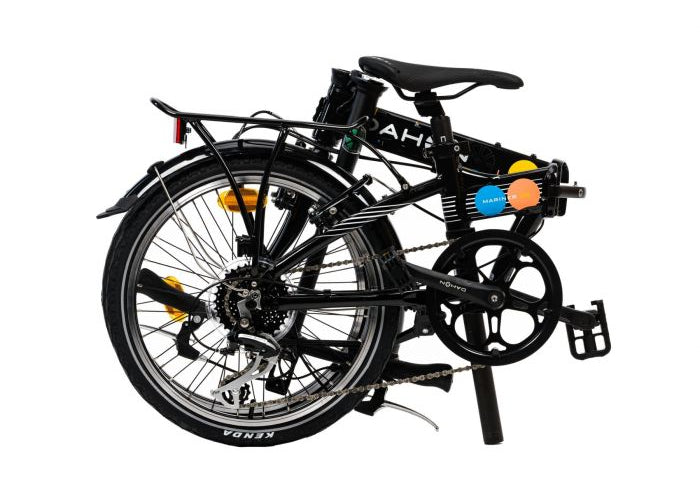
Folding bike standard parts can make ownership easier to maintain and, in some cases, help keep lifetime costs more predictable. The advantage is not magic savings. It is simpler sourcing, broader shop support, and fewer repairs that depend on a rare, model-only component.

That matters most when a bike needs routine wear items: tires, tubes, brake pads, chains, cables, grips, pedals, and bearings. When those parts follow widely used standards, more shops can usually help, and downtime may be shorter.
Why Repairability Matters
A folding bike is still a bicycle, so many service needs are familiar. The harder part is when a repair depends on a shape or interface that only one maker uses. That is where downtime starts to matter.
Repairability is not a niche concern. If a bike sits waiting for a part, the purchase price stops being the main cost. Time, shipping, and lost use become part of the ownership picture.
That is why folding bike standard parts are worth checking early. Common wear items are easier to source, while proprietary hardware can add friction later.
What Standard Parts Mean on a Folder
"Standard" does not mean every part is identical across every bike. It means the part follows a common bicycle dimension, interface, or service convention.
The ISO 4210-2 bicycle safety standard explicitly includes folding bicycles, which is useful context because it shows folding bikes still sit inside normal bicycle safety and testing expectations. In the U.S., the CPSC bicycle requirements and the related eCFR bicycle rules also reinforce that bicycles sold here need usable instructions and baseline safety compliance.
Common examples often include:
- Tires and tubes in established sizes
- Brake pads that match a normal caliper or rim-brake system
- Chains that match a common speed count
- Pedals with common thread standards
- Saddles, seatposts, grips, and bar-end accessories that fit standard clamp sizes
- Cables and housing cut to ordinary lengths
- Bearings and seals that match widely used measurements
Where possible, the benefit is not just replacement availability. Standard parts also make it easier to compare options by durability, rolling resistance, fit, or comfort instead of being forced into a single brand-only choice.
Tire sizing is a good example. Tire labels can look different depending on the system used, but the key service point is matching the tire to the rim and frame clearance. A neutral sizing convention can help reduce confusion, though the final choice still has to fit the specific wheel and frame.
How Standard Parts Affect Lifetime Cost
Lifetime cost is not only the purchase price. It also includes wear items, labor, shipping, delays, and the chance that a bike sits unused because one part is hard to obtain.
Standard parts can help in three ways.
First, they widen the number of places that can help. A local shop is more likely to stock or quickly order common parts than model-specific hardware.
Second, they can reduce labor complexity. When a shop recognizes the interface immediately, diagnosis and installation may be simpler.
Third, they can improve replacement flexibility. If one brand's part is unavailable, an equivalent part may still work, provided it matches the required dimensions and function.
That said, lower lifetime cost is only a possibility, not a guarantee. A bike with standard parts can still be expensive to maintain if it is heavily used, poorly adjusted, or stored in harsh conditions.
What a Local Bike Shop Can Usually Service
A local shop can often handle many routine tasks even if it does not stock the exact brand name of the folding bike.
| Routine task | Usually local-shop friendly? | Notes on model-specific support |
|---|---|---|
| Tire and tube replacement | Yes | Needs correct wheel size, valve type, and clearance |
| Brake pad replacement | Yes | Must match brake type and pad shape |
| Chain replacement | Yes | Must match drivetrain speed and length |
| Cable and housing replacement | Yes | Routing and folding layout may add time |
| Wheel truing | Usually yes | Hub, rim, or spoke specs may matter |
| Bottom bracket service | Usually yes | Requires standard shell and spindle compatibility |
| Pedal replacement | Yes | Thread standard is usually the key detail |
| Saddle and grip replacement | Yes | Clamp sizes and seatpost diameter must match |
| Hinge or latch hardware | Sometimes | More likely model-specific and brand-supplied |
| Frame, fork, or handle post parts | Sometimes | Often the most model-specific items |
This is why folding bike standard parts can be so useful. If the most common wear items remain standard, routine care can stay straightforward.
Buying for Service, Not Just for Specs
If we want lower lifetime cost, we should evaluate serviceability before we fall in love with a spec sheet.
Useful questions include:
- Which parts are standard wear items?
- Which parts are model-specific?
- Are replacement tires, tubes, and brake pads common sizes?
- Can a local shop service the folding mechanism?
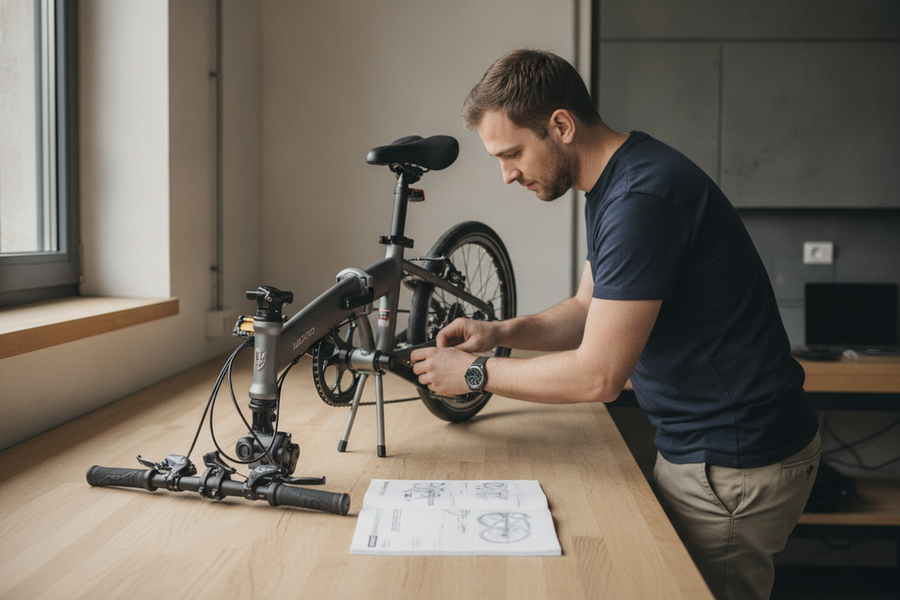
- Is the manual clear about assembly and maintenance?
- Is support available if a special part is needed?
Manufacturer guidance matters here. Dahon's FAQ states that, except for the frame, fork, and handle post, most parts are standard and can be replaced through a quality bicycle dealer. That is a useful reminder to separate common service parts from structural or proprietary components.
The broader principle is similar in consumer safety guidance. The U.S. bicycle requirements in 16 CFR Part 1512 require bicycles to meet defined expectations for assembly, braking, steering, tires, wheels, reflectors, and instructions. In plain terms, a bicycle should be serviceable according to its instructions and built so core safety functions can be maintained.
Standards and Safety Give Service Work a Baseline
When we talk about serviceability, we should also talk about safety. A bike that is easy to repair still has to be safe to ride.
The ISO 4210-2 standard covers safety and performance requirements for bicycles and sub-assemblies, and it explicitly includes folding bicycles within its scope. That does not make every bike identical, but it does reinforce the idea that folding bikes should still meet recognized safety and performance expectations.
For owners, this is a practical message: the better the standards alignment and documentation, the easier it is for a shop to diagnose and maintain the bike responsibly.
Where Standard Parts Can Save Friction
Standard parts may not always create dramatic dollar savings by themselves. The bigger advantage is usually friction reduction.
That can mean:
- fewer special orders
- less waiting for import shipping
- more choice among equivalent replacements
- easier comparisons between shop estimates
- better odds of getting back on the road quickly
This is especially helpful for commuter bikes. Daily transportation is less forgiving than weekend riding. A bike that needs one rare proprietary piece before it can roll again can become expensive in a practical sense, even if the part itself is not costly.
A Note on Wheels, Tires, and Fit
Wheel and tire service is one area where people can get tripped up. A tire must match the rim and fit the frame and fork with enough clearance. Size labels may be presented in different systems, so careful confirmation matters more than the marketing shorthand.
A neutral sizing convention can help avoid mistakes. Where possible, use the exact size marking and confirm compatibility before buying. If the fit is uncertain, a shop can usually help verify clearance, valve type, and rim compatibility.

That same caution applies to folding bikes with small wheels. Small does not automatically mean hard to service, but it does mean the exact wheel size and part availability should be checked before purchase.
When Proprietary Parts Are Acceptable
Proprietary parts are not automatically a problem. Folding bikes often need some custom engineering at the hinge, stem, latch, or folding interface.
The question is whether proprietary parts are limited to the features that truly need them. If the bike keeps everyday wear items standard, ownership can still be practical.
A good rule is to separate three categories:
- Safety-critical structural parts
- Folding-specific hardware
- Ordinary wear items
If only the first two categories are proprietary, maintenance may still be manageable. If the third category also becomes proprietary, service can become much more dependent on one source.
What to Check Before Buying
Before we buy, we can use a simple checklist:
- Ask which parts are standard and which are not
- Confirm tire, tube, and brake pad availability
- Look for a clear owner's manual
- Check whether a local bike shop is willing to service the brand
- Confirm how warranty support works
- Prefer bikes with common service interfaces when possible
This does not eliminate all future maintenance costs. It does, however, reduce the chance that a minor repair becomes a major inconvenience.
Why This Matters for Everyday Riders
For commuters, students, and travelers, the value of standard parts is often time. A bike that can be serviced in more places is a bike that is easier to keep in circulation.
That also makes ownership more predictable. Predictability is a hidden form of value. We may not save money on every line item, but we may avoid the larger cost of a bike that becomes difficult to repair when we need it most.
Final Takeaway
Folding bike standard parts are worth caring about because they can lower hassle more reliably than they lower sticker price. If common wear items are easy to source and the folding-specific hardware is clearly documented, service is usually simpler and ownership tends to feel less fragile. If you are comparing bikes, check parts access, manual clarity, and local shop support before you buy.
FAQs
Can Any Bike Shop Service a Folding Bike?
Often, yes for routine wear items and common adjustments. The folding joints, handle post, or other structural hardware may need brand-specific parts or guidance. The easiest bikes to live with are usually the ones that separate ordinary bicycle service from folding-specific replacement parts.
Do Folding Bikes Use Standard Parts?
Many do, but not every component is standard. Tires, tubes, brake pads, chains, and cables are often common bicycle items, while hinges, latch systems, and some frame interfaces may be model-specific. The key is to confirm which parts are standard before buying.
What Parts Are Most Likely to Need Special Ordering?
Usually the folding frame hardware, hinge components, latch systems, and some stem or handle post parts. These are the parts most tied to the bike's folding design, so they are the most likely to depend on the maker or dealer channel.
How Do Standard Parts Affect Maintenance Costs Over Time?
They usually reduce friction more than they reduce every bill. Easier sourcing can mean less downtime, fewer shipping delays, and more local service options. But labor, wear, and riding conditions still drive real maintenance cost.
What Should I Ask a Shop Before Buying?
Ask which routine parts they can source, whether they have folding-bike experience, and which repairs might require special-order components. It also helps to ask about wheel size, brake type, and whether they are comfortable with the bike's folding mechanism.
Is It Worth Choosing a Folding Bike Mainly for Serviceability?
It can be, especially for commuting or travel. If standard wear parts are easy to source and local service is available, the bike may be easier to keep in use over time. That is often more valuable than a lower sticker price that comes with hard-to-source parts.