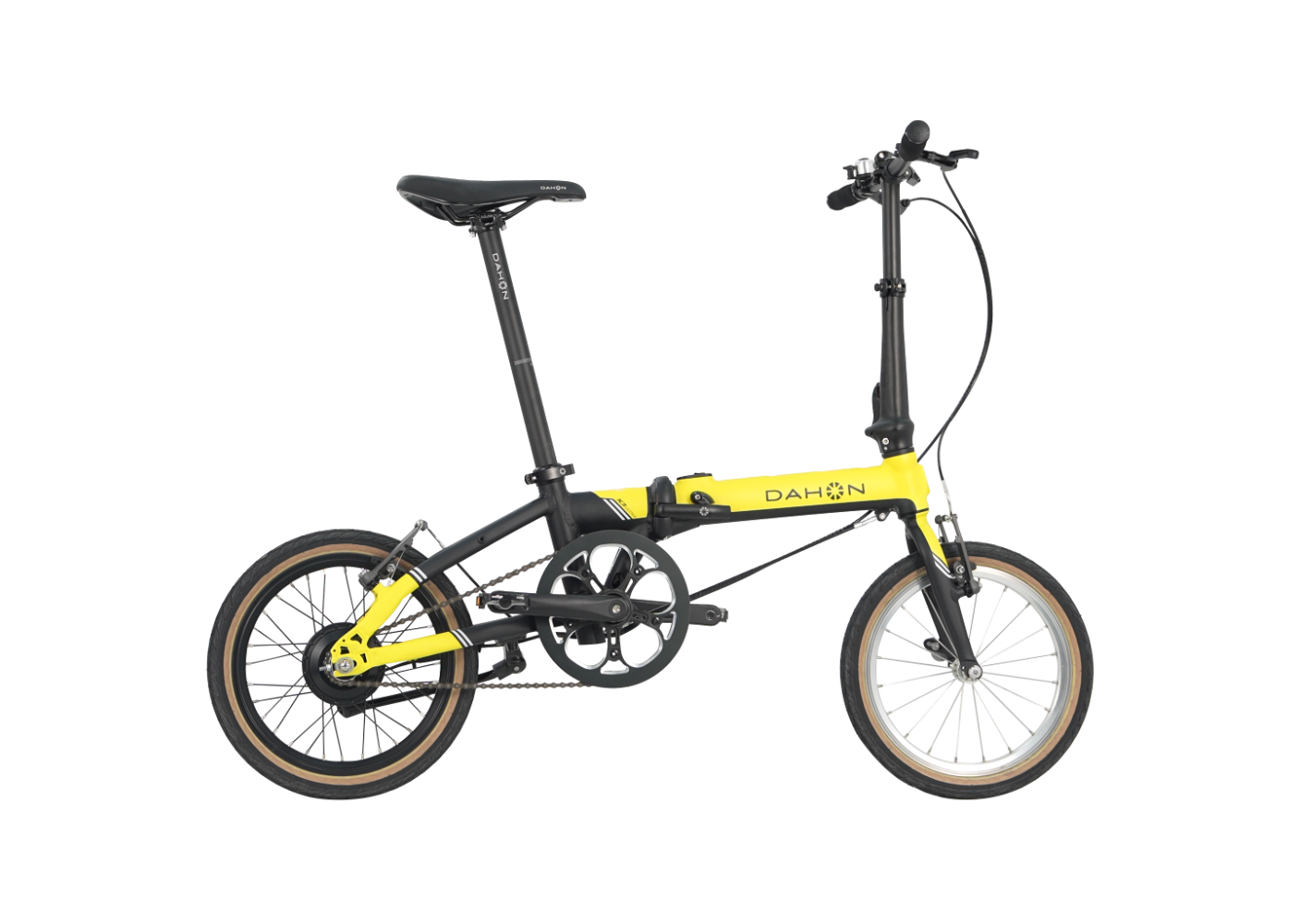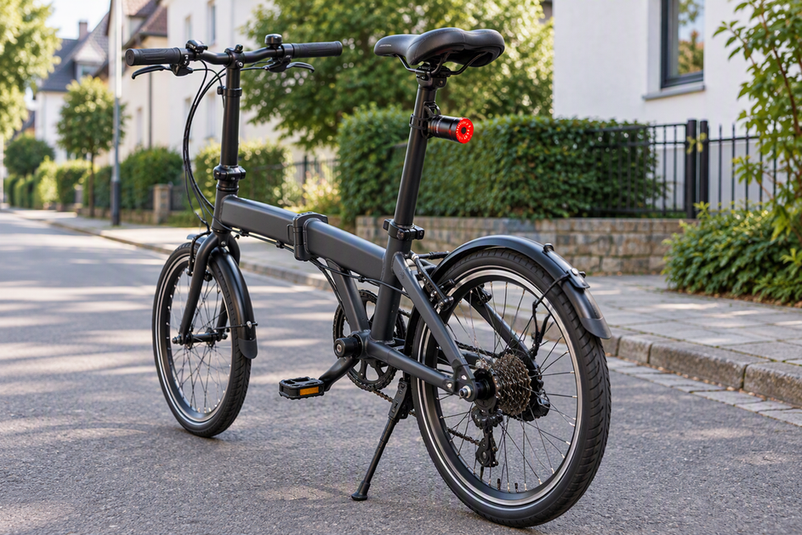
An automatic brake light function can be a useful addition if it is part of a tail light approved for bicycles. In addition, the mounting position, power supply, and folding path must be compatible with your folding bike.
Check these four points against the manual of your chosen rear light before attaching it permanently. Only then is it worth looking at the German requirements and the appropriate mounting position on the folding bike.
Key takeaways
- A sensor-based solution is suitable if the manual, mounting location, power supply, and folding path demonstrably match, not just because of a high brightness rating.
- According to § 67 StVZO, an additional red brake light function is generally possible, but flashing tail lights are prohibited.
- Type approval and test marks according to § 22a StVZO must be checked independently, regardless of product designation or lumen specifications.
- The seat post is the intended mounting location for the DAHON DH-1075; every position must be checked for fit and visibility again after folding.
- If the light is loose, obscured, or not functioning clearly, you should refrain from using it in road traffic until the cause is clarified.
Which automatic brake light solution fits the folding bike?
A suitable solution is one whose sensor function, mounting position, power supply, and folding path demonstrably match your specific folding bike. A high brightness specification alone tells you little about this.
Sensor principle without brake lever wiring
Sensor-based rear lights usually detect deceleration via integrated motion or acceleration sensors and therefore do not require wiring to the brake lever. This simplifies retrofitting on a folding bike because no additional cable has to be routed through the folding hinges. However, alignment and calibration differ depending on the model. Therefore, follow the specific manual of the respective rear light instead of adopting general values.
Which criteria count first for the folding bike
Prioritize mounting position, line of sight, folding movement, energy supply, and a repeatable position over an isolated brightness specification. A sensor-based rear light can simplify wiring, but it only fits if the mount remains stable even after repeated folding.
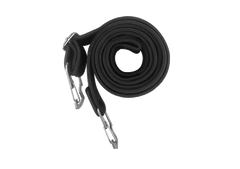
For the DAHON DH-1075, the manufacturer specifies automatic brake detection, auto and manual modes, up to 60 lumens of brightness, a 220° beam angle, a 400 mAh battery with USB charging, IPX6 water resistance, and strap mounting for seat posts.
If these features fit the seat post, folding path, and visibility of your folding bike and the remaining proof required for your usage is clarified, we can show the model as an option. However, general suitability for every folding bike cannot be derived from this.
What evidence is required in Germany?
An additional red brake light function on the bicycle tail light is generally possible in Germany, but it does not replace the individual inspection of the respective product. Check the following points before purchase and use.
- Red, non-flashing tail light: § 67 StVZO on the brake light function allows an additional red brake light function on the tail light; flashing tail lights are prohibited.
- Type approval and test mark: According to § 22a StVZO on type approval, the affected lights must be of an officially approved design.
- Firm fit that does not shift unintentionally while riding.
- Unobstructed light emission surface at the intended mounting height.
- Use in accordance with the bicycle application intended by the manufacturer.
- Complete product documentation instead of a mere advertising claim such as "StVZO-compliant".
If any of this evidence is missing, you should ask the dealer or manufacturer before ordering, rather than relying solely on the product description.

Where does the rear light sit securely and visibly on the folding bike?
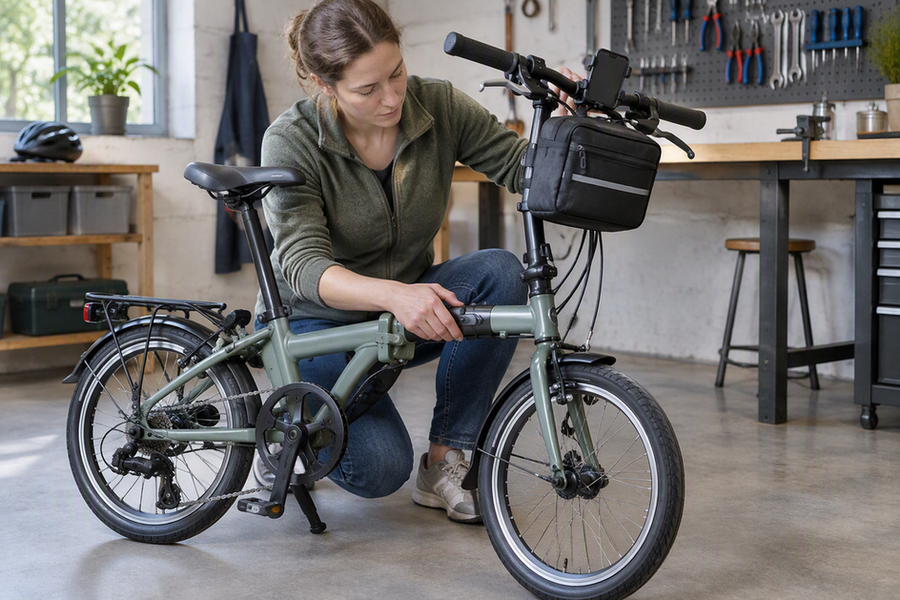
When riding, the light must be firmly and unobstructedly attached. When folded, it must be checked whether the light or mount can collide or be damaged. Determine the position while riding first and then check it during the complete folding process.
Seat post, luggage carrier, or frame
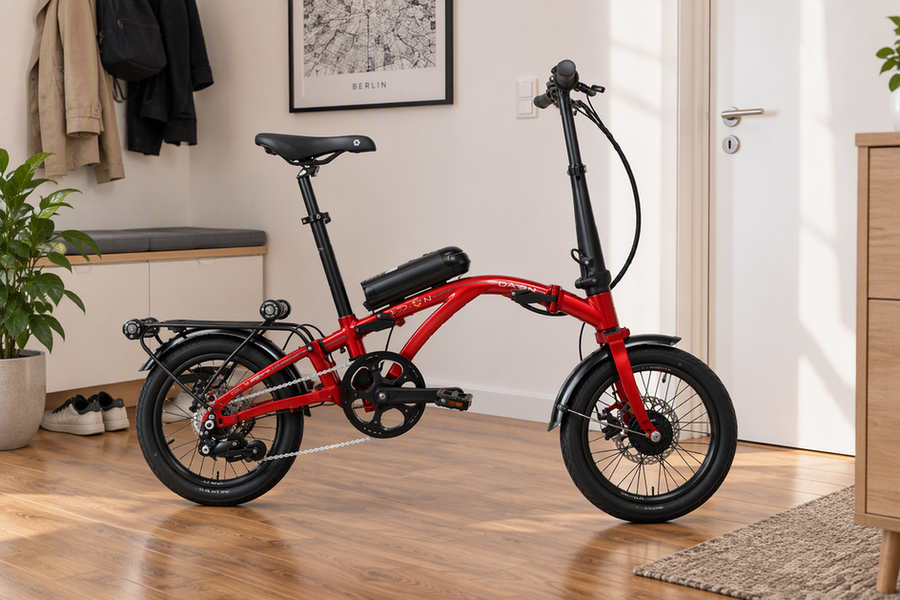
The strap mounting documented for the DAHON DH-1075 is described for the seat post. Other mounting locations such as luggage carriers or frames are only an option if the mount and the manual of the respective model expressly provide for them. For a seat post that is frequently adjusted in height when folding, you should set a mark or a fixed end position without exceeding model markings or the folding mechanism. According to § 67 StVZO regarding mounting and visibility, the light must be firmly attached, secured against unintentional shifting, and unobstructed; an installation height of 250 to 1,200 mm is specified for the tail light and reflector.
Assess line of sight and folding path together
Keep the light emission surface clear from the usual riding position and check whether luggage, frame, or seat post partially obscure the light. Then, fold and unfold the bike completely without kinking, pinching, or unintentionally twisting cables, mounts, or the light. Further information on everyday visibility can be found in the article Folding bike light and visibility, and the article on lighting when folding offers a comparison of power supply options.
Mounting, calibrating, and testing an automatic brake light on a folding bike
Follow these six steps for installation to ensure that fit, alignment, and triggering work reliably together.
- Read the manual and product data of the rear light and note the installation position, calibration, operating modes, and charging instructions.
- Determine the mounting location in the unfolded state and coordinate it with the line of sight and folding path.
- Attach the mount firmly and secure it against slipping.
- Align the light according to the model and calibrate if the manual specifies this.
- Test the triggering in a controlled manner, for example, by braking slowly in a safe, quiet environment, rather than assuming reliable function from a brief flash.
- Fold the folding bike completely, unfold it again, and check the position, mount, visibility, battery level, and sensor behavior again.
You should obtain specific calibration values or button combinations exclusively from the respective model manual, as they differ from model to model.
Troubleshooting and maintenance after folding
Check for visible, easily correctable causes first before questioning the sensor function itself. This prevents unnecessary experimentation with the device.
No or delayed triggering
First check the charge level, the set operating mode, the alignment, and the position that may have changed after folding. Do not change sensitivity values on your own if the manual does not provide any instructions for doing so.
False triggering and changed position
An uneven road surface, a twisted light, or a different seat post height can be observable causes without a single main cause being derived from them. Reproducibly restore the previously determined position and then test the triggering again in a controlled manner.
Loose, obscured, or discharged light
Tighten the mount or reposition it correctly, clean the light surface, remove obstructions caused by luggage, and charge the battery if the product manual specifies this. If the mount is damaged, visibility is unclear, or the brake light triggering is not functioning clearly, you should refrain from using it in road traffic until the issue is resolved or clarified by a professional.

Opt for a retrofit as soon as the mount, visibility, and StVZO evidence are consistently documented for your model. Compare the exact dimensions of your seat post with the product manual now. Check the attachment, visibility, and operating mode while standing first. Then test the brake light triggering by braking in a controlled manner on a safe, traffic-free area in accordance with the product manual.
Frequently asked questions
Why can an automatic brake light trigger when pushing or on an uneven path?
A false trigger when pushing or on an uneven path can be due to the model-dependent sensor system, its alignment, or calibration. First check the firm fit and the installation position described in the manual instead of assuming your own sensitivity values.
What needs to be considered with a changing seat post height when folding?
A changed seat post height can change the light position and thus visibility and sensor position. A reproducible mark or fixed end position can serve as a practical guide here, provided it is compatible with the model manual.
Is the statement "StVZO-compliant" in the product description sufficient?
This wording alone does not replace an individual inspection. Decisive factors are a verifiable type approval, a test mark, a red, non-flashing version according to § 67 StVZO for the additional brake light function, and the actual mounting on your bicycle.