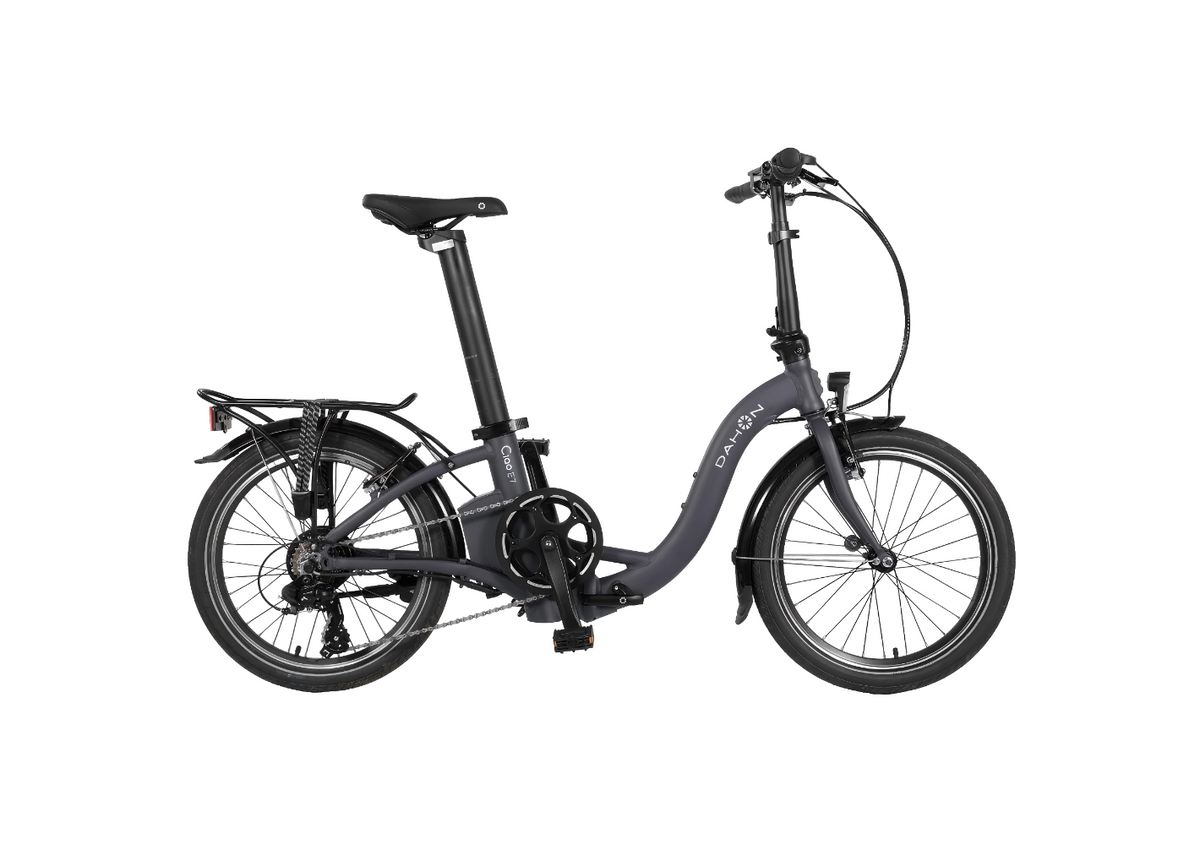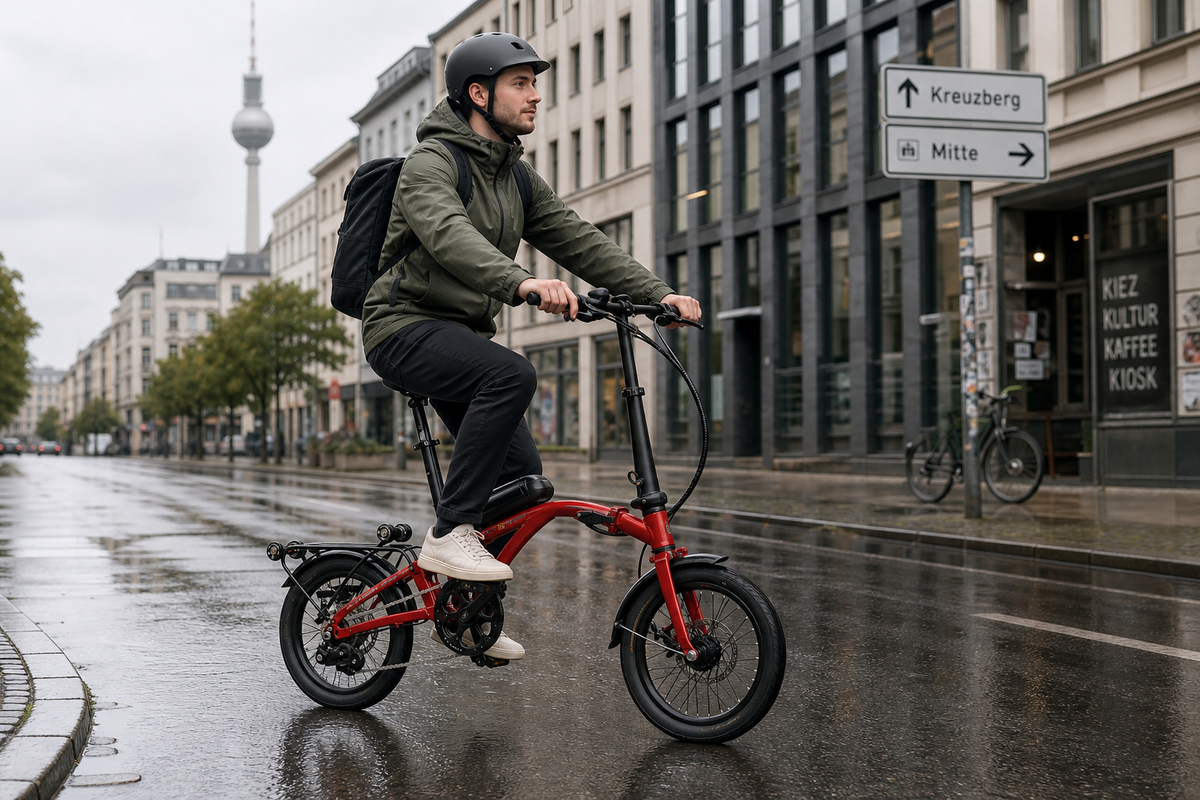
If you have limited hand strength and want finely adjustable modulation, a hydraulic disc brake may be the first option to consider. However, when folding frequently, the decision is not based on the system name alone, but on whether the hydraulic line or cable lies freely and undamaged after the folding process.
For an urban e-bike in everyday use, it is therefore worth looking at hand strength, modulation, maintenance access, and documented folding compatibility before deciding on a brake type.

Which Brake Type Suits Your E-Folding Bike?
The choice depends on your personal priority when using an e-bike in city traffic, as the ADFC guide to bicycle brakes describes. However, that is not proof of a general safety advantage for every model or system. At the center of the decision are hand strength, folding compatibility, and maintenance access.
| First option to check | Critical condition | |
|---|---|---|
| Limited hand strength, fine modulation | Hydraulic disc brake | Professional service for line and bleeding must be ensured |
| Accessible service, easy visual inspection | Mechanical disc brake | Cable routing must remain free and undamaged after folding |
| Frequent folding and storage | Hydraulic disc brake (when professionally bled) or mechanical disc brake (when cable routing is verified) | The folding compatibility documented by the manufacturer is the decisive factor |
The question of whether a folding e-bike can also be ridden in winter extends beyond the brake system alone. Nevertheless, the brake choice contributes to safety in wet and cold conditions. The difference between mechanical and hydraulic disc brakes in terms of maintenance effort, hand strength, and folding compatibility helps to narrow down the choice. Evaluate both system types using the table above, check the folding compatibility, and decide which brake system fits your urban everyday profile.
Hand Strength and Modulation: Where Do the Systems Differ?
Hydraulic disc brakes require less hand force at the lever because the hydraulic fluid transmits the force directly. Mechanical disc brakes rely on the cable pull. If you have limited hand strength or need very fine modulation in stop-and-go traffic, the hydraulic system is the first option. If you place more value on simple visual inspection and easy adjustment, the mechanical system is suitable. Both work when correctly adjusted; the modulation feel differs noticeably.
Folding Compatibility: Hydraulic Line vs. Cable on the E-Folding Bike
The folding process stresses the brake connection. A hydraulic line can kink or leak at the folding joint if it is not routed correctly. A cable can chafe or pinch. Check the documented folding compatibility in the owner's manual or have the assembly confirmed by a specialist dealer before purchase. The difference between hydraulic and mechanical on the folding bike is not a fundamental one, but a question of routing.
Maintenance Access: What Can You Check and Adjust Yourself?
Mechanical disc brakes allow you to readjust the pad gap yourself and inspect the cable. Hydraulic systems require a bleeder kit or a workshop visit for bleeding. On an e-folding bike, the folding joint limits access: if the hydraulic bleeder valve is difficult to reach after folding, maintenance becomes more complex.
Purchase Decision: Which Brake Should You Choose?
Choose hydraulic if: Limited hand strength, a desire for fine modulation, and good access to a specialist workshop are your priorities.
Choose mechanical if: Simple visual inspection, fast pad adjustment, and undisturbed folding compatibility matter most to you.
Decide based on the comparison and keep the brake system in mind for future bike comparisons. For comparisons depending on the application, you can find e-folding bike models and configurations.
Frequently Asked Questions
Are hydraulic disc brakes on e-folding bikes more powerful?
They transmit force with less hand effort and offer finer modulation. However, whether they brake "more powerfully" also depends on the pads, disc, and adjustment. The difference in braking power is not generally greater, but the control is more precise.
Can I retrofit my e-folding bike from mechanical to hydraulic brakes?
A retrofit is possible in many cases, but requires compatible brake levers, lines or hoses, calipers, and possibly new routing. The folding compatibility must be checked again after retrofitting.
Does folding damage the hydraulic line of the brake?
Not if the line is routed correctly. However, a kinked or pinched line after folding must be repaired. Therefore, check the routing after every folding process and have a specialist check it during assembly.
Which brake lasts longer on an e-folding bike?
Both brake types have comparable wear with good pad quality. The hydraulic system requires a bleed interval; the mechanical system requires regular readjustment of the pad gap. Neither has a clear service life advantage on the folding bike.