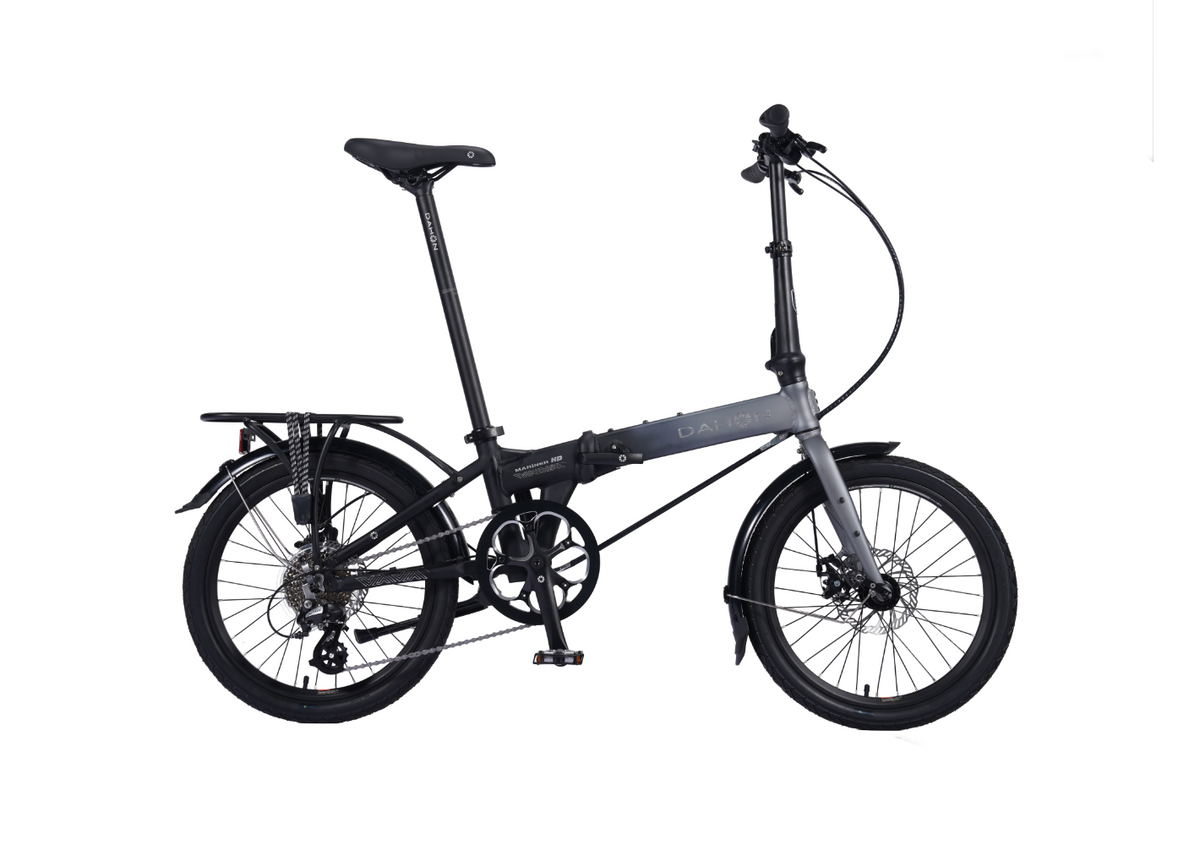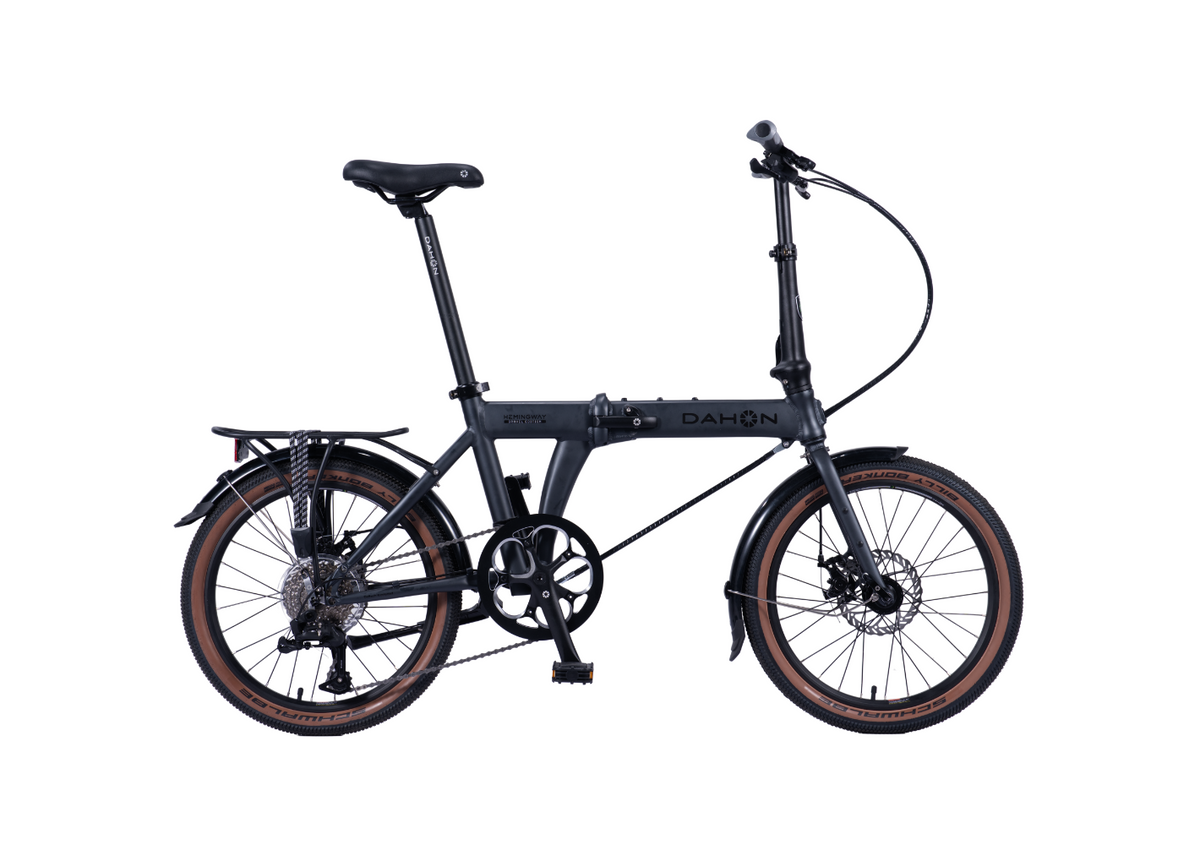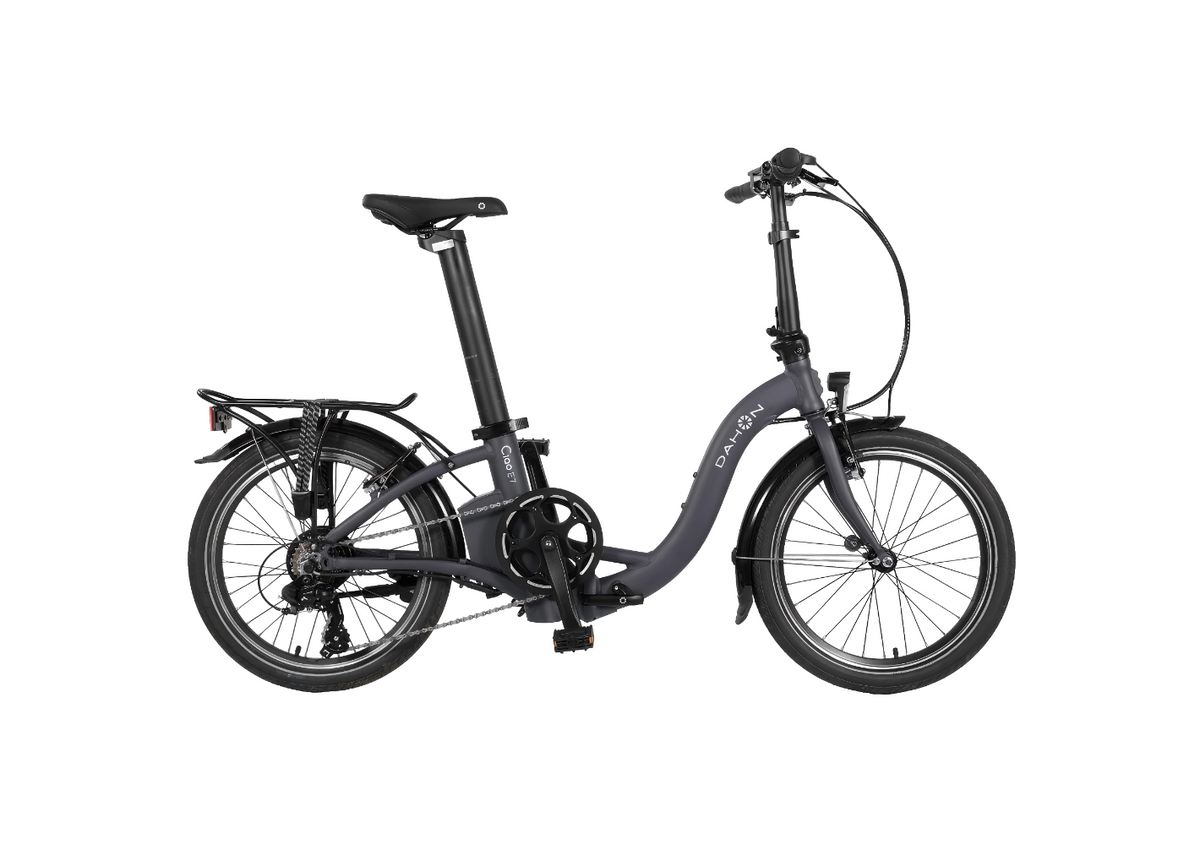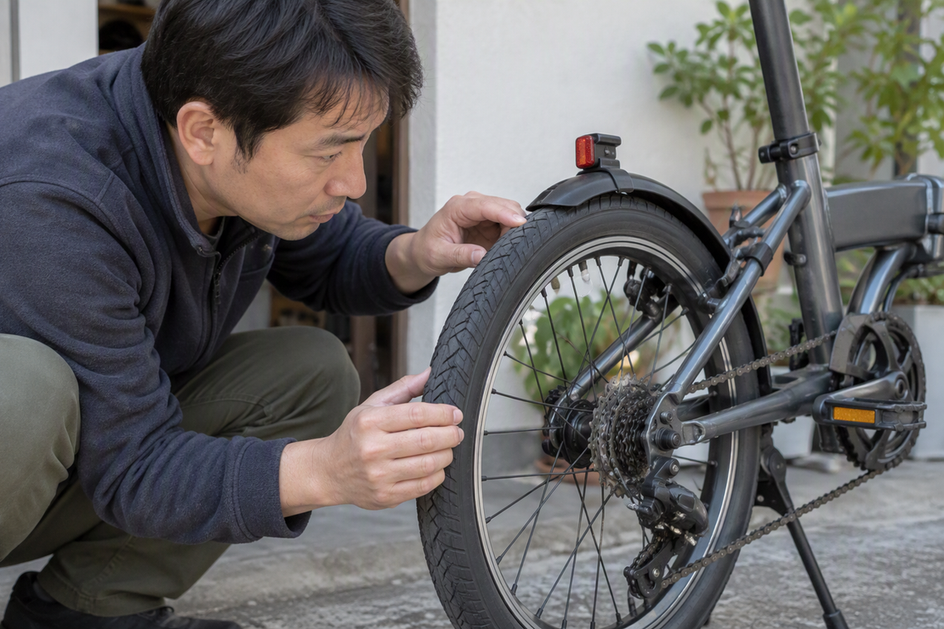
Swapping the front and rear tyres is not a proven way to even out wear or make a folding-bike tyre pair last longer, so it is not worth doing for that reason alone. Treat each tyre as its own decision: inspect it first, then consider a swap when its condition, size, specified fit, and any direction markings allow it.
A tyre showing visible damage or a wear limit needs replacement or a professional assessment rather than a position swap.
Is rotation a reliable way to even out folding-bike tyre wear?
No. Uneven wear between the two wheels is common, but folding-bike tyre rotation is not an established fix for it.
The back tyre often wears faster for a simple reason. Continental explains that rear bicycle tyres tend to wear faster than front tyres because of how the rider's weight is distributed. More load sits over the rear wheel, so its tread works harder.
Uneven wear simply reflects normal differences in workload between the wheels. Before considering a swap, inspect the condition of each tyre and confirm whether both wheels share the same fitment requirements.
Assess each tyre separately
Look at the front and rear tyres one at a time and judge each on its own condition. Check the front tyre carefully even if the rear looks more worn, and vice versa.

Continental lists clear tread and sidewall inspection signs: check the tread for wear, nicks, and cuts, and check the sidewalls for tears or bulges. It also names a flat spot or visible bare casing as signs that a tyre needs replacing. Turn each wheel slowly in good light and work through these points:
- Tread wear: Note how much tread pattern is left on this tyre. Ordinary wear, including faster wear at the rear, is normal and does not require moving the tyre.
- Nicks and cuts in the tread: Look closely at any mark. If you find deep cuts or embedded debris, follow the tyre manufacturer's guidance or consult a mechanic instead of moving the tyre to the other wheel.
- Sidewall tears or bulges: Treat these as a replacement or assessment issue. Keep the tyre off the other wheel rather than relocating it to balance wear.
- Flat spot: Continental identifies this as a replacement sign. Replace the tyre instead of swapping it.
- Visible bare casing: This is also a replacement sign. The tyre has reached the end of its service life on either wheel.
These findings guide the next step for each wheel. A tyre showing a tear, bulge, flat spot, or bare casing requires replacement under the tyre maker's guidance or a professional check by a qualified bike mechanic. Moving a compromised tyre to the other wheel leaves the defect in place, so replacement or professional inspection is the right step.
If your bike has been standing for a while, our German-language guide to broader pre-ride checks puts tyres in context with brakes, folding joints, and the drivetrain.
What must match before a front-to-rear swap?
A tyre should move to the other wheel only when the bicycle and tyre manufacturers permit it and the tyre is compatible with the new position. If the guidance for your exact bike and tyres leaves either of these points open, keep the tyres in their current positions.
Work through these checks in order and pause if any point cannot be confirmed:

- Condition of both tyres. Each tyre must pass the inspection above on its own. If either shows a replacement sign, replace or assess that tyre instead of swapping.
- Size and specified fit for the new position. Compare each tyre against the specifications for the target wheel. Schwalbe explains that the tyre's inner diameter must match the rim shoulder diameter, tyre width must match inner rim width, and wheel- or rim-maker guidelines apply. Check frame and fork clearance as well. Our article on maximum tyre width for the frame explains how to measure clearance at the frame, fork, and mudguards.
- Direction and position markings. Look on each sidewall for a rotation arrow and any front or rear designation. For the urban and touring tyres it discusses, Continental says rotation direction matters when mounting because the tread pattern is designed for optimum speed. Keep a wheel-specific tyre on its designated wheel, and mount any directional tyre so the arrow points in the marked rotation direction.
- Documentation and professional guidance. Check the model manual and tyre manufacturer guidelines to verify that both tyres suit their new positions. For a DAHON, consult your model manual or have a dealer inspect the bike using our store locator. For other folding bikes, check with the manufacturer or a qualified bicycle mechanic.
FAQs
Does a worn rear tyre mean the front needs replacing too?
Not necessarily. Evaluate each tyre individually against the manufacturer's criteria. If only the rear shows a flat spot, bare casing, or sidewall damage, replace that tyre while assessing the front tyre separately based on its own condition.
What if I cannot find a direction arrow on the sidewall?
Look again in good light around the full circumference, as markings can be small or partly hidden by dirt. If none is visible, check the tyre maker's documentation for that exact tyre model. If no marking is visible, check the documentation for the exact tyre model. If the manufacturer identifies it as non-directional and gives no front- or rear-specific instruction, it may be mounted in either permitted orientation.
I had a puncture and noticed my tyre is worn. Is a repair enough?
A puncture repair fixes the hole, while the tyre's overall condition requires its own check. After fixing the flat, inspect the tread and sidewalls for the replacement signs described above. Our guide to puncture repair limits on the road explains when roadside self-help is no longer enough.
Does fitting the same tyre model front and rear make a later swap safe?
Using the same model helps with the size and type check, alongside a few remaining steps. Each tyre still needs to pass its own condition check, suit the rim and frame at the new position, and follow any direction markings. Use your bike and tyre documentation as the final reference.